
Landlord A/C Drain Checklist Between Tenants
A vacant turnover window is the best time to document the condensate system, correct drainage problems, and give the next tenant a clear reporting plan.
Start the inspectionSee Unclog
Turnover gives you a clean baseline
When furniture is out and the property is accessible, you can see the air-handler area, ceiling below attic equipment, outdoor drain termination, and thermostat without working around a tenant's belongings.
The goal is not to assign blame for every stain or shutdown. It is to establish the system's current condition, resolve active problems, and create a repeatable record. Condensate drains carry moisture removed from indoor air. A slow drain, damaged pan, blocked outlet, failed pump, or disabled safety device can become a leak or cooling shutdown after the next tenant moves in.
Inspect
See the whole drainage path and note warning signs.
Resolve
Repair active defects before the next lease begins.
Handoff
Tell the tenant what to report and whom to contact.
Follow the condensate from the unit to the outlet
- Identify the equipment. Record the property, unit number, thermostat, air-handler location, filter size, and service contact.
- Check the surrounding surfaces. Photograph the floor, platform, walls, ceiling, and baseboards around or below the equipment. Look for staining, swelling, rust trails, dampness, and prior patching.
- Inspect the pan visually. Standing water, corrosion, cracks, or residue deserves review. Do not reach into equipment or remove energized panels.
- Locate the drain parts. Identify the primary connection, accessible cleanout, trap or vent if present, float switch, secondary route, and condensate pump if the system uses one. Use the condensate drain parts diagram for terminology.
- Trace the visible route. Note loose fittings, unsupported sections, damage, or a route that cannot be positively identified.
- Find the termination. Confirm the outdoor outlet is visible and not buried by mulch, soil, insects, landscaping, or stored items.
- Confirm normal operation. If you cannot confirm drainage safely or the system has a history of clogs, schedule an HVAC professional before occupancy.
Do not bypass a float switch, mix chemicals, open electrical compartments, or treat an unknown pipe as the condensate drain.
Photograph the same points every turnover
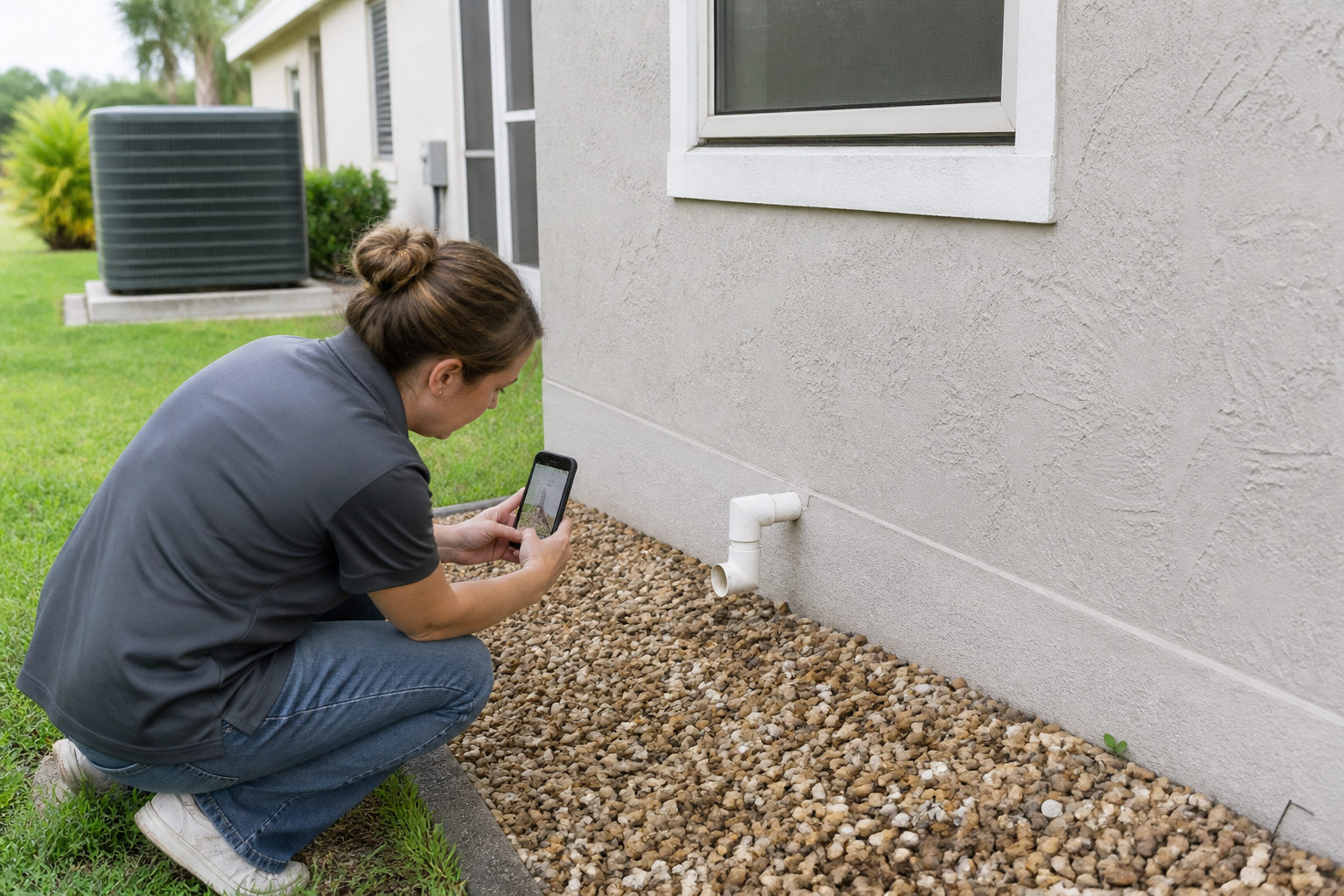
Indoor area, pan, thermostat, cleanout, and outlet photos
Vendor diagnosis, work order, and completion photos
Tenant reporting instructions and contact path
Review the same views at the next inspection
Use neutral descriptions: “water in auxiliary pan,” “new ceiling stain below air handler,” or “outdoor drain outlet buried by mulch.” Avoid diagnosing the cause from a photo alone. Ask vendors to record what they found, what they changed, whether drainage was tested, and whether follow-up is recommended.
What can wait, and what should not?
| Finding | Turnover action | Why it matters |
|---|---|---|
| Dry area, clear outlet, no alerts | Record the baseline and schedule normal maintenance | Creates proof of normal condition |
| Outlet obstructed by landscaping | Clear access without altering the drain; verify the route | Keeps the termination visible for future checks |
| Standing water, active leak, wet ceiling | Stop and call an HVAC professional; address wet materials | An active moisture problem should not be handed to a new tenant |
| Repeated float-switch trips or past clogs | Request diagnosis and a prevention plan | Recurring symptoms can signal a route, airflow, pump, or maintenance problem |
| Unknown, shared, pumped, or inaccessible drain | Document and request professional review | Guessing can send work to the wrong pipe or hide a larger issue |
Give the next tenant a short reporting plan
Tell the tenant where the thermostat and filter are, which maintenance duties the lease assigns, and how to submit an urgent HVAC report. The tenant does not need to diagnose the drain. They need to recognize early signs and report them promptly.
- Water near the air handler or on the floor
- A new ceiling stain or active dripping
- A musty odor that persists
- A thermostat or float-switch alert
- Cooling that stops unexpectedly
- Water from an emergency or secondary drain location
Include a photo-upload option in the work-order process. Ask for a wide view, a close view of the water or stain, and the thermostat display. Never instruct tenants to bypass safety devices or add chemicals to the drain.
Build prevention into the ownership plan
A turnover inspection is a snapshot, not a year-round maintenance program. Add the property to an A/C drain-line maintenance schedule, keep service history by unit, and review repeat events instead of treating each clog as unrelated.
For compatible systems, Unclog is designed around automatic condensate-drain maintenance that helps reduce buildup between visits. Review the compatibility guide and the installation requirements before planning a property rollout. Properties with multiple systems can also use the multiple A/C units guide to map each drain separately.
Landlord turnover FAQ
Should a landlord clean the A/C drain between every tenant?
Turnover is a useful time to inspect and document the drain. Whether cleaning is needed depends on condition, service history, climate, equipment, and the HVAC professional's maintenance plan. Do not perform unnecessary chemical treatments or work on an unidentified line.
Can I make the tenant responsible for the condensate drain?
Maintenance responsibilities depend on the lease and applicable law. Get local legal guidance. Regardless of responsibility language, provide a clear reporting process for water, stains, odors, alerts, and cooling shutdowns.
What photos should I keep?
Keep dated views of the air-handler area, drain pan if visible, accessible drain components, thermostat, ceiling below attic equipment, outdoor termination, and completed repairs.
When should I call an HVAC professional?
Call for standing water, active leaks, repeated shutdowns, damaged piping, failed pumps, inaccessible equipment, shared drains, wet electrical areas, or any condition you cannot identify and verify safely.
Protect the property after the keys change hands
See how Unclog supports automatic A/C condensate-drain maintenance, then confirm that the system and drain layout are compatible.
Explore UnclogCheck compatibility