
Snowbird A/C Drain Checklist: Before You Leave Your Florida Home
Months away change the stakes. Prepare the condensate drain, document the system, and give your local contact a simple plan for catching trouble early.
Start the checklistSee Unclog
Your A/C can keep making water after you leave
In a humid home, air conditioning does two jobs: it cools the air and removes moisture. That moisture becomes condensate and must travel from the air handler, through the drain line, to a safe termination point.
A partial blockage can look harmless on departure day. After weeks of humid operation, the same restriction may slow the drain enough to fill a pan, trigger a float switch, or produce a leak. A safety switch may protect the floor by shutting off cooling, but that can also stop the moisture control you expected while the property was empty.
Drain path
Know where condensate starts, how it travels, and where it exits.
Shutdown signal
Know whether a float switch can stop cooling when water rises.
Human backup
Give a local contact the exact signs that deserve a call.
Complete these checks before the house goes quiet
- Locate the indoor drain components. Identify the air handler, primary drain connection, drain pan, accessible cleanout, and float switch if present. Our condensate drain parts diagram can help you learn the vocabulary.
- Find the outdoor termination. Make sure the opening is visible and not buried by mulch, soil, insects, landscaping, or stored items.
- Look for warning signs. Standing water, rust trails, damp drywall, a wet pan, musty odor, or repeated float-switch shutdowns deserve attention before departure.
- Confirm drainage. Use only a safe method appropriate for your system. If you cannot confirm the line is flowing, schedule an HVAC professional instead of experimenting before a long trip.
- Replace or clean the filter if due. Correct airflow supports normal cooling and moisture removal. Use the size and type specified for your equipment.
- Test remote monitoring. Confirm that the thermostat or humidity monitor is online, notifications work, and a trusted local contact can access the home.
- Photograph the normal condition. Capture the pan, drain access, outdoor outlet, thermostat screen, model information, and shutoff locations for reference.
Do not open electrical panels, bypass a float switch, reach into equipment, mix drain-cleaning chemicals, or work near water and energized components. When the condition is unclear, stop and call a licensed HVAC professional.
Give your caretaker a one-minute drain check
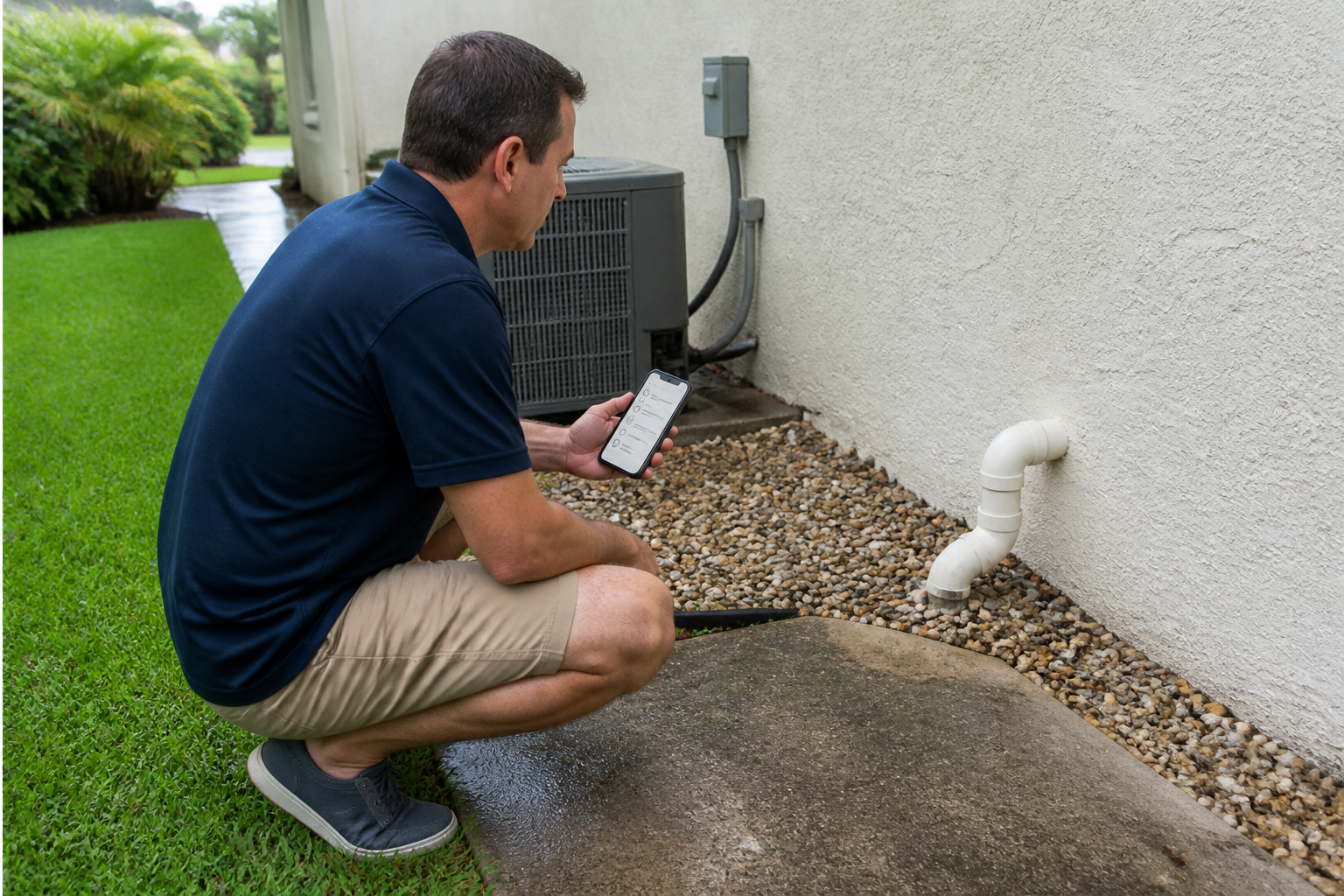
Walk the route together once. Show the caretaker the air handler, the emergency pan, the thermostat or monitor, and the outdoor drain outlet. A photo of each normal condition is more useful than a long explanation after something has changed.
| Check | Normal baseline | Action signal |
|---|---|---|
| Thermostat | Online and near the planned range | Offline, unusually warm, or repeated alerts |
| Indoor drain area | Dry floor and no standing water | Wet pan, stained ceiling, damp wall, or active dripping |
| Outdoor outlet | Visible and unobstructed | Buried, damaged, blocked, or surrounded by unexpected water |
| System sound | Usual operating sound | Repeated starting, buzzing, or silence during a cooling call |
| Odor | No new musty smell | Strong musty or electrical odor |
Ask for the same five photos at each visit. Consistent angles make small changes easier to spot and create a useful record for an HVAC technician.
Use a simple monitoring rhythm
Before departure
Document the baseline, address any warning signs, test alerts, and share contacts.
During vacancy
Review temperature and humidity trends. Arrange regular in-person checks appropriate for the home and season.
After storms or alerts
Ask for an extra visit. Check power, thermostat status, the drain area, and the outdoor outlet.
A smart thermostat is helpful, but it cannot see a wet drain pan or an outlet covered by storm debris. Pair remote data with a local person. If the home has multiple systems, label every thermostat, air handler, pan, and outdoor drain so an alert can be matched to the correct equipment.
Recurring prevention may also fit seasonal ownership. Unclog is designed around automatic condensate-drain maintenance, helping reduce buildup between visits. First confirm that your system is compatible using the Unclog compatibility guide.
Inspect before assuming everything stayed the same
Start with the documented baseline. Look at the drain pan, nearby ceiling or floor, outdoor termination, thermostat history, and any alerts that occurred while you were away. A line that appears to be working can still drain slowly.
- Compare the current drain area with your departure photos.
- Check for new staining, dampness, algae, debris, or musty odor.
- Review temperature and humidity history for unexplained spikes.
- Confirm the outdoor outlet remains open and undamaged.
- Resume the schedule in your A/C drain-line maintenance checklist.
Call an HVAC professional before departure when…
You see standing water, an active leak, wet electrical components, repeated float-switch trips, damaged PVC, a line you cannot trace, or a drain that will not flow normally. Professional help is also the right move for inaccessible attic equipment, condensate pumps, shared condo drains, and systems with a history of recurring clogs.
Common questions from snowbirds and second-home owners
Should I turn the A/C off when I leave my Florida home?
Turning cooling off can allow indoor humidity to rise. The right operating strategy depends on the home, equipment, season, monitoring, and insurance requirements. Follow your HVAC professional's and manufacturer's guidance rather than using one universal setting.
How often should someone check an empty seasonal home?
There is no universal interval. Base the schedule on local conditions, system history, home-watch or insurance requirements, and storm exposure. Remote monitoring should supplement, not replace, in-person checks.
What should a caretaker do if the drain pan has water?
If water is rising, near wiring, or actively leaking, they should avoid the equipment, follow the home's safe shutdown plan, and contact the designated HVAC professional. They should not bypass a float switch or improvise a chemical treatment.
Can recurring drain maintenance help a seasonal property?
It can reduce the chance that buildup accumulates unnoticed between visits. Compatibility and installation still matter. Review your system with an HVAC professional and confirm the drain configuration before choosing a solution.
Build protection into the months you are away
Learn how Unclog supports automatic A/C condensate-drain maintenance, then confirm it fits your specific drain configuration.
Explore UnclogCheck compatibility