
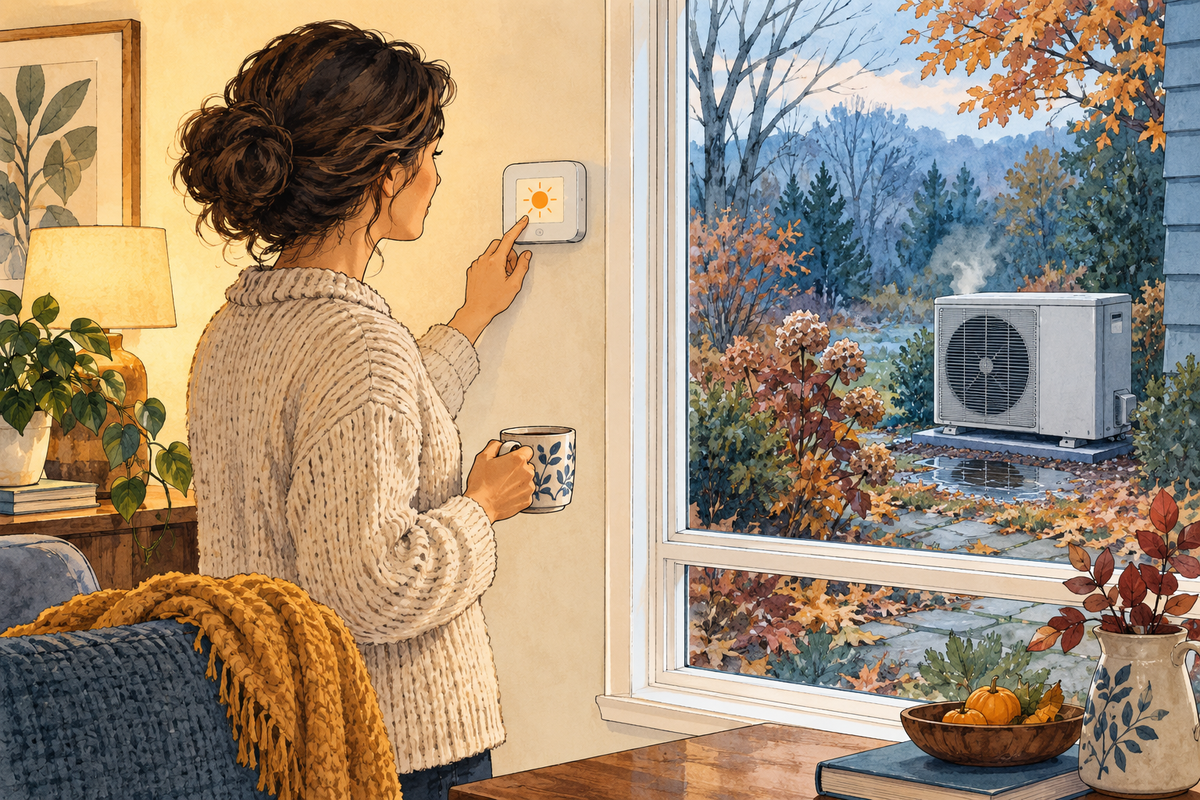
Cover: AI-generated editorial illustration of a hypothetical heating-season observation, not a field test or installation drawing.
Water appears near your HVAC equipment after you switch the thermostat to heat. Is it still the A/C drain, normal defrost water, or a new leak? The answer depends on which equipment made the water and where it is going. Unclog helps maintain a compatible cooling-condensate drain with automatic suction; identifying that drain correctly comes first.
Keep the cooling drain on your seasonal checklist
Once active faults are corrected and normal flow is verified, Unclog uses scheduled suction at a compatible outdoor gravity-drain termination to help remove buildup. That gives the cooling drain a repeatable maintenance routine without recurring chemical dosing.
For a home that switches between heating and cooling, the useful question is: which dedicated cooling drain can Unclog maintain? Do not connect it to a furnace drain, a shared or unknown route, or a heat pump’s defrost outlet on the assumption that all condensate is the same.
Check your drain’s fitSee Unclog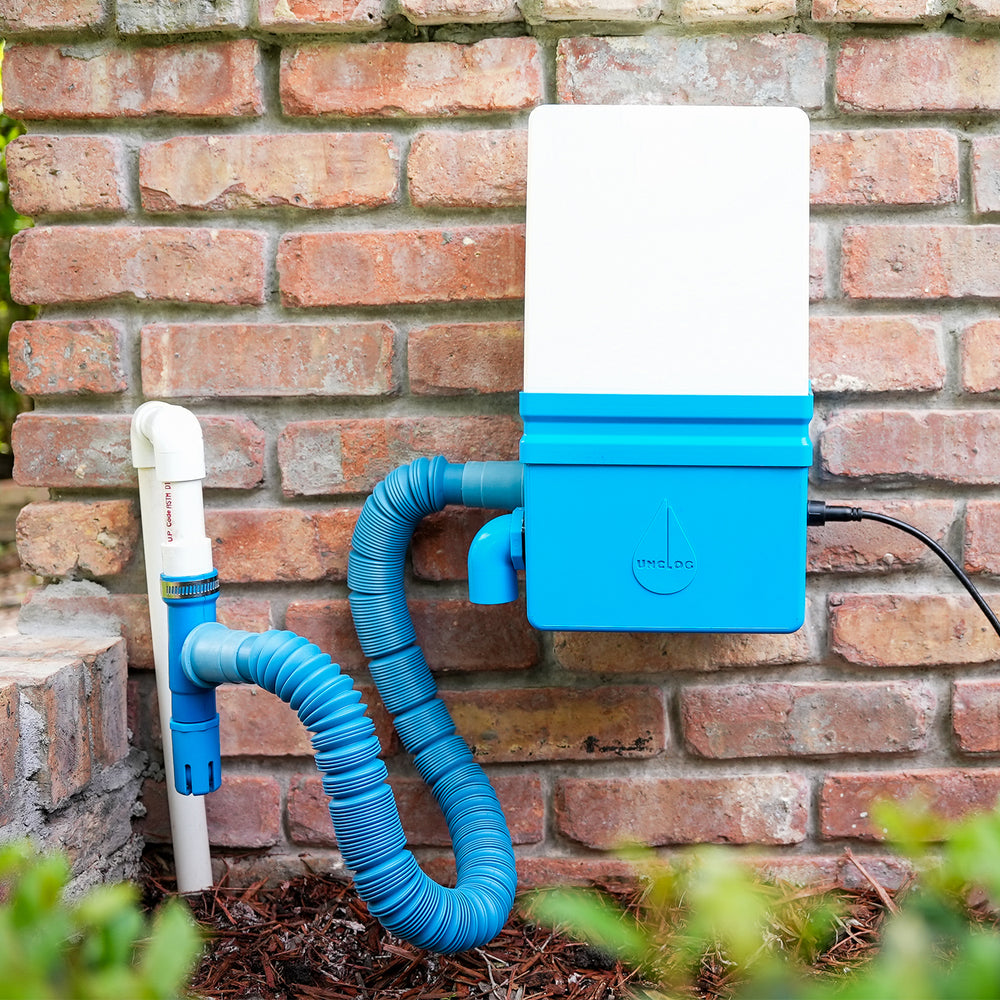
Why heating-season water has more than one explanation
Outdoor heat pump water
Trane explains that condensation can form outdoors while a heat pump heats the home. In colder conditions it may freeze; the defrost cycle melts that ice. Water near the outdoor unit can therefore be part of operation. This explanation applies to that outdoor process, not automatically to an indoor puddle or a nearby PVC pipe. Read Trane’s heat-pump guidance.
Condensing furnace water
A high-efficiency condensing furnace recovers heat from combustion gases and produces condensate. Carrier describes a designed drain system that carries this water away. Drainage, pump or humidifier problems can cause leakage around the furnace; the source needs professional diagnosis. A pipe near the cooling coil may serve more equipment than its location suggests. Read Carrier’s furnace guidance.
Cooling condensate during changeable weather
In a warm climate, a house may need heating on one day and cooling on another. During cooling, the cold indoor coil removes moisture and sends it into the condensate drain. Record what the equipment was actually doing when water appeared, rather than using the month—or the thermostat setting you see later—as the diagnosis. The outdoor A/C drain guide explains how to identify the correct pipe.
Start with the water’s location, then check its timing
“Water outside” is too broad to identify a fault. A puddle beneath an outdoor heat pump, discharge from a confirmed cooling-drain pipe, and a secondary outlet dripping over a window are different observations. Do not cap an opening, attach a vacuum or pour cleaner into it until its role is known.
| What you see | What it may represent | Useful next step |
|---|---|---|
| Water beneath the outdoor heat pump during heating | Outdoor condensation or defrost meltwater | Note timing and whether ice clears. Persistent heavy ice, poor heat or unusual behavior warrants service. |
| Water moving through a known furnace drain | Condensate from a condensing furnace | Confirm the route with the equipment manual or technician. Water should remain in the intended path. |
| Water at the confirmed A/C primary outlet after cooling | Moisture removed during cooling | Compare with the same system under similar conditions; there is no universal drip rate. |
| Indoor puddle, wet ceiling, full auxiliary pan or secondary discharge | Water escaping or reaching a safeguard | Stop operation from a safe, dry location and arrange diagnosis. Do not bypass a float switch. |
A dry cooling outlet during a heating call also does not establish a blockage. Look for evidence of abnormal water at the equipment and confirm the route. If pipes merge, a pump intervenes or the destination is concealed, use the drain-system types guide and have the arrangement mapped before any cleaning method is selected.
Make the service call specific
Collect observations without opening cabinets or disturbing plumbing. A clear description helps the provider understand whether the call concerns outdoor defrost behavior, furnace drainage or an indoor leak. Use this short record:
- Mode and time: heating, cooling, auto or unknown; when water first appeared.
- Exact location: beneath the outdoor unit, at a pipe end, around the furnace, under the indoor unit or at the ceiling.
- What changed: a new puddle, repeated shutdown, persistent ice, weaker heating or recent service.
- Photos: one wide view and one close view, taken from safe access. Include visible labels without removing panels.
- Drain identity: confirmed primary, secondary, furnace, pumped, shared or unknown. “Unknown” is useful information.
For example: “The thermostat was calling for heat at 7 a.m. Water appeared beneath the outdoor unit. The indoor floor is dry. I have not identified the nearby PVC outlet.” That is more actionable than “the A/C is leaking.” For indoor water, describe that first and consult the HVAC technician or plumber guide.
Plan prevention for the confirmed cooling drain
After the water source is diagnosed and any active fault is corrected, ask the technician to identify the cooling system’s primary drain and verify normal flow. This is the point to discuss ongoing maintenance—not while the cause of an indoor leak remains uncertain.
Unclog’s scheduled suction helps remove buildup through a compatible outdoor termination, reducing the need to remember repeated manual drain-cleaning sessions or chemical applications. Keep the system’s safety devices and professional maintenance in place. Review the compatibility checklist and installation instructions for the actual setup; this article does not establish furnace, shared-drain or defrost-drain compatibility.
Heating-season drain FAQs
Is water under a heat pump normal in winter?
It can be. Outdoor condensation and defrost can produce water during heating. Indoor leakage, persistent heavy icing or poor performance deserves professional assessment rather than that assumption.
Why does the furnace drain water when the A/C is off?
A condensing furnace produces its own condensate as it recovers heat from combustion gases. That water needs its designed drainage route even when cooling is off. Confirm which equipment the pipe serves.
Does a dry A/C drain during heating mean it is clogged?
No. A dry outlet alone is insufficient evidence. Confirm the operating mode, drain identity and signs of abnormal water before deciding that a blockage exists.
Can Unclog clear a heating-system water leak?
Unclog is for suction-based prevention on a compatible cooling-condensate drain after faults are corrected and normal flow is verified. It does not diagnose or repair a heating-system leak, furnace drain problem or defrost fault.
Identify today’s water. Plan tomorrow’s drain care.
Get abnormal heating-season water diagnosed first. Then give the confirmed cooling drain a maintenance routine that fits the installation.
Explore UnclogCheck compatibility before installationPublished October 1, 2026. Manufacturer references checked on that date. Diagrams are original explanatory graphics, not equipment-specific installation instructions.