

Cover: AI-generated editorial illustration of ornamental gardening, not an actual condensate-reuse installation or product test.
Can you use air conditioner water for plants? A/C condensate can be a useful irrigation source, but the answer depends on what the water touches, whether anything has been added to the system, and how you collect it. Start with the drain’s job: carrying water away from your home. Unclog supports routine maintenance of compatible outdoor condensate drains; it does not turn their discharge into purified irrigation water.
Quick answer
Consider A/C condensate for ornamental plants only after confirming the source, maintenance history, water suitability and collection arrangement. Do not assume clear-looking discharge is drinking water. Avoid collecting cleaning runoff or water from an unidentified, shared or emergency drain. Any permanent collection system needs a design that preserves normal drainage and a safe overflow route.
UNCLOG • DRAIN CARE BEFORE WATER REUSE
Keep the drain working. Evaluate the water separately.
Unclog uses scheduled suction at a compatible outdoor termination to help move developing buildup through the drain. A user-selected routine provides physical maintenance without recurring chemical dosing. That is useful when you want a consistent drain-care routine, but it is not filtration, disinfection or a guarantee of water quality.
Correct an active clog or leak first, verify normal flow, then check the complete installation for compatibility. Do not add a collection hose or tank to Unclog without confirmation that the arrangement is supported.
Explore UnclogCheck your drain’s compatibility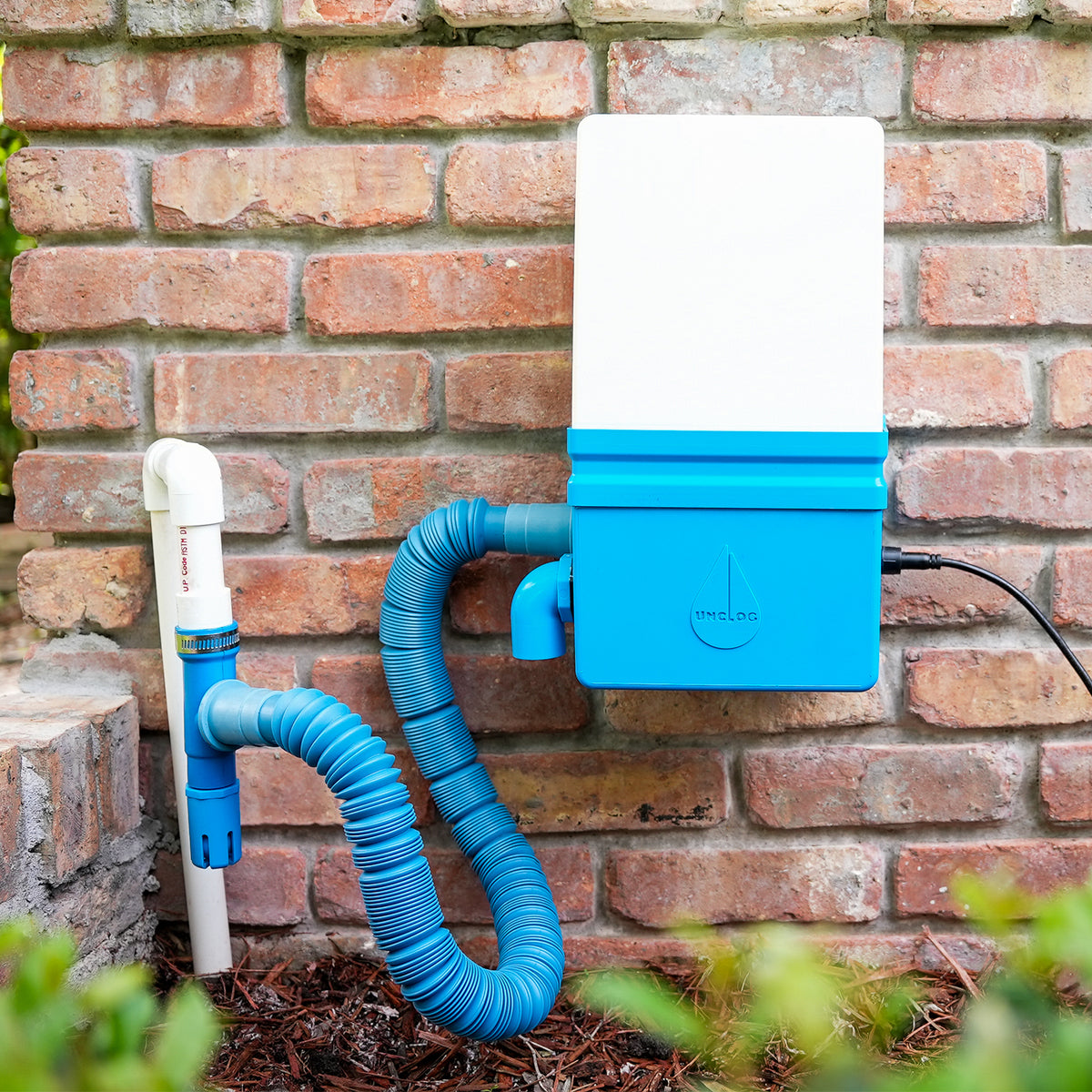
A/C condensate starts as moisture from the air
When humid air meets the indoor cooling coil, moisture condenses into droplets. The pan and drain carry that water away. It is different from deliberately manufactured distilled water: the water you see at the outlet has already passed through equipment and piping.
Utah State University Extension identifies A/C condensate as a potential landscape irrigation source because of its low dissolved-salt content. Its guidance also favors drip application over spraying because microorganisms can be a concern. Those observations support evaluating reuse; they do not certify the water from an individual home.
The U.S. Department of Energy’s captured-condensate guidance explains that contact with cooling coils can introduce metals, bacteria can grow during storage, and coil-cleaning water should be kept out of a collection system. Its discussion addresses planned reuse systems, including cooling-tower applications, rather than approving every household bucket of condensate.
A useful way to frame the decision is to ask three separate questions: Is this the right source? Is its water appropriate for the intended use? Can collection happen without compromising the drain? A yes to one does not answer the others. A clean-looking sample cannot establish its chemistry or microbial quality.
Match the water decision to the plant and the exposure
For a homeowner considering a small reuse project, ornamental landscaping is a more sensible starting point for a discussion with a local extension specialist than food crops or indoor uses that create mist. Ask about your particular plants, soil, irrigation method and the water’s maintenance history. Do not interpret a general irrigation recommendation as approval for every edible plant, aquarium, pet bowl or appliance.
| Proposed use | Practical next step |
|---|---|
| Ornamental plants or landscape beds | Confirm the water source and service history; ask your local extension office about plant suitability and soil-directed application. |
| Vegetables, herbs or fruit you eat | Use your established irrigation source until an appropriate local specialist confirms water quality and application requirements. |
| Sprinklers, misters or decorative spray | Do not treat untreated condensate as ready for aerosol-producing use. Obtain a designed treatment and reuse plan. |
| Drinking, cooking, pets or aquariums | Do not use untreated A/C discharge as a substitute for water appropriate to those uses. |
| Unknown outlet or recently cleaned equipment | Pause reuse. Identify the drain and obtain the service-product details first. |
This table is a conservative planning screen, not a laboratory result or a local plumbing approval. Where suitability is uncertain, keep using the established water supply while you resolve it. Do not add bleach, vinegar or another treatment to a collection container based on an improvised recipe.
A collection idea must not become a drain blockage
Before considering a bucket, barrel or permanent system, identify the outdoor drain. An emergency or secondary outlet is a warning route, not a reliable irrigation supply. Water from a shared plumbing connection is not equivalent to discharge from a dedicated condensate line. A pump also changes the design questions; see the guide to condensate drain types.
Do not cap a drain, raise its discharge into a higher container, submerge the pipe end, or attach a restrictive hose just to capture more water. A full container must not push water back toward the equipment. A permanent recovery system should be reviewed by an HVAC or plumbing professional for the actual equipment, discharge requirements, collection level, overflow destination and access for service.
Keep the existing protective devices and warning outlets functional and visible. If the float switch trips, the pan fills, or water appears indoors, stop the reuse experiment and address the active problem. Unclog does not repair pumps, frozen coils, cracked pans, bad piping or leaks, and it is not an emergency substitute for clearing a blocked line.
Ask this before buying a collection tank
“If this container is full, its outlet blocks, or nobody checks it for a week, where does the A/C water go?”
A sound answer must protect the normal drainage route and provide an appropriate overflow destination. If the answer is uncertain, the collection design is not ready.
A/C condensate reuse planning checklist
Use this short worksheet for the conversation with your technician and local plant specialist. Mark unknowns explicitly rather than guessing. A photo of an accessible outlet and the last service invoice can be more useful than a container-size estimate.
- Source: Which indoor unit supplies the line? Is it a dedicated primary drain, a pumped line, a shared drain or a secondary outlet?
- Condition: Has normal flow been verified? Are there active leaks, unusual deposits, odors, standing water or recent shutdowns?
- Service history: What coil cleaners, pan treatments or drain products have been used? Who will keep cleaning runoff out of the collection route?
- Intended use: Which plants, where, and how will the water be applied? What water-quality advice or testing does that use require?
- Collection design: Who verified that collection will not restrict the drain? Where will overflow go, and how is access maintained?
- Storage and upkeep: Who will inspect and clean the collection equipment, manage insects and decide when stored water should not be used?
- Change control: Who needs to know before a technician cleans the coil, changes a drain treatment or modifies the piping?
Do not size a reuse system from a universal “gallons per day” claim. A/C runtime and the moisture being removed vary. Ask the designer how to assess available water without obstructing the drain, and how the irrigation plan works on days with little or no condensate. Plants still need care when the A/C is not producing water.
Where Unclog fits in a condensate maintenance plan
Drain maintenance and irrigation-water assessment are two different tasks. Once the drain is clear, intact and flowing normally, Unclog can provide scheduled suction-based maintenance at a compatible outdoor termination. The app or supported offline presets help make that routine consistent. Physical maintenance avoids making recurring chemical dosing the center of that routine.
That benefit does not certify the discharge as clean water. Buildup moved during a suction cycle, residues from other service products and the condition of collection equipment still matter to any reuse proposal. Do not assume that a tank, hose or irrigation system is compatible merely because it connects to the same pipe size. Review the installation guidance and ask about the complete proposed arrangement before changing it.
Keep routine inspections and professional service in the plan. If you already add liquids or tablets, document them rather than assuming the drain contains only condensed moisture. Our vinegar-versus-bleach guide explains why maintenance instructions and materials matter.
Common questions about A/C water and plants
Is A/C condensate the same as distilled water?
No. It begins as condensed moisture, but the collected discharge has contacted the coil, pan, piping and possibly storage equipment. Do not treat it as certified distilled or drinking water.
Can I water vegetables with A/C condensate?
Do not assume a general landscape-reuse recommendation covers edible crops. Use your established irrigation source until an appropriate local specialist confirms water quality and the application requirements for your crop.
Can I put a bucket under any outside pipe?
No. First identify the source and whether it is the primary drain, a pump outlet, a shared line or a secondary warning outlet. Collection must not submerge, restrict or change the discharge path.
Does Unclog make the water safe for plants?
Unclog provides suction-based drain maintenance. It is not a filter or disinfectant and does not certify the quality of discharged water. Evaluate water reuse separately from drain compatibility.
Should I keep collecting water after coil cleaning?
Keep cleaning runoff out of the collection system. Ask the service professional what was used and when the collection arrangement can return to service; do not guess a universal waiting period.
Your next step: identify the drain, then choose the routine
If your goal is healthier plants, resolve water suitability and collection design first. If your goal is more consistent condensate drain maintenance, start with normal flow and a compatibility check. Unclog’s scheduled suction addresses the maintenance task without pretending to solve water treatment.
Check compatibilitySee Unclog’s featuresSources reviewed September 20, 2026: Utah State University Extension, “Using Non-traditional Water Sources in the Landscape”; U.S. Department of Energy FEMP, “Best Management Practice #14: Alternative Water Sources,” captured-condensate section. This guide applies those sources to a homeowner planning checklist; it does not report a test of any home’s water or a tested Unclog reuse installation.