
A timing clue, not a diagnosis. If your A/C condensate drain releases water mainly when the blower stops, the system may have a pressure or trap problem—or another drainage fault. Unclog can provide suction-based preventive maintenance at a compatible outdoor termination after the cause is corrected; it cannot correct an improperly configured trap.
Where Unclog fits in this situation
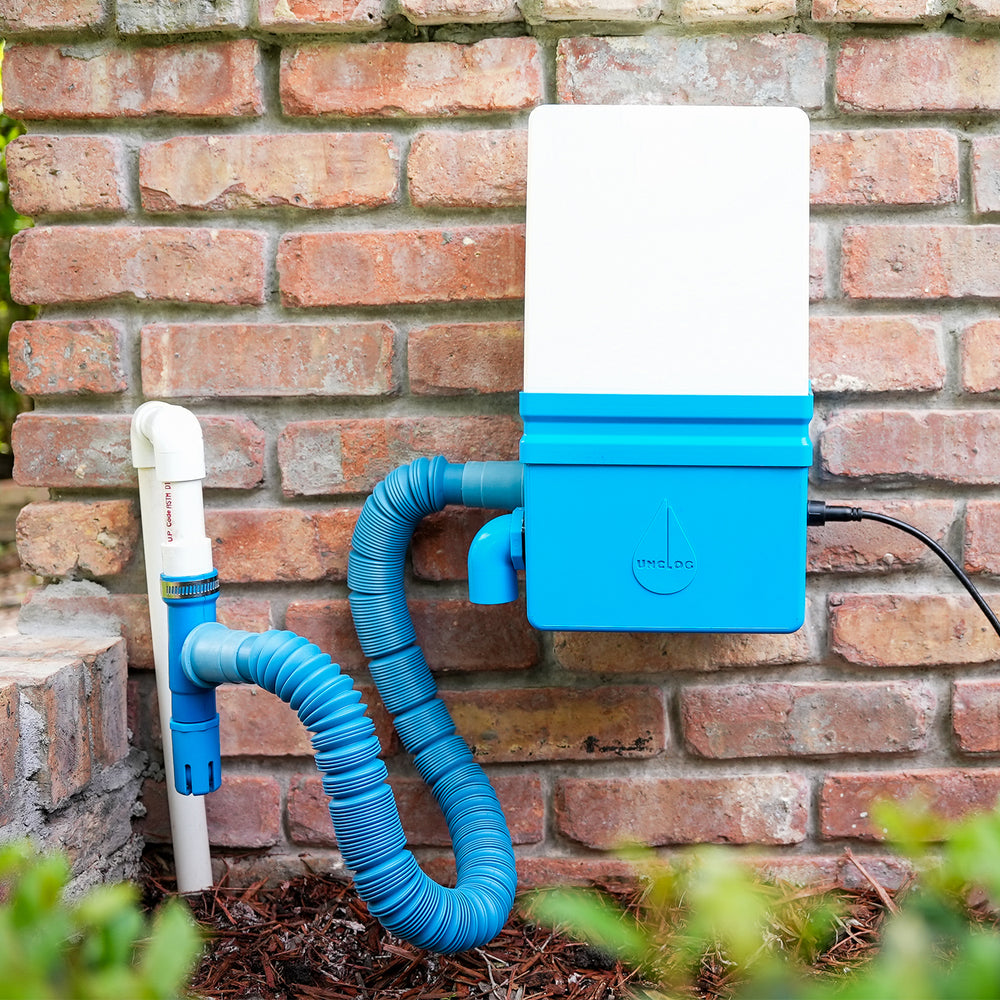
A drain that needs pressure correction should be repaired first. Once normal drainage is verified, Unclog uses scheduled suction at a compatible outdoor drain termination to help remove buildup through physical maintenance rather than a recurring chemical pour. App control and offline presets support a routine. Start with the compatibility guide; an outdoor pipe by itself does not establish suitability.
First distinguish the cooling cycle from the blower cycle
The compressor and indoor blower do not necessarily stop together. Some systems keep the blower running briefly after cooling ends; a thermostat fan setting can keep it running longer. “The A/C turned off” is therefore less useful than “the indoor blower stopped, and the drain began releasing water immediately afterward.”
Condensate production also varies with humidity, cooling runtime and equipment conditions. A dry outlet on one visit does not establish a clog. See what an outdoor A/C drain can tell you for that broader distinction. This article addresses a repeating relationship between blower operation and drainage, not a universal expected drip rate.
Why negative pressure can hold back drainage
On equipment whose drain pan is exposed to negative pressure during blower operation, the blower can draw air inward through the drain connection. Without an effective water seal, that incoming air can interfere with water leaving the pan. When the blower stops, the pressure condition changes and retained water may drain.
The trap must suit the equipment and its operating pressure. A missing trap, an ineffective water seal or an unsuitable configuration can matter. Venting, pipe support, unintended extra traps and restrictions can also affect drainage. The condensate drain parts guide explains the components; it is not a substitute for the model-specific installation instructions.
Do not copy trap dimensions from a generic diagram. Equipment designs differ, and the same symptom can have more than one cause. A technician should assess the actual installation and operating conditions. Nor should you remove a cap to “let it breathe” without identifying its purpose: read cleanout cap or vent? before changing anything.
Useful observations without opening equipment
| Observation | What it establishes | Next step |
|---|---|---|
| A few drips after cooling | Residual water may still be draining; timing alone proves little. | Note whether there are other symptoms. |
| A repeatable release immediately after the blower stops | A pressure-related drainage issue is possible, not confirmed. | Ask for drainage verification during blower operation. |
| Water leaking, a wet ceiling or a tripped safety switch | An active fault needs attention regardless of outlet timing. | Stop cooling if safe and arrange service; never bypass the switch. |
| The pattern began after drain work | The change is useful diagnostic history. | Give the technician the date and description of the work. |
From a safe, accessible location, record the thermostat mode, whether the indoor fan is actually running, when the water appears and whether this happens on normal cycles. Photograph accessible piping without removing panels or climbing into unsafe spaces. Do not pour liquid into an unidentified opening or disconnect piping to create a test.
Gurgling can accompany air-and-water movement, but the noise does not identify the fault. The A/C drain gurgling guide addresses that separate symptom.
Ask the technician to demonstrate drainage with the blower running
A useful service request is: “Water appears to release when the indoor blower stops. Please verify condensate drainage during blower operation and afterward, and explain whether the trap, water seal, venting or a restriction is involved.”
Ask what was found, what was corrected and how normal flow was verified. The review may include the manufacturer’s drain requirements, operating pressure, trap configuration, intended cleanout and vent arrangement, route and supports, and pan or safety-switch condition. Request a plain-language explanation rather than prescribing a particular repair yourself.
Then build a prevention routine around a working drain
Clearing buildup and correcting pressure problems are different tasks. A clean line can still drain poorly if its configuration is wrong; a correctly configured line can later accumulate material. After active faults are resolved and normal flow is verified, consider Unclog’s suction-based maintenance for a compatible outdoor termination.
Check the route, termination, mounting and power requirements in the compatibility guide and follow the installation instructions. Unclog does not repair frozen coils, pumps, damaged pans, bad piping, incorrect traps or active leaks. It is not an emergency substitute for clearing a blocked line.
Frequently asked questions
Does water draining after shutdown always mean a clog?
No. Residual drainage can be normal. A repeating release associated specifically with the blower stopping can also indicate a pressure or trap issue, which requires diagnosis.
Should I change the thermostat fan setting to fix it?
No. Changing fan operation does not repair the underlying drainage configuration. Describe the setting and timing to the technician.
Can I remove the cleanout cap to improve drainage?
Do not remove a cap as a trial repair. Its purpose and location matter, and changing it can alter how the drain behaves.
Will Unclog fix a trap that is incorrectly installed?
No. Correct the trap or other active fault and verify normal flow first. Unclog provides preventive suction-based maintenance at compatible outdoor terminations.
Next step: Get repeating shutdown-only drainage diagnosed. Once the system drains normally, check whether Unclog fits your installation.
Technical reading: HVAC School: planning and installing condensate drain lines and HVAC Basics: condensate drains and traps. General explanations; your equipment manufacturer’s instructions govern the installation. Cover: original AI-created editorial illustration, not equipment or test evidence.