
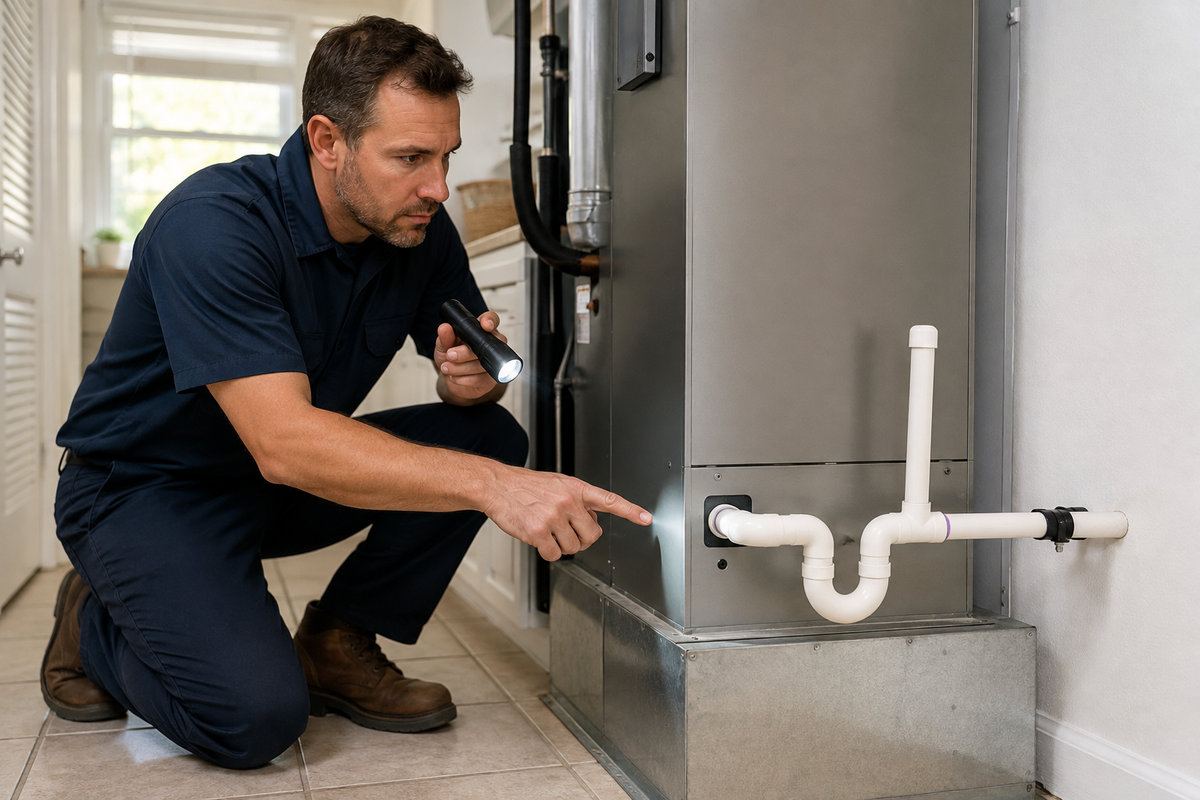
A gurgle near an air handler can come from condensate water sharing space with air, but the sound alone does not prove the drain is clogged. Pinpoint where it starts, when it happens, and whether water is appearing where it should not.

A gurgle means air and liquid are moving somewhere
Condensate drainage is usually quiet enough that most homeowners never notice it. When you hear bubbling, gulping, or gurgling, air is moving through water or water is moving through a partly air-filled path. That can happen inside a PVC drain, at a trap or vent, in a condensate-pump reservoir, or at a plumbing drain that receives condensate.
Start with two observations: where the sound is loudest and when it occurs. A sound that begins during a long cooling cycle points toward condensate production. A sound that continues when cooling is off, comes from copper tubing, or changes with sinks and toilets may involve something other than the A/C drain.
Pinpoint the sound before choosing a fix
A partial restriction, pressure change, or installation detail may be affecting how air and water pass.
Intermittent hums, slurps, and gurgles may come from the reservoir, pump, discharge tubing, or check valve.
Do not assume every liquid-like noise is drainage. Refrigerant and airflow sounds require equipment-side diagnosis.
A trap, branch drain, or plumbing vent can be involved when condensate empties into the building drainage system.
If you cannot tell PVC from the refrigerant lines, review the A/C condensate drain parts diagram before drawing conclusions. Keep equipment panels closed and avoid touching wet components.
Five common reasons an A/C drainage path gurgles
1. Developing buildup narrows the drain
Slime, debris, or sediment can reduce the open area inside a condensate line. Water may still pass, but air has less room to move. The result can be an irregular gulping sound before a complete backup occurs. Slow drainage, recurring pan water, musty residue, or weak flow at the outlet makes this possibility more concerning. See the clogged A/C drain guide for the broader symptom pattern.
2. The trap or vent is influencing pressure
Many systems need a correctly designed trap, vent, or both because of pressure at the coil and drain connection. Requirements depend on the equipment and installation. A dry trap, incorrect configuration, blocked vent, or other layout issue can change drainage behavior and produce noise. This is not something to diagnose from a generic internet diagram. Manufacturer instructions and a qualified local technician should govern the layout.
3. A condensate pump is cycling or struggling
Where gravity cannot carry condensate to a safe discharge point, a pump may collect and move it. Some water sounds during a normal cycle can be expected. New gurgling, repeated short cycling, rising reservoir water, leakage, or failure to discharge deserves prompt attention.

If the noise centers on a reservoir or pump, use the condensate pump troubleshooting guide. Unclog is not designed to attach to small pumped discharge tubing.
4. The A/C shares a plumbing drainage route
Some condensate lines discharge into an approved plumbing receptor or branch connection. A gurgle at a nearby sink or drain can point to the plumbing connection, its trap, a restriction, or venting. Because local code and installation design vary, a plumber or HVAC professional may need to trace the route.
5. The sound is not coming from the condensate drain
Refrigerant moving through copper tubing, airflow at a grille, a loose panel, or another appliance can be mistaken for drain gurgling. Hissing, bubbling, or rushing from the refrigerant circuit is not a homeowner repair. If the sound is accompanied by weak cooling, ice, short cycling, or a change in system performance, arrange professional diagnosis.
Safe observations that make a service call faster
You do not need to dismantle anything to collect useful clues. Observe from a dry, accessible location. Do not remove the air-handler panel, reach near wiring, bypass a float switch, pour chemicals into an unidentified opening, or enter an unsafe attic or crawlspace.
The listen, locate, note method
Note whether the sound occurs at startup, during a long cycle, at shutdown, or when another plumbing fixture runs.
Identify whether it is loudest at PVC, a pump reservoir, copper tubing, the cabinet, or a sink drain.
Look without touching for a wet pan, dripping joint, ceiling stain, float-switch trip, or weak outdoor discharge.
| What you hear or see | What it may indicate | Safer next step |
|---|---|---|
| Gurgling at PVC with slow or intermittent outdoor flow | Restriction, trap, vent, or pressure issue | Arrange drain-path inspection before an overflow develops. |
| Gurgling plus water in an emergency pan | Primary drainage is not keeping up | Turn cooling off as appropriate and call promptly. |
| Noise at a pump with rising reservoir water | Pump, tubing, power, or switch problem | Do not bypass controls. Contact a qualified professional. |
| Sink gurgles when A/C runs | Shared plumbing route, restriction, or venting issue | Have the condensate and plumbing connection traced. |
| Bubbling or hissing near copper with weak cooling or ice | Possible refrigerant or equipment condition | Keep the cabinet closed and schedule A/C service. |
| Brief water sound with normal drainage and no warning signs | May be normal water movement | Document it and monitor for a change in frequency or symptoms. |
Call promptly when sound comes with water or performance changes
A gurgle is useful as a clue, not a complete diagnosis. Photograph visible water, record a short audio or video clip, and tell the technician exactly when the sound occurs. That evidence can shorten the path from symptom to cause.
If water is already indoors, start with the indoor A/C leak decision guide. If a float switch has stopped cooling, follow the tripped float-switch guide and do not bypass the safety control.
Questions about A/C drain gurgling
Is it normal for an A/C drain line to gurgle?
A brief water sound may occur in some drainage layouts, but a new, frequent, or worsening gurgle should be investigated. The location, timing, drainage flow, and presence of water or cooling problems determine how urgent it is.
Can a clogged condensate drain cause gurgling?
Yes. A partial restriction can force air and water through a smaller opening and create irregular sounds. It is only one possible cause. Trap, vent, pump, plumbing, refrigerant, and equipment issues can sound similar.
Why does my sink gurgle when the A/C runs?
The condensate may connect to a plumbing drain, or the timing may be coincidental. A restriction, trap, branch connection, or plumbing vent may be involved. Have the actual route traced rather than treating the sink sound as proof of an A/C clog.
Can Unclog stop a gurgling noise?
Unclog is not a direct noise repair. After normal flow is restored, it may help manage developing buildup in a compatible open gravity condensate drain by applying scheduled suction at the outdoor termination. It will not correct pump, trap, vent, plumbing, refrigerant, or equipment faults.
Should I pour cleaner into the line?
Do not pour a chemical or cleaner into an opening you have not positively identified. Equipment instructions, pipe materials, the cause of the noise, and local installation details matter. If the route or condition is uncertain, have a qualified professional diagnose it.
Confirmed recurring buildup in a compatible drain?
Once an active restriction is cleared, normal flow is verified, and the open outdoor gravity-drain termination is confirmed compatible, Unclog can add scheduled suction-based maintenance to that specific drainage path.