
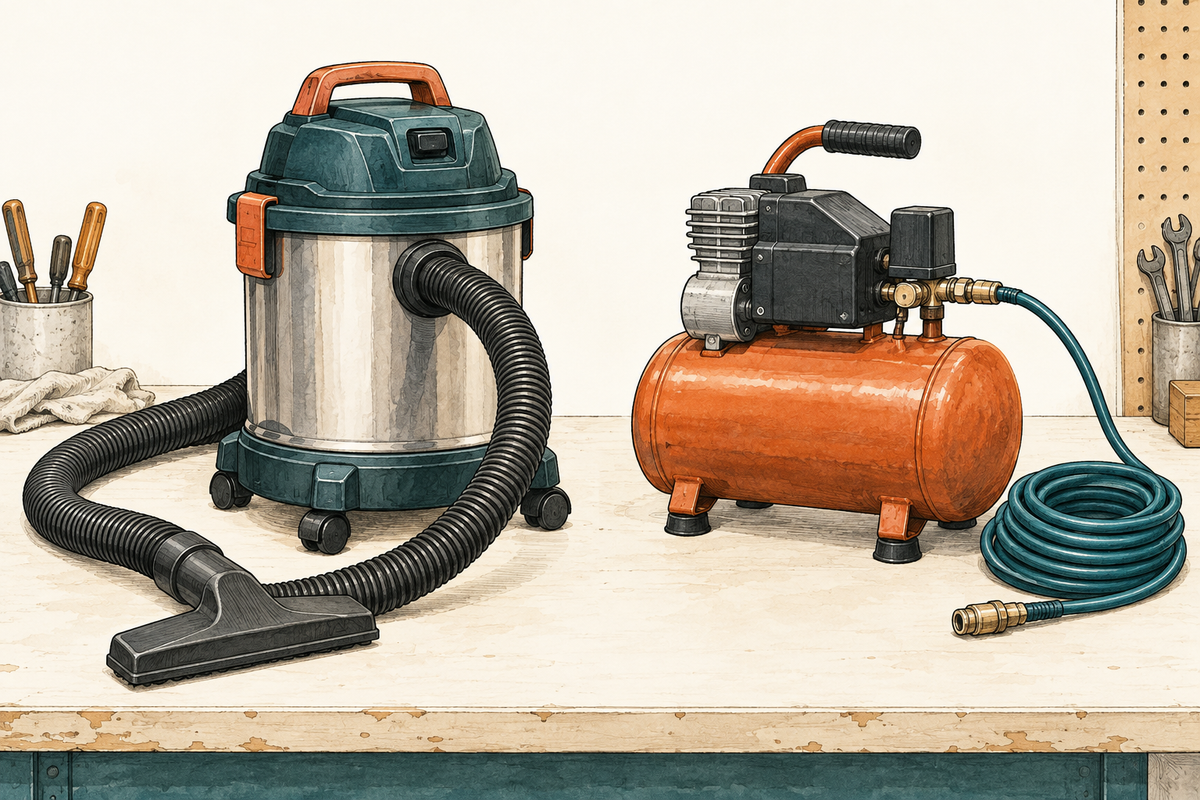
A clogged A/C drain can make a compressor, drain gun or wet/dry vacuum look like interchangeable ways to move the same plug. They are not. One pushes with positive pressure; the other pulls toward its inlet. Before choosing a tool, identify the complete route and the fault. Unclog uses scheduled suction for preventive care at a compatible outdoor termination after active faults are corrected and normal flow is verified.
Unclog automates suction-based maintenance
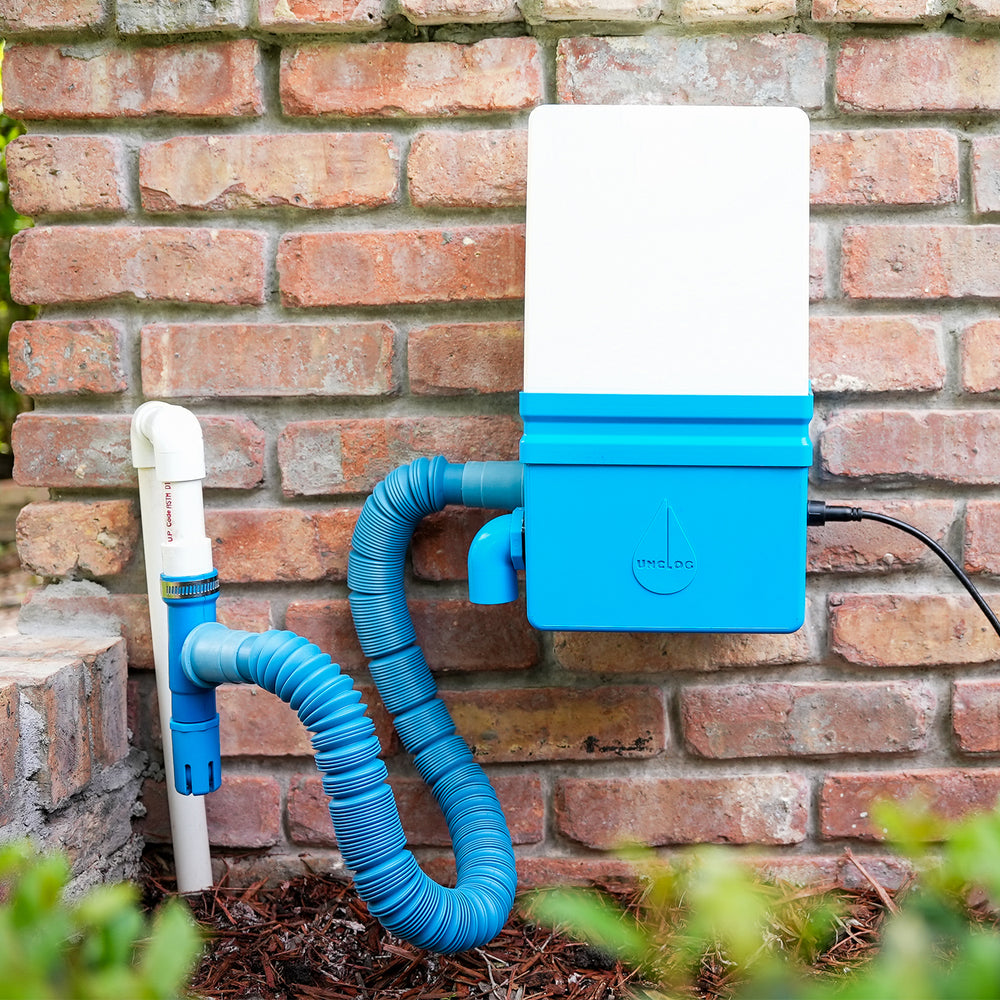
Once a suitable drain is working normally, Unclog provides scheduled suction to help remove developing buildup without recurring chemical cartridges. App controls and offline presets support a repeatable routine instead of relying on memory to bring out a wet/dry vacuum.
That is a prevention decision after clearing and diagnosis. Review compatibility and installation instructions; a nearby outdoor pipe does not establish fit. Unclog is not an emergency substitute for clearing a blocked line.
Push and pull are different service actions
A wet/dry vacuum connected at a positively identified termination draws air, water and loose material toward the collection tank. Positive pressure introduced through a service connection pushes away from that entry point. Where material goes depends on the route, restrictions and connected openings—not simply which direction the operator intends.
The comparison below illustrates force direction only. It is not a plumbing layout or an instruction to connect either tool. Pumps, shared branches, secondary drains and uncertain routes require their own assessment.
Why a pressure number is not a safety guarantee
AC Service Tech's original methods guide describes both vacuum extraction and controlled pressure methods, and warns that excessive pressure can separate a pipe joint and cause a leak. This is why professional use of pressure should not be simplified into “attach a compressor and blast it.”
A setting quoted for a particular service method is not a universal rating for an assembled drain. An unseen loose connection, a shared branch or an incorrectly identified opening changes the situation. Do not copy a forum pressure setting, improvise a cartridge adapter or increase pressure because a first attempt failed. Ask a qualified technician how they will control the method and check for leaks afterward.
The same caution applies to a wet/dry vacuum's blower port. Moving the hose to the exhaust changes the action from suction to positive pressure. It is not the same procedure as collecting material through the vacuum inlet.
Which next step matches the condition?
| Situation | Practical next step | Avoid |
|---|---|---|
| Known, accessible gravity outlet; restriction suspected | Assess whether wet/dry extraction is appropriate; follow the complete cleaning guide. | A dry household vacuum or a stressed, loose pipe connection. |
| Route unknown, shared or pumped | Have the route and service method identified professionally. | Blind suction or pressure on a guessed pipe. |
| A first attempt does not restore flow | Reassess the fault and seek service. | Escalating pressure or repeatedly adding water. |
| Drain flows normally after repair | Plan inspection and compatible preventive care. | Treating maintenance as emergency clearing. |
For a broader comparison including flushing and treatments, use the A/C drain-cleaning methods guide. This article addresses pressure-versus-suction decisions, not every cleaning technique.
Debris coming out is not the finish line
Material appearing in a vacuum tank or at an outlet is useful evidence, but it does not by itself establish a complete, leak-free route. Confirm normal drainage through the intended path and inspect accessible connections as appropriate. Service openings, trap condition and safeguards need to be left as the installed equipment requires.
When hiring a technician, ask three concrete questions: which route was cleared, what was found, and how was drainage verified afterward? If a joint separated, a pan is damaged or a pump failed, clearing alone does not complete the repair. Water near electricity, spreading water, an unsafe equipment location or a repeatedly tripping safety switch requires prompt qualified help.
Choose prevention after the drain works
A one-time tool removes a present restriction. A preventive routine addresses future buildup on a working system. For a compatible outdoor termination, Unclog's scheduled suction adds physical maintenance without recurring chemical cartridges, with app scheduling or offline presets.
Keep the two decisions separate: correct the active fault and verify normal flow first, then check whether Unclog fits the installation. It does not repair frozen coils, pumps, pans, bad piping or active leaks.
Common questions
Can I use compressed air on an A/C drain?
Pressure methods exist in professional service, but suitability depends on the actual installation and controlled procedure. Do not blast an unidentified or unfamiliar route.
Is the blower port of a shop vacuum the same as suction?
No. The blower port pushes air out; the vacuum inlet draws air and material toward its collection tank.
Does a successful clearing make Unclog unnecessary?
Clearing and prevention have different roles. After normal flow is verified, a compatible installation can use scheduled suction for ongoing maintenance.