
An A/C drain line that disappears underground raises a practical question: where does the water actually go? Before paying for another cleaning or approving a reroute, distinguish a covered pipe opening from a concealed drainage system. Unclog can add scheduled suction to a compatible, normally flowing outdoor drain, but first you need a known route and a serviceable termination.
UNCLOG · PLAN FOR ACCESSIBLE DRAIN CARE
Make the final outlet a maintenance point.
When a professional restores a sound drainage route, consider how you will maintain it. Unclog uses scheduled suction at a compatible outdoor termination to help remove developing buildup without recurring chemical dosing. You can choose a repeatable cleaning routine instead of waiting for another symptom.
An unidentified buried end is not a connection point. Confirm the complete route, correct active faults, verify normal flow and review mounting, power and free-flow mechanism requirements before installation.
See how Unclog worksCheck your drain’s fit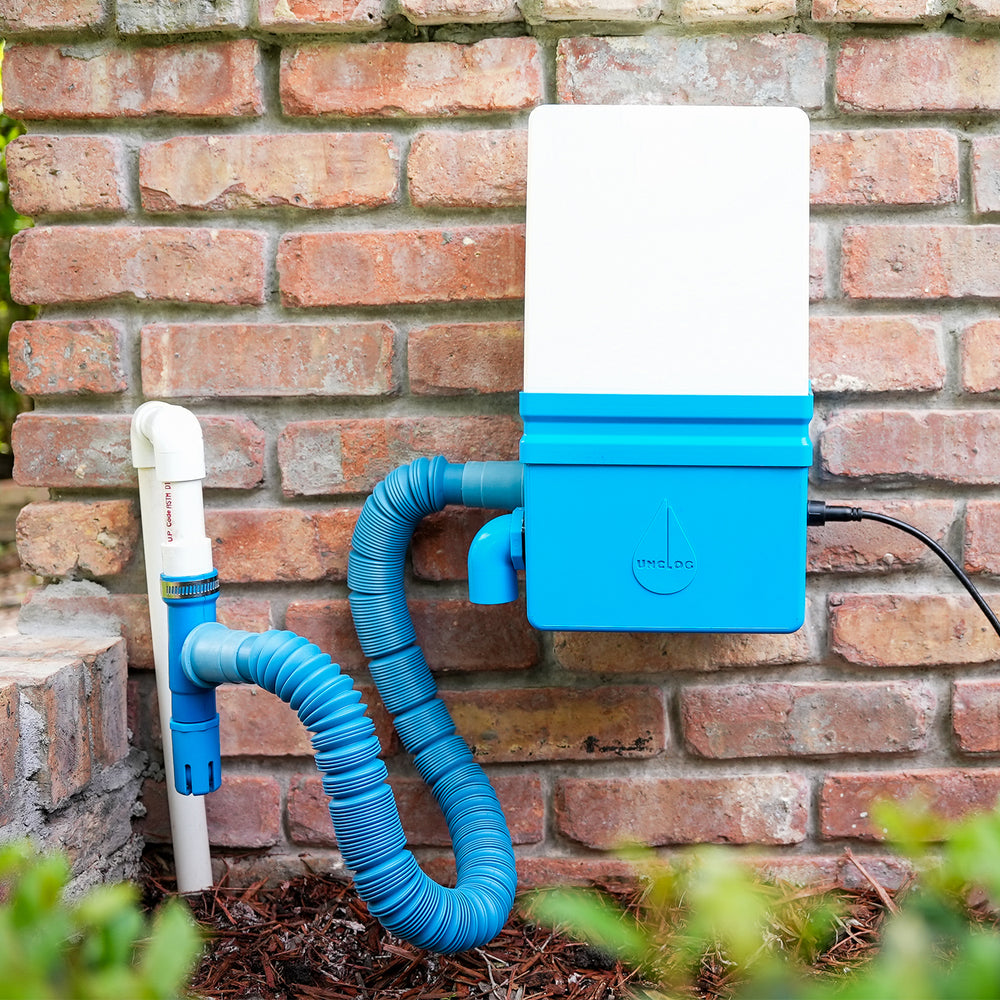
“Buried drain” can mean three different things
A covered outlet: landscaping material has accumulated around a previously exposed opening. Compare older photos if you have them. Moving loose leaves away from a known opening is different from excavating an unknown pipe or pulling on fittings.
A concealed pipe run: a pipe travels below a walkway, through a slab or under landscaping and emerges elsewhere. Seeing it enter the ground does not reveal the destination, condition or slope of the hidden section.
A separate discharge destination: the condensate route may discharge into another drainage arrangement. A pipe disappearing beside the house does not tell you whether that arrangement is designed, approved, serviceable or working. Ask the contractor to identify it rather than naming it a “dry well” from appearance alone.
The outdoor drain guide helps identify primary and secondary outlets. This guide addresses the next decision: what evidence justifies work on a route you cannot see.
What to record before a service visit
If water is spreading indoors, the auxiliary pan contains water or a safety switch has stopped cooling, protect the building first. Turn cooling off from a safe location and arrange service. Stay away from wet electrical equipment and do not bypass a float switch to keep the A/C running. An outdoor investigation should not delay an active-leak response.
For a non-emergency visit, record the equipment served, the last visible pipe location, when the symptom started and any recent landscaping or paving. Photograph the area without opening equipment or disturbing the ground. Note whether the wet patch follows rain, irrigation or cooling operation; timing is a clue, not proof of the source.
Give the contractor previous cleaning dates and results. “The problem returned two days after clearing” is more useful than “it always clogs.” Lennox identifies recurring clogs and inaccessible blockages as reasons to seek professional help. That supports investigating the cause; it does not establish which repair your home needs.

Do not use an unknown opening for a pressure, chemical or water experiment. A concealed route may include damaged joints, a pump or shared connections. If excavation is proposed, have the responsible contractor plan utility locating and safe access before work begins.
Compare cleaning, repair and rerouting by the problem they solve
A useful proposal names the suspected fault and the evidence behind it. Ask what the technician can confirm now, what remains concealed and what additional investigation would change the recommendation. Camera access is one possible diagnostic tool; ask whether it can actually reach the relevant section before treating it as a complete inspection.
| Proposed work | What it should address | What to ask |
|---|---|---|
| Clear an obstruction | Identified material restricting an otherwise serviceable route. | Where was it, and how will you verify flow to the actual destination? |
| Repair a section | A located defect, such as a damaged or disconnected section. | What evidence locates the defect, and which section is included? |
| Restore the discharge area | A confirmed problem where water leaves the route. | How will you establish that the destination can receive the discharge? |
| Reroute the drain | A documented access, drainage or design problem that cleaning alone will not solve. | Where will the new line terminate, what requirements apply and how will it be serviced? |
Clearing the inside of a pipe does not by itself demonstrate that its final destination works. Conversely, wet ground does not prove the pipe is broken. Request a monitored, equipment-appropriate flow verification and an explanation of any section that could not be assessed.
Do not approve a generic “raise the pipe” fix without a drainage review. A gravity route depends on its elevation and slope. PNNL’s Building America guidance describes pitched drainage toward the discharge point and the need to manage disposal. The professional should verify the actual route and applicable local requirements; this guide does not prescribe a universal burial depth, outlet height or disposal design.
Use the clean, repair or replace guide for broader fault decisions and the service quote worksheet to compare costs only after the scope is clear.
Underground drain service record
Copy these fields into your service notes. Separate a confirmed observation from a proposed explanation. A blank or “not assessed” field is preferable to an assumed route.
Equipment served and last visible pipe location:
Confirmed discharge destination and how it was identified:
Symptoms, timing, prior cleanings and recent site changes:
Confirmed fault, supporting photos or findings, and unassessed sections:
Proposed work, access or excavation, exclusions and authorization:
Flow verification result, remaining concerns and follow-up owner:
Future service point and optional Unclog compatibility review:
Keep the corrected outlet accessible
Ask the contractor to show you the final service point and explain what should remain visible. Share that location with landscapers and anyone doing paving or exterior work. Keep a dated photo of the normal arrangement and record changes instead of relying on memory when a symptom returns.
For a compatible outdoor termination, Unclog adds physical, scheduled suction to the maintenance plan without recurring chemicals. It does not locate an underground defect, repair bad piping, restore a failed discharge area, fix pumps or pans, thaw frozen coils or resolve an active leak. Normal drainage and the installation requirements must be established first.
Review the installation guidance together with the compatibility checklist. Then choose a routine and keep professional inspection and safety controls in place.
Explore automatic drain careQuestions about buried A/C drain lines
Is an underground A/C drain always wrong?
No universal answer follows from its appearance. A covered outlet and a deliberately routed underground drain are different situations. Have the route, discharge destination, service access and applicable local requirements checked before changing it.
Can I pour vinegar into a buried drain to find the end?
Do not add liquid to an unknown or blocked route as a tracing experiment. It can back up or escape at a damaged connection. Have the route identified and use an equipment-appropriate, monitored flow test.
Does wet soil prove the A/C drain is leaking?
No. Rain, irrigation and other plumbing can also wet the ground. Record timing and the location, then have the source confirmed before authorizing drain repairs.
Can Unclog maintain a drain that runs underground?
An underground section alone does not establish compatibility. The complete route must be understood, active faults corrected and normal flow verified. Unclog needs an accessible compatible outdoor termination and an installation that meets its instructions. An unknown buried end is not an installation point.
Sources and scope: Reviewed September 25, 2026. Lennox: clogged A/C drain guidance supports escalation for recurring or inaccessible problems. PNNL Building America: condensate drainage and disposal provides general system guidance. These sources do not establish approval of a particular underground installation. The comparison and worksheet are Unclog editorial decision aids, not field-test results.