
A/C Drain Pipe Size: PVC Measurement Chart & Record
Measuring an A/C condensate drain pipe can be confusing when the ruler and the pipe label seem to disagree. Use this PVC outside-diameter chart to identify a likely nominal size, then record exactly what you measured. If you are considering Unclog, bring that record into the full compatibility review before choosing an installation.
FROM PIPE IDENTIFICATION TO PREVENTION
Identify the connection. Then plan scheduled drain care.
Unclog uses scheduled suction at a compatible outdoor condensate termination to help remove developing buildup. App scheduling or offline presets provide recurring physical maintenance without recurring liquid treatments or tablets.
Your measurement helps describe the outlet, but the route and operating condition matter too. Correct active faults and verify normal flow first. Unclog does not repair pumps, frozen coils, damaged pans, faulty piping or active leaks.
Explore Unclog drain care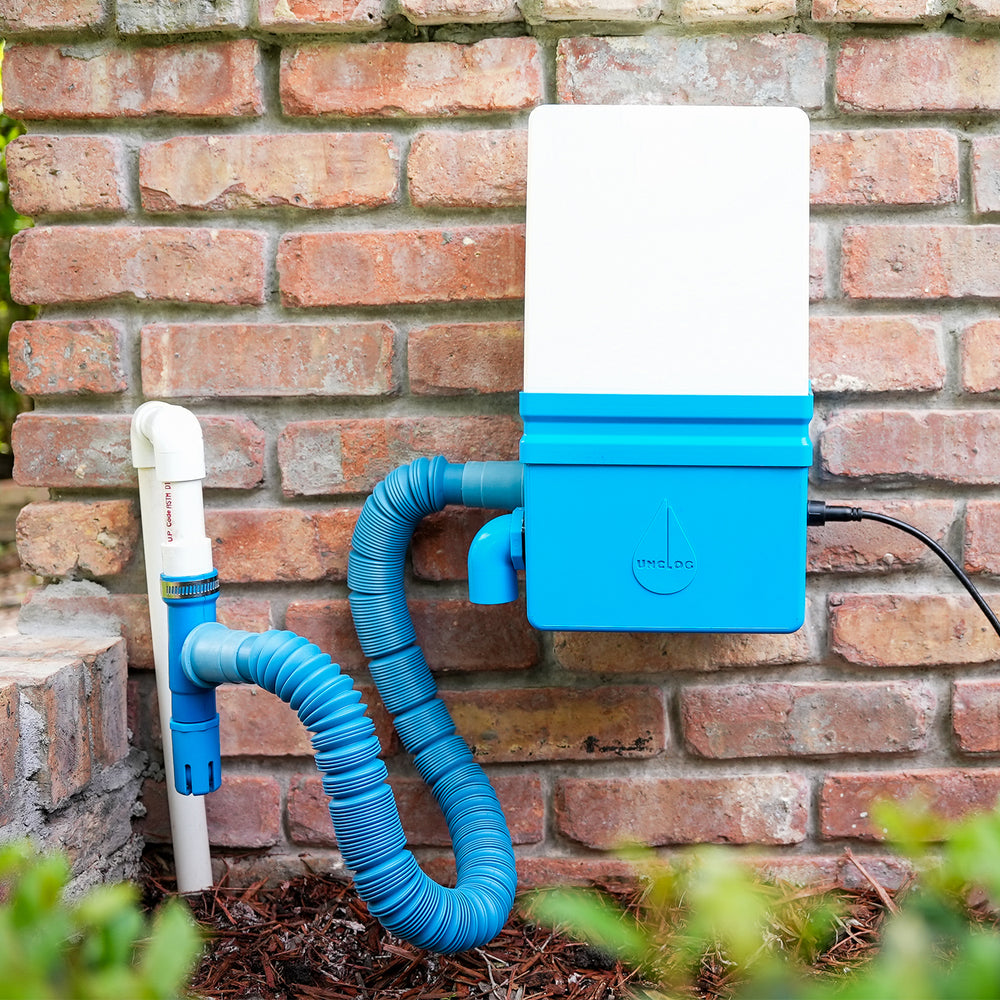
PVC outside diameter to nominal size
These three reference sizes are from FORMUFIT’s Schedule 40 PVC dimensions table. The manufacturer also shows that Schedule 80 changes wall thickness and inside diameter while retaining these outside diameters. Confirm the material and sizing system before using the chart.
| Nominal PVC size | Outside diameter (in) | Outside diameter (mm) |
|---|---|---|
| ½ inch | 0.840 | 21.34 |
| ¾ inch | 1.050 | 26.67 |
| 1 inch | 1.315 | 33.40 |
These are reference dimensions, not a promise that every field measurement will match to three decimal places. Do not treat rounded ruler readings as machining tolerances. This is not a code-sizing table, a drainage-capacity calculation or a list of interchangeable materials.
Measure the pipe, not the fitting
Start with an accessible section you can safely see. Confirm that it belongs to the condensate route you are documenting. If that is uncertain, use the outdoor drain locator guide or have the route identified professionally. A familiar-looking white pipe is not enough.
- Read the markings. Record the material, printed size and schedule when legible. Keep a photo rather than relying on memory.
- Choose exposed straight pipe. Avoid measuring across a coupling, elbow, adapter, insulation or a painted buildup. Do not remove a fitting or disturb a joint to create a measuring point.
- Record the outside measurement and units. A ruler provides a rough check; calipers can make the external measurement easier where access permits. Do not squeeze, bend or damage the pipe.
- Compare only after identification. Note the likely nominal match, and leave it unconfirmed if the material or measurement is uncertain.

You do not need to cut the line, open an electrical compartment, climb into an unsafe attic or reach near wet wiring for this record. If safe access is unavailable, leave the measurement to the service provider. A useful record can simply say “not safely accessible.”
When the numbers do not agree
Keep the raw observation separate from the conclusion. “Outside diameter approximately 1.05 inches” is more useful than silently changing it to “one-inch pipe.” The first reports what you saw; the second may select the wrong nominal size.
If the reading sits between rows, do not force a match. Recheck the units, measuring point and visible markings. Flexible pump tubing, copper tubing and other dimensional systems need their own manufacturer references. Do not assume that a nominal-size label makes different materials interchangeable.
Also keep pipe identification separate from system design. An existing pipe is not proof that its size, slope or route is correct for the equipment. A qualified provider should resolve drainage-design questions using the equipment instructions and applicable local requirements. Our slope worksheet covers a different measurement: fall along a run.
A measurement record you can copy
Copy these fields into your maintenance notes or share them with your installer. Keep unknowns visible. This record helps a person review the connection; it does not produce an automatic compatibility verdict.
System / outlet location: ____________________
Material and printed markings: ____________________
Measured point (plain pipe / other): ____________________
Outside diameter and units: ____________________
Tool used / approximate or precise: ____________________
Likely nominal size / still unconfirmed: ____________________
Photo reference and unresolved questions: ____________________
For example: “Patio-side outlet; PVC marking visible; measured exposed straight pipe; approximately 26.7 mm outside; nominal ¾-inch is the chart match; route and installation fit still to be confirmed.” This is an illustrative record, not an actual customer measurement or an approval.
Use the size record in a complete fit check
The Unclog compatibility guide covers the drain route, condition, mounting and utilities. Review it together with the installation information. A pumped, shared, unidentified or inaccessible route deserves review even when a pipe dimension looks familiar.
After the correct termination is identified, active problems are corrected and normal drainage is verified, scheduled suction can become part of ongoing care. Keep the installation decision and maintenance routine with your drain maintenance log.
See Unclog’s scheduled suction systemPipe measurement questions
Why does my ¾-inch PVC pipe measure about an inch outside?
The nominal size is a naming convention, not the measured outside diameter. The chart lists 1.050 inches outside for nominal ¾-inch Schedule 40 PVC.
Can I identify the pipe by measuring an elbow?
Use exposed straight pipe or readable markings instead. The outside of a fitting is not the pipe outside diameter used in this chart.
Does a matching diameter confirm Unclog compatibility?
No. Confirm the drain route, outdoor termination, condition, mounting and installation requirements. Size identification is only one input to that review.
Should I cut the pipe to measure the inside?
No. This guide does not require cutting or disconnecting the system. If accessible markings and external measurement are inconclusive, ask a qualified professional to identify it.
Reviewed September 2026. Dimensional reference linked above; examples and diagrams are explanatory. This page does not report product testing or replace equipment instructions.