
Often assigned to the owner
An air handler, pan, pump, trap, or branch serving one unit may be treated as an owner-maintained component. The declaration, rules, and maintenance chart must confirm it.
Use the actual drain route, governing documents, and service records to decide who coordinates maintenance before a condensate backup turns into a dispute.
Start with the quick answerBuild a clear policy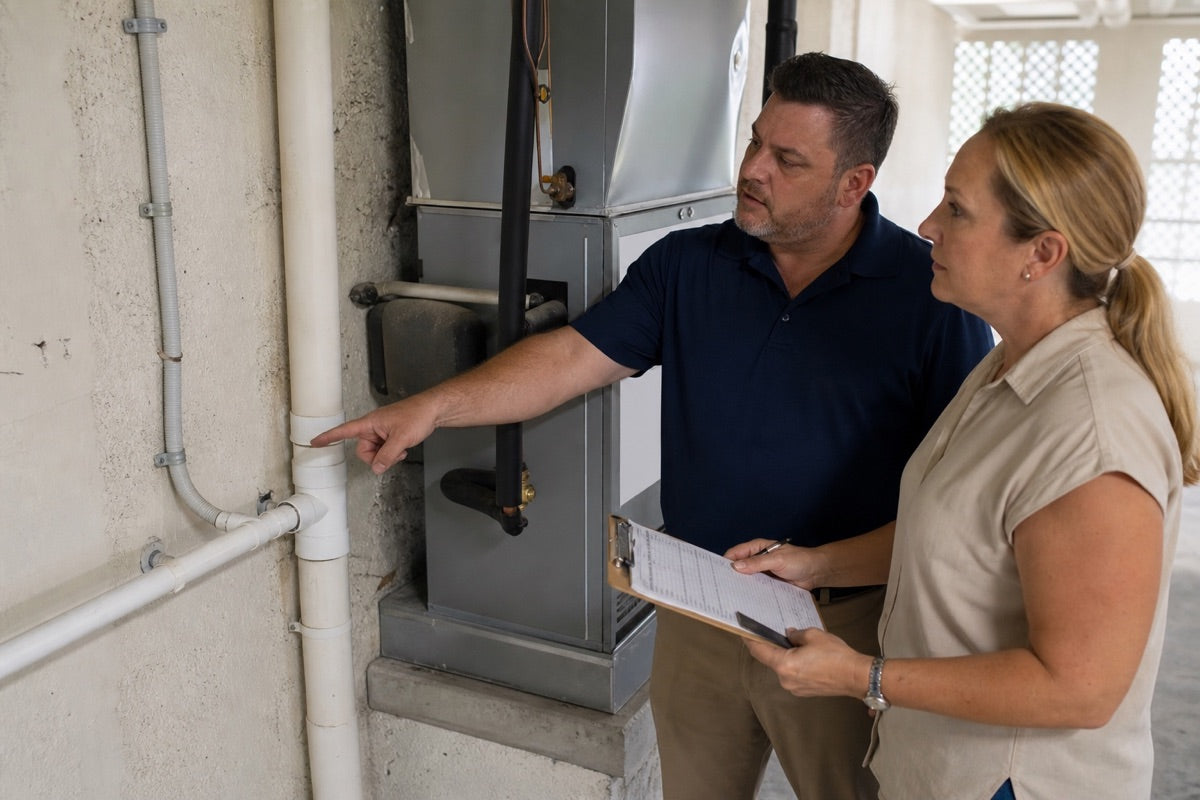
There is no universal rule that makes every condo condensate drain the owner's responsibility or every shared line the association's responsibility.
Start with three facts: what the line serves, where the association's maintenance boundary is defined, and whether the event involves routine maintenance, a repair, resulting water damage, or access. Those can be separate responsibilities even when they arise from the same overflow.
An air handler, pan, pump, trap, or branch serving one unit may be treated as an owner-maintained component. The declaration, rules, and maintenance chart must confirm it.
A riser, stack, or common drain receiving condensate from multiple units may be treated as a common element. The building documents and actual piping layout control.
The party that maintains a component is not automatically the party that pays every resulting claim. Insurance, negligence, notice, access, and local law can matter.
A dispute often begins with an incomplete sentence such as “the drain line is clogged.” A condo can have a short branch that serves one air handler, a condensate pump discharge, piping inside a wall, a shared vertical stack, or a dedicated line that terminates outside. The location of the water alone does not prove which component failed.
This diagram is conceptual. Some units drain independently from the equipment to the exterior. Others connect to shared piping, a plumbing receptor, or a condensate pump. Have a qualified professional identify the installation rather than assuming every white PVC pipe belongs to the A/C.
| Question to answer | Evidence to collect | Why it matters |
|---|---|---|
| What does the pipe serve? | Air-handler connection, unit number, equipment schedule, plans, and field verification | Separates a unit branch from a route serving several systems |
| Where does it go? | Accessible route, connection point, pump discharge, riser, receptor, or exterior termination | Identifies the components that need inspection and testing |
| Where was the restriction or defect? | Technician notes, photos, measured observations, and verified flow test | A symptom in one unit may originate downstream or outside that unit's branch |
| Was the source confirmed? | Moisture-source diagnosis and equipment inspection | Roof, plumbing, frozen-coil, pan, pump, and connection problems can resemble a clogged drain |
For a visual refresher on common parts, use the A/C condensate drain parts diagram. The condensate drain types guide explains gravity, pumped, shared, and secondary routes.
The maintenance answer may be split across several documents. A declaration might define unit boundaries and common elements, while the rules establish access procedures and a maintenance chart assigns routine service. Amendments can change older language.
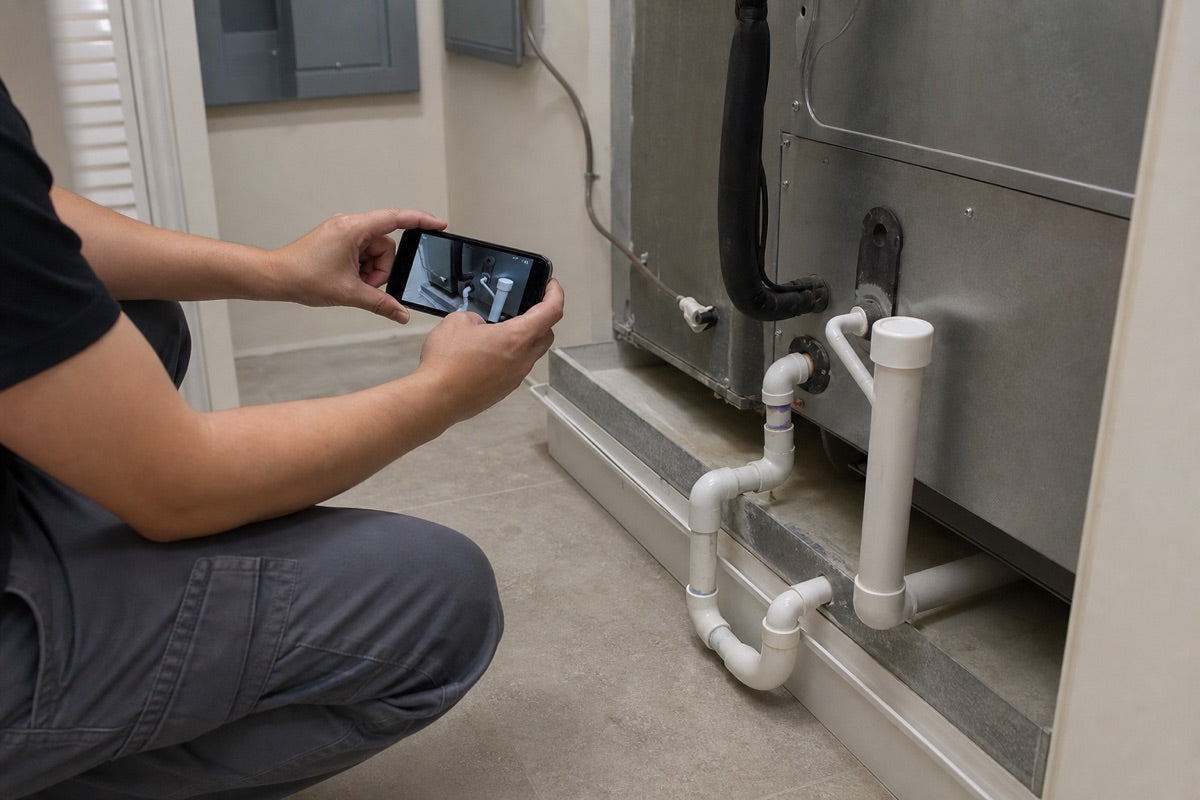
A policy is useful only when each task has an owner, a frequency, an access process, and proof of completion. The schedule should reflect equipment type, humidity, building history, drain design, manufacturer instructions, and the recommendations of the property's HVAC professional.
| Maintenance task | Party the policy must name | Completion evidence |
|---|---|---|
| Inspect unit equipment, pans, switch, pump, trap, and accessible branch | Owner, association vendor, building staff, or another specifically assigned party | Dated checklist, photos, observed condition, and open follow-up items |
| Service a shared riser, stack, or common access point | Association-selected qualified contractor when the documents assign the common route | Units or stacks served, access points used, material findings, flow verification, and exceptions |
| Coordinate entry | Manager or named coordinator | Notice date, entry status, keys or escort, refusals, return visits, and resident communication |
| Correct installation defects | Party assigned repair authority after professional diagnosis | Scope, permit or license information when applicable, before-and-after photos, and operating test |
| Review repeat events | Manager, board, and HVAC partner | Incident trend by unit, stack, cause, season, response, and unresolved building condition |
The property-manager drain maintenance guide provides a broader planning framework for multiple systems.
Do not delay an active response while the owner and association debate responsibility. Follow the building's emergency plan, keep people away from unsafe ceilings or wet electrical components, contain water only when it can be done safely, and bring in the appropriate qualified professional.
A good incident record includes the time reported, units affected, system status, photos, technician findings, exact work performed, test results, property-protection actions, and open tasks. Avoid writing “owner fault” or “HOA fault” before the cause and governing responsibility have been reviewed.
For a structured intake and dispatch sequence, see the A/C water-leak work-order triage guide.
For buildings with many independent systems, a consistent preventive platform may make tracking easier. After a qualified HVAC professional confirms that each gravity drain is correctly installed, open, accessible, and compatible, Unclog can support scheduled suction-based maintenance at the exterior drain termination. It does not diagnose an active leak, service condensate pumps or shared stacks, repair damaged piping, or replace professional maintenance.
Boards, managers, and contractors exploring a portfolio approach can review the Unclog Pro pathway.
No. Responsibility depends on the building's governing documents, the actual system design, the component involved, and the task being performed. A unit-only branch and a shared building stack may be assigned differently.
Not automatically. Shared service can be an important clue, but the declaration, amendments, maintenance provisions, contracts, local requirements, and professional findings should confirm the association's responsibility.
Repair responsibility, resulting damage, insurance coverage, deductibles, negligence, notice, and access can be separate issues. Notify management and the relevant insurers promptly, preserve evidence, and obtain qualified legal or insurance guidance rather than relying on a general rule.
Many associations establish access procedures for authorized inspection or maintenance, but the authority, notice, emergency provisions, and cost consequences depend on the governing documents and applicable law. The policy should be reviewed by qualified community-association counsel.
There is no single schedule for every building. Frequency should reflect equipment instructions, drain design, humidity, occupancy, prior clogs, pump use, shared piping, and recommendations from the property's licensed HVAC professional.
Unclog is designed for compatible gravity drain lines with an appropriate exterior termination. It is not a shared-stack cleaning service, a condensate-pump solution, or a substitute for professional diagnosis. A qualified HVAC professional should confirm suitability for each installation.
This educational resource does not determine legal responsibility for a particular condominium. Use the building documents and advice from qualified local professionals.
Clear boundaries reduce missed work. Consistent records help boards, managers, owners, and contractors act before the next overflow.
Explore property drain careVisit Unclog Pro