
A/C Drain Line Maintenance for Property Managers
A/C drain line maintenance becomes an operations problem when you manage more than one system. A missed condensate backup can mean an after-hours call, a displaced resident, ceiling repairs, or an avoidable no-cooling complaint. This guide turns drain care into a repeatable property workflow.

Why condensate drains deserve their own plan
Every cooling cycle pulls moisture from indoor air. That water should leave through the condensate drain. Warm temperatures, dust, organic debris, algae-like biofilm, poor slope, damaged insulation, and neglected drain pans can interrupt that path. The result may appear as a tripped float switch, water around an air handler, a full drain pan, a stained ceiling, or an A/C system that seems to have stopped cooling.
A drain program cannot prevent every leak. It can make failures less surprising and give technicians better information before they arrive. For a symptom-first reference, use the A/C condensate leaks hub. If cooling has already stopped, follow the safe triage steps in A/C stopped or not cooling.
Build a simple A/C drain asset map
Start with a unit-by-unit inventory. Record the air-handler location, filter size, drain-pan access, primary drain route, exterior termination, float-switch location, condensate-pump model if present, and the shutoff or access limitations a technician needs to know. Photograph each termination and label it with the building and unit number. This small step prevents crews from guessing which pipe belongs to which apartment.
| Record | Why it matters | Useful proof |
|---|---|---|
| Air handler and drain pan | Shows where an overflow is likely to appear. | Wide photo plus access notes |
| Primary drain route | Helps identify long runs, poor slope, and shared-risk areas. | Sketch or marked floor plan |
| Termination point | Gives technicians a safe place to observe flow or apply approved service methods. | Exterior photo with unit label |
| Float switch or pump | Explains why cooling stopped and what must be tested. | Model, location, last test date |
| Service history | Reveals repeat-clog units and seasonal patterns. | Date, symptom, action, outcome |
Use a schedule based on climate and history
There is no universal interval that fits every property. A humid South Florida building with long cooling seasons, interior air handlers, and a history of slime buildup deserves closer observation than a lightly used system in a dry climate. Start with manufacturer instructions and the HVAC contractor's judgment, then adjust based on documented conditions.
A practical inspection rhythm
- At every filter visit: look for standing water, wet insulation, staining, loose fittings, and a triggered safety switch.
- Before peak cooling season: inspect the full condensate path and verify the approved drain-care procedure.
- During peak humidity: recheck repeat-problem systems and occupied units with prior overflow history.
- After any backup: document the blockage location, cleaning method, water damage, and the next preventive date.
- At turnover: confirm access, labeling, pan condition, and that records follow the unit rather than the resident.
- After roof or renovation work: check for disturbed drain routing, insulation, power, and equipment access.
Do not treat bleach, vinegar, tablets, compressed gas, or a wet/dry vacuum as interchangeable. Drain construction, equipment instructions, local practice, and technician training matter. The homeowner maintenance hub explains safe observation and when to stop.
Create a response path before water appears
1. Protect people and the building
If water is near electrical components, a ceiling is bulging, or active leaking threatens occupied space, stop and use the property's emergency procedure. Do not send an untrained person into an attic or ask a resident to open powered equipment.
2. Capture the symptom
Record whether the thermostat is blank, the outdoor unit is running, the float switch is raised, the pan is full, the pump is alarming, or water is leaving the exterior termination. A short video can save a needless diagnostic round trip.
3. Route the right job
A maintenance technician may safely handle approved inspections. Refrigerant, electrical, inaccessible attic work, recurring backups, cracked pans, and unknown piping should go to a licensed A/C professional. Use the float-switch guide and the condensate-pump guide to distinguish common shutdown clues.
Choose a drain-care system that scales with the property
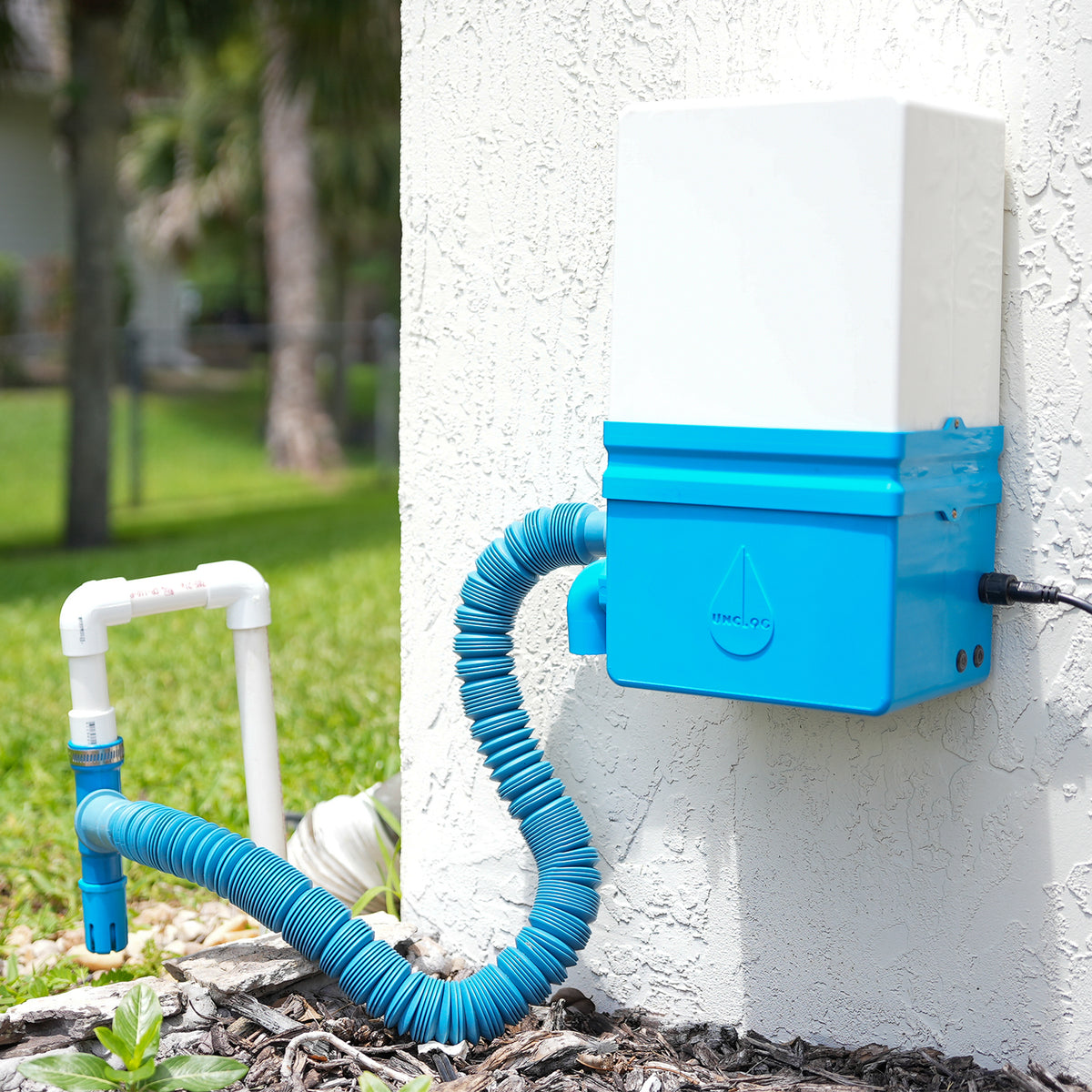
The best system is the one your team can install correctly, verify, document, and service consistently. For a few owner-managed units, the Unclog 2 Pack or Unclog 4 Pack may align with the number of independent A/C systems. Larger portfolios, installers, and service companies should review Unclog Pro and the Trade Series. Current-product depictions on this page use verified production imagery.
Match the plan to your number of systems
Start with a complete inventory, then choose the homeowner bundle or professional program that fits how the equipment is owned and serviced.
Shop 2 PackShop 4 PackExplore Unclog ProProperty-manager questions
How often should an apartment A/C drain line be checked?
Check it during routine filter and equipment visits, before peak cooling season, and more often for systems with repeat backups or long humid-season runtime. Follow the equipment maker and HVAC contractor's instructions.
Can several apartments share one condensate drain?
Some buildings have shared or connected drain paths. Shared piping increases the importance of accurate mapping because a downstream restriction can affect more than one unit. Have a qualified professional confirm the layout.
Why did the A/C stop even though the equipment is not broken?
A float switch may stop cooling when rising condensate water signals a drainage problem. Treat that shutdown as a warning. Find the source of the water instead of repeatedly resetting the switch.
Should residents clean the drain line?
Usually the property should define who may inspect or service HVAC equipment. Residents can report symptoms and protect belongings, but powered equipment, attics, electrical exposure, and unknown drain layouts belong with trained staff or a licensed professional.