

Cover: AI-generated editorial illustration of a hypothetical service follow-up. It is not an actual customer or field investigation.
If your A/C starts leaking water after coil cleaning, contact the service company and ask for a check of the complete water path. The timing matters, but it does not establish the cause. A clean evaporator coil and a working condensate drain are two separate things to verify. Unclog supports scheduled drain maintenance after the leak is diagnosed, the fault corrected and normal drainage confirmed.
AFTER THE SERVICE CALLBACK
Keep the repaired drain on a routine
Once the system is working normally, Unclog uses scheduled suction at a compatible outdoor condensate termination to help move developing buildup. It provides physical drain care without recurring liquid treatments or tablets, with app scheduling or offline presets.
That makes it a useful maintenance conversation after a drain-related repair. It does not clean the evaporator coil or correct a leaking pan, failed pump, frozen coil, faulty piping or active leak.
Explore scheduled suctionCheck your drain’s compatibility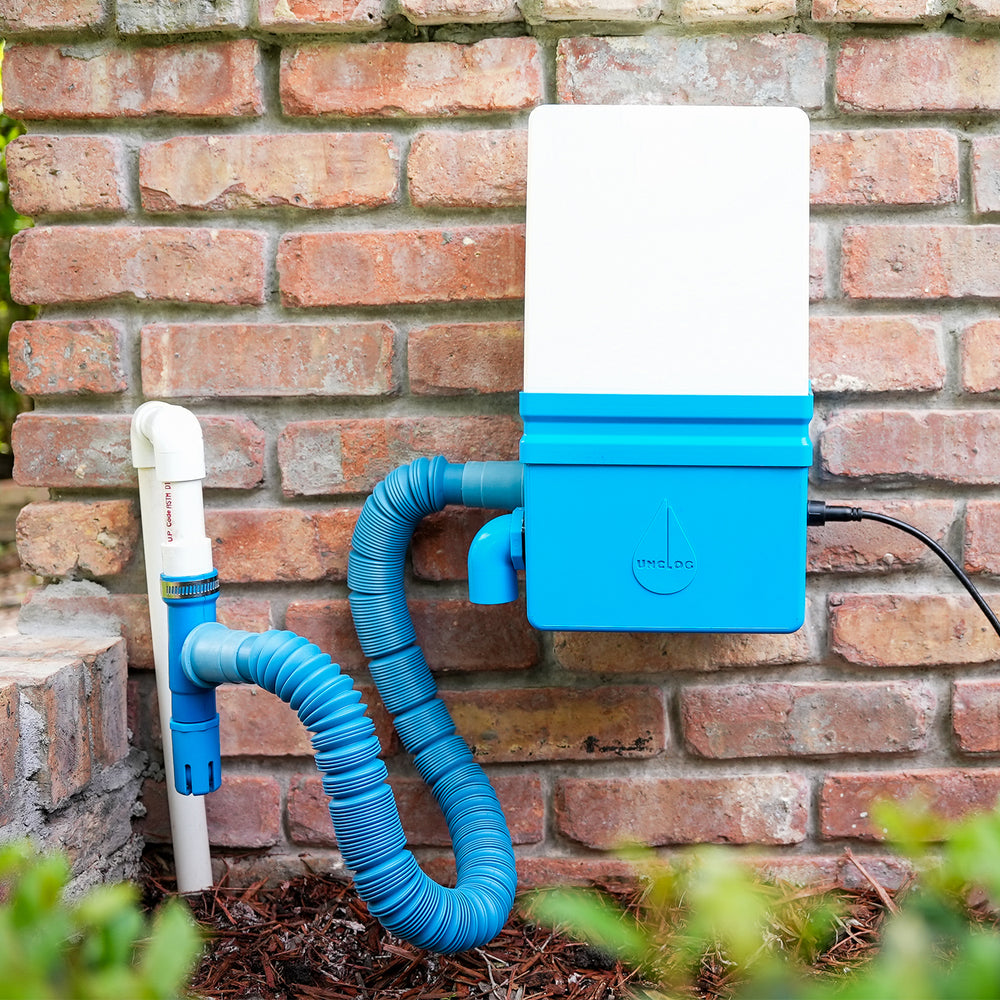
First, describe the new leak precisely
Tell the company when the visit ended, when you first noticed water and where it appeared. State whether cooling was running, had stopped, or had been stopped by a safety control. Report any visible ice, unusual cooling performance or water in a safely visible auxiliary pan. You do not need to open the cabinet to make a useful report.
Keep people away from wet lights, outlets and sagging ceilings. Do not enter an unsafe attic, bypass a float switch or remove a wet electrical panel. If water threatens electrical equipment or is spreading through the building, seek urgent professional help rather than waiting to collect a perfect record.
A sentence such as “water appeared below the cabinet an hour after the visit” preserves the observation. “The cleaner ruined the drain” adds a conclusion that has not been established. Keep the invoice and any safely obtained photos; the existing water-damage documentation checklist covers that record in detail.
Coil cleaning and drain clearing are different jobs
The indoor evaporator coil removes moisture from the air during cooling. The pan and connected drainage route must then carry that water away. Cleaning a coil addresses its surfaces. It does not, by itself, demonstrate that the pan, drain, fittings or pump are functioning correctly.
Carrier’s leaking-water guidance identifies drain blockage, frozen-coil meltwater and damaged pans as possible causes. Those possibilities still need diagnosis even when a cleaning visit happened recently. The sequence alone cannot distinguish a remaining problem from a new one.
Also confirm which coil was serviced. “Coil cleaning” on an invoice can be too vague to explain work on the indoor evaporator versus the outdoor condenser. Ask the provider to identify the equipment and work performed. Do not assume that a clean outdoor unit proves anything about the indoor condensate route.
“No rinse” does not mean “no drainage needed”
Cleaner directions are product-specific. For example, Nu-Calgon’s Evap Foam No Rinse directions describe condensate rinsing away emulsified material and give different handling for coils that do not produce condensation. The manufacturer specifies professional HVACR use.
This is a reason to ask what was used and how the provider followed the applicable directions. It is not proof that a product caused your leak, a recommendation to add it yourself, or a rule that every cleaner needs the same rinsing method.
Do not try to finish the job by pouring bleach, vinegar, household drain opener or a second coil cleaner into the system. First identify the products already used and have the technician determine the appropriate next step. Avoid guessing about chemical compatibility, concentration or rinse volume.
| Question to ask | Why the answer matters |
|---|---|
| Which coil and equipment were cleaned? | Identifies the work instead of relying on a general invoice label. |
| What exact cleaner and directions applied? | Prevents a generic “no rinse” claim from replacing product-specific instructions. |
| Was the pan and drainage route checked? | Separates surface cleaning from water removal. |
| What was observed during the final operating check? | Establishes what was actually verified and what remains uncertain. |
Make the service callback about findings
Ask the provider to trace the water from its source to the intended termination, inspect the relevant components and explain the diagnosed cause. Depending on the installed system, this may involve the pan, connections, gravity route, pump or equipment operating condition. The technician should select the tests for that equipment.
Keep observations and conclusions separate. A wet cabinet is an observation. A cracked pan is a diagnosis only after someone identifies the defect. Water seen at an outlet is useful context, but it does not independently rule out a leak elsewhere.
You can use this short message: “Since the coil-cleaning visit on [date], I noticed water at [location] while the system was [state]. Please check the source, the pan and complete drain route, and document the cause and verification after correction.” Fill in only what you know; no invented times or measurements are needed.
Before treating the leak as resolved
Ask what was corrected, how the water path was checked and whether the system was observed under appropriate operating conditions. A wiped floor or a restarted thermostat does not tell you what caused the leak. Record any unresolved condition and who will follow up.
If the drain needed repair rather than cleaning, our clean, repair or replace guide explains those different scopes. For a drip concentrated at a PVC connection, see the joint-leak repair guide. These are supporting resources, not substitutes for the callback.
After normal flow is restored, plan the next interval
Keep the service findings with your maintenance log. Follow the equipment and service recommendations for coil, filter, pan and drain care. If developing buildup in a compatible gravity drain is the maintenance concern, Unclog adds scheduled suction at the outdoor termination between appropriate inspections.
Its role is recurring drain care. It does not replace coil cleaning, repair existing faults or guarantee that no future leak can occur. Review the compatibility guide and installation information before choosing the device for your system.
Questions after coil cleaning
Does a leak after cleaning prove the technician caused it?
No. The timing should be reported, but the source and cause need inspection. Keep the service record and describe what changed without assigning an unverified cause.
Does no-rinse coil cleaner clear the drain too?
Do not assume so. The cleaner instructions address its application. The pan and complete drain route still need separate verification when water is escaping.
Should I keep running the A/C to rinse the cleaner?
If water is leaking into the house, do not keep running it as a rinsing experiment. Turn cooling off if safe and contact the service provider for equipment-specific guidance.
Can Unclog fix a leak immediately after coil cleaning?
Unclog is for scheduled maintenance on a compatible drain after diagnosis, correction of active faults and confirmation of normal flow. It does not repair an active leak or clean the evaporator coil.
Finish the repair, then choose ongoing drain care
Get a clear service explanation and verified drainage first. For a compatible, normally flowing outdoor termination, explore how scheduled suction can fit the maintenance plan.
See how Unclog worksEditorial review: September 2026. Sources linked above are manufacturer guidance, not findings about your equipment. This article does not report a field test or replace equipment instructions and professional diagnosis.