
Changing an air filter and then finding an A/C water leak can make the new filter look responsible. But timing is a clue, not proof. A previously frozen coil may be melting, an existing drain problem may have become visible, or the filter and airflow requirements may need review. Unclog supports suction-based prevention at a compatible outdoor drain termination after the actual fault is corrected and normal flow is verified.
Unclog handles drain buildup—not filter airflow
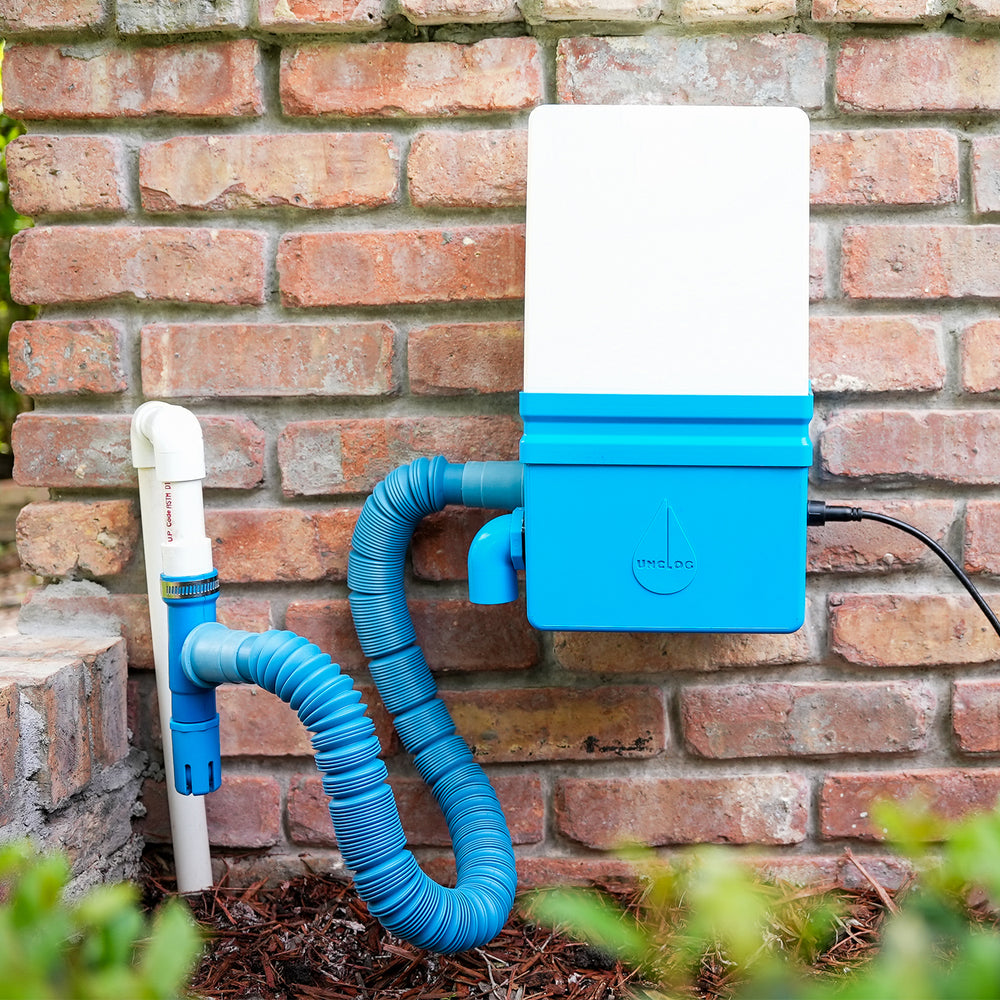
If diagnosis confirms a drain restriction, correct it and prove normal drainage first. Then Unclog can add scheduled suction at a compatible outdoor termination to help remove developing buildup through physical maintenance without recurring chemical cartridges. App control and offline presets support a repeatable routine.
A filter change and drain maintenance address different parts of the system. Review Unclog compatibility before choosing prevention; no outdoor pipe alone proves the installation is suitable.
What was happening before you changed the filter?
Write a short sequence rather than starting with a diagnosis: cooling or airflow problem noticed; filter replaced; cooling restarted or stopped; water first seen. Include whether there was already dampness when the filter was removed. Discovering water during a maintenance task does not establish that the task created it.
A dirty filter can contribute to restricted airflow and coil freezing. Replacing it does not make accumulated ice disappear instantly or establish that the filter was the only cause. Water appearing after cooling stops can be meltwater, but a drain or pan problem can occur at the same time. The indoor A/C leak guide covers the broader causes; this checklist focuses on what to preserve and check after a filter change.
Safe checks on the replacement filter
With the system off, compare the filter’s printed dimensions and model information with the installed equipment instructions and the intended filter location. Note the airflow arrow and whether the filter sits properly in its accessible holder. If access requires removing equipment panels, reaching near wiring or climbing into unsafe spaces, leave that inspection to a technician.
Record the old and new filter type and MERV rating, if shown. Do not assume a higher rating is suitable for every system, or that matching the nominal size alone establishes the right replacement. Ask the technician to confirm the equipment’s filter requirements and operating airflow when the cause is uncertain. Do not run without a filter or alter the cabinet as a trial repair.
A wet replacement filter deserves attention. Do not hide the symptom by repeatedly replacing wet filters. Photograph the accessible wet area and ask where the water is coming from. The point is to preserve evidence while the leak source is identified.
Use the clues to frame the service request
| Clue | What to ask | What it does not prove |
|---|---|---|
| Weak airflow or visible frost | Check for freezing and its airflow or refrigerant cause. | That the new filter is the only fault. |
| Water grows after cooling stops | Check for thawing ice and a working drainage route. | That clearing the drain alone resolves the cause. |
| Water in a pan or a tripped safety switch | Check pan, drain, pump where present and switch condition. | That it is safe to reset or bypass the switch. |
| Water at an accessible pipe joint | Check the fitting and trace the actual source. | That the filter change caused a piping leak. |
Stop cooling if the leak continues. Do not chip coil ice, apply heat, add refrigerant, pour a cleaner into an unidentified opening or keep restarting a system that has shut down. Water near wiring or controls, a ceiling leak and an inaccessible air handler call for prompt professional help.
Give the technician a concise before-and-after record
Use this description: “I changed the filter at ____. The old filter was ____, and the replacement is ____. Before the change I noticed ____. Water first appeared at ____ while the system was ____. I saw / did not see visible ice from a safe location.”
Keep a photo of each filter label and the first wet location. Tell the technician whether the thermostat was calling for cooling and whether the indoor blower was running. Do not reproduce the leak intentionally to make a video.
Ask what caused the water, whether the replacement filter meets the equipment requirements, and how normal airflow and drainage were verified. A repair should explain the cause as well as the dry floor. If the float switch tripped, ask for the reason and proper restoration; never defeat it.
After repair, protect the part that actually failed
If airflow or a frozen coil caused the leak, follow the equipment’s filter and service requirements. If a pump, pan or pipe failed, repair that component. Unclog cannot repair frozen coils, pumps, pans, bad piping or active leaks.
If a drain blockage contributed, restore the route and verify normal flow before planning prevention. At a compatible outdoor termination, Unclog’s scheduled suction helps maintain the drain through physical removal of developing buildup. Follow the installation instructions and keep inspection in your routine. It is not an emergency substitute for clearing a blocked line.
Common questions
Does a leak after changing the filter prove the new filter caused it?
No. The sequence is useful evidence, but diagnosis must distinguish airflow, ice, drainage and equipment faults.
Does replacing a dirty filter clear the condensate drain?
No. Filter replacement does not remove a drain obstruction or prove normal flow.
Can Unclog fix a wet filter or frozen coil?
No. Resolve the equipment or airflow fault first. Unclog supports drain-line prevention at a compatible outdoor termination after normal flow is verified.
Next step: Preserve the filter details and get the active leak diagnosed. For a repaired drain-related problem, check whether Unclog fits your installation.
Manufacturer reading: Trane: air handler dripping water. General education; use the installed equipment instructions and an on-site diagnosis.