
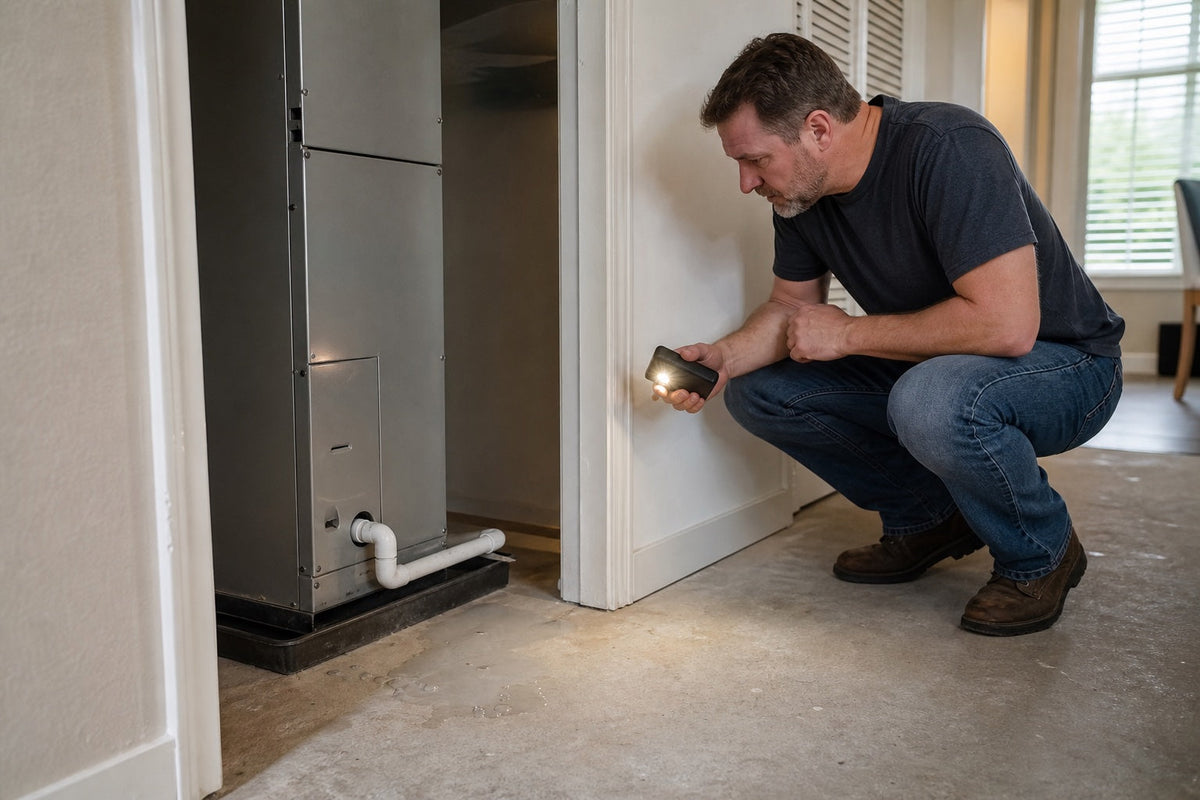
Short answer: an A/C leaking water inside the house usually means condensate is no longer reaching its intended drain. A clogged or disconnected drain line is a common cause, but it is not the only one. A frozen evaporator coil, damaged drain pan, failed condensate pump, poor equipment drainage, or condensation forming on an uninsulated cold surface can produce a similar puddle.
The location and timing of the water are the best starting clues. Water directly below the indoor air handler points toward the coil, pan, drain, pump, or nearby piping. A ceiling stain below attic equipment deserves faster action because water may already be moving through insulation and drywall.
If water is touching electrical equipment, spreading across finished flooring, dripping through a ceiling, or collecting faster than you can contain it, turn the cooling system off at the thermostat and call a qualified A/C professional. Do not bypass a float switch or keep restarting a system that has shut itself down.
First, protect the house
Stop the source before trying to name the exact failure. Switch cooling off. Move belongings away from the wet area if that can be done without reaching around electrical equipment. Place a dry container or absorbent towels where they will not interfere with the unit, drain pan, wiring, or service access.
Do not remove a wet electrical panel. Do not drill a ceiling stain to release water. Do not pour a cleaner into an unidentified PVC opening. A vertical fitting near the air handler may be a cleanout, vent, trap connection, float-switch port, or part of a condensate pump arrangement.
Take a few photos before drying the area. Record whether the A/C was cooling normally, whether a float switch stopped it, whether you saw frost, and whether the outdoor drain outlet was dripping. Those observations can shorten a technician's diagnosis.
Find the wettest safe point

Water can travel along a cabinet seam, pipe, platform, duct, joist, or refrigerant line before it becomes visible. The first drip you notice may not be the source. Begin at the wettest point you can see safely, then look uphill and upstream without opening the equipment.
- Water in an auxiliary pan: the primary drainage path or equipment may have a problem. The auxiliary pan is a warning area, not the normal destination for condensate.
- Water around the drain connection: look for a loose fitting, cracked pipe, missing cap, backed-up trap, or overflowing primary pan.
- Water after the system shuts off: melting coil ice can release more water than the drainage system can handle.
- Water only when the pump runs: inspect the condensate pump reservoir, discharge tubing, check valve, and connection.
- Droplets on the outside of a cold pipe or duct: the moisture may be surface condensation caused by missing insulation or humid air reaching a cold surface.
Cause 1: the condensate drain is clogged, disconnected, or leaking
During cooling, moisture from indoor air condenses on the evaporator coil, falls into the primary pan, and leaves through the condensate drain. Dust and biological material can narrow that route. When water cannot move through the line, it rises in the pan and may trip a safety switch or spill into an auxiliary pan.
A clog is more likely when the A/C recently stopped running, the float switch is raised, the primary pan has standing water, the outdoor drain outlet is not dripping during humid operation, or suction removes soft debris from the termination. A disconnected fitting or cracked PVC section may instead leak while the rest of the line remains open.
Start with the clogged A/C drain-line troubleshooting guide. If the correct outdoor termination is accessible and the equipment is safe to work around, the complete drain-line cleaning guide explains how suction and a controlled flow test are used. Stop if the route cannot be identified, the pan is damaged, or water is near wiring.
Cause 2: a frozen evaporator coil is melting

A frozen indoor coil stores water as ice. When cooling stops, that ice can melt quickly and overwhelm the pan or drain. Clues include weak airflow, poor cooling, frost on the refrigerant tubing near the indoor unit, or a puddle that grows after the thermostat is turned off.
Restricted airflow from a heavily loaded or poorly fitted filter can contribute to freezing. A dirty coil, blower problem, blocked return, or low refrigerant condition can also be involved. Replacing a dirty filter may correct one airflow restriction, but it does not prove the cause or repair a refrigerant leak.
If you see frost or ice, leave cooling off and call an A/C professional. Do not chip ice from the coil, apply heat, or open refrigerant components. Continuing to run a frozen system can damage equipment, and the meltwater still needs a clear route away from the unit.
Cause 3: the primary or auxiliary drain pan is damaged

A pan can corrode, crack, warp, or develop a failed seam. Water may drip through the damaged area even when the drain line is open. Older metal pans can develop localized rust-through. Plastic pans can split near a fitting or support point.
A damaged pan is more likely when water appears at the same cabinet corner during every cooling cycle, the drain outlet is flowing normally, or a visible crack or rust trail leads to the drip. Staining beneath the pan can show that the leak has happened before.
Pan damage is a repair problem. Sealants applied from the outside often hide the symptom without addressing corrosion, movement, or an inaccessible crack. A technician should inspect the primary pan, auxiliary pan, drain connections, cabinet, and equipment supports.
Cause 4: the condensate pump is not moving water

Some systems cannot drain by gravity and use a small condensate pump. Water enters the reservoir, raises an internal float, and is pushed through flexible tubing to an approved discharge point. If the pump loses power, sticks, clogs, or develops a blocked outlet tube, its reservoir can overflow.
A pump problem is more likely when the reservoir is full, you do not hear the pump cycle, the pump runs continuously, or water appears around the pump rather than the air-handler drain connection. A kinked or disconnected discharge tube can also leak only while the pump is operating.
Turn the system off before water reaches the pump's electrical connection. Do not probe a wet pump or defeat a pump safety circuit. A technician can test power, the float, check valve, reservoir, tubing, and discharge route.
Cause 5: cold surfaces are sweating
Not every puddle is water escaping from the drain system. Humid air can condense on a cold refrigerant suction line, uninsulated drain pipe, metal supply plenum, or air-handler cabinet. The outside of the component becomes wet, and droplets fall to the floor.
Surface condensation is more likely when water beads evenly along the outside of a pipe or duct, the drain pan is not full, and the problem worsens on humid days. Missing, split, or compressed insulation is a common visual clue.
Do not wrap wet material and assume the problem is solved. The surface should be inspected for correct insulation, air leakage, temperature, and drainage. Persistent cabinet sweating can also indicate an airflow, humidity, or installation issue.
Cause 6: the equipment or drain layout is not carrying water correctly
An air handler that is not level, a reverse-pitched drain, a sagging pipe, an incorrect trap, or a poorly placed vent can leave water where it should not remain. The line may pass a large flush while still holding a shallow pool during normal operation.
Recurring leaks after repeated cleanings are a strong reason to inspect the complete route instead of clearing the outdoor end again. Our guide to drain lines that keep clogging explains how pitch, traps, retained debris, and outlet obstructions create repeat problems.
Drain configuration depends on the equipment and installation. Do not lift, cut, cap, or rehang piping without the unit instructions and an understanding of the trap and vent requirements.
Use the symptoms to choose the next step
| What you notice | More likely direction | Best next step |
|---|---|---|
| Standing water in the pan and no flow at the known outlet | Drain restriction or disconnected route | Turn cooling off, confirm the route, then clear and flow-test it or call a technician |
| Weak airflow, poor cooling, or visible frost | Frozen evaporator coil | Leave cooling off and arrange professional diagnosis |
| Normal outlet flow but a repeated drip from one pan corner | Cracked, corroded, or poorly supported pan | Have the pan and cabinet inspected |
| Full pump reservoir or leak only when the pump cycles | Pump, tubing, or check-valve problem | Keep water away from power and have the pump system tested |
| Beads of water on the outside of a cold pipe or duct | Surface condensation or missing insulation | Inspect insulation, air leakage, humidity, and equipment operation |
What a complete repair should prove
Drying the floor is not proof that the cause is fixed. A complete diagnosis should identify where the water formed, how it was supposed to leave, and why it reached the house instead.
For a drainage problem, controlled test water should travel from the correct service point to the identified termination without backing up or leaking. The primary pan, auxiliary pan, pump, fittings, and visible pipe should remain dry afterward. Caps, vents, traps, float switches, and service panels must be restored correctly.
For a frozen coil, pan failure, pump problem, or sweating surface, the related airflow, refrigerant, mechanical, insulation, or installation condition must be corrected. Simply clearing the drain does not fix those causes.
Preventing the next condensate leak
Keep the air filter correctly sized, fitted, and replaced on a schedule that matches the home. Have the coil, pans, drain, pump, safety switches, and equipment supports inspected during routine service. Keep the outdoor condensate outlet visible and away from mulch, soil, and clippings.
After a compatible residential drain is open, intact, and flowing correctly, Unclog can support prevention with scheduled suction cycles that help move accumulating material before it becomes a complete blockage. It does not repair a frozen coil, cracked pan, failed pump, bad pipe pitch, refrigerant problem, or active leak. Correct those conditions first.
For a climate- and system-specific routine, use the guide to how often an A/C drain line should be inspected and cleaned.
Frequently asked questions
Can I run my A/C if it is leaking water inside?
No. Turn cooling off until the source is identified, especially when water is near electrical equipment, finished surfaces, a ceiling, or insulation. Continued operation can create more condensate and worsen property damage.
Does water near the indoor unit always mean the drain line is clogged?
No. A clogged line is common, but a frozen coil, damaged pan, failed pump, loose fitting, equipment-level problem, or surface condensation can create similar symptoms. Inspect the complete water path before choosing a repair.
Why does the A/C leak after I turn it off?
Ice on a frozen evaporator coil may melt after cooling stops. The resulting water can overwhelm a restricted drain or damaged pan. Leave the system off and have the freezing cause diagnosed.
Why is water dripping from the secondary drain outside?
A secondary or emergency drain that suddenly begins dripping can indicate that the primary drainage path is not working normally. Treat it as a warning and have the primary pan, drain, trap, pump, and outlet checked.
Can Unclog stop every kind of A/C water leak?
No. Unclog is designed to support drain-line prevention on a compatible system after the drain is open and working correctly. It cannot repair damaged equipment, frozen coils, pumps, pans, insulation, piping slope, or refrigerant conditions.
Reviewed July 2026. This article provides general homeowner education and does not replace the installed equipment instructions, local requirements, or an on-site diagnosis.