
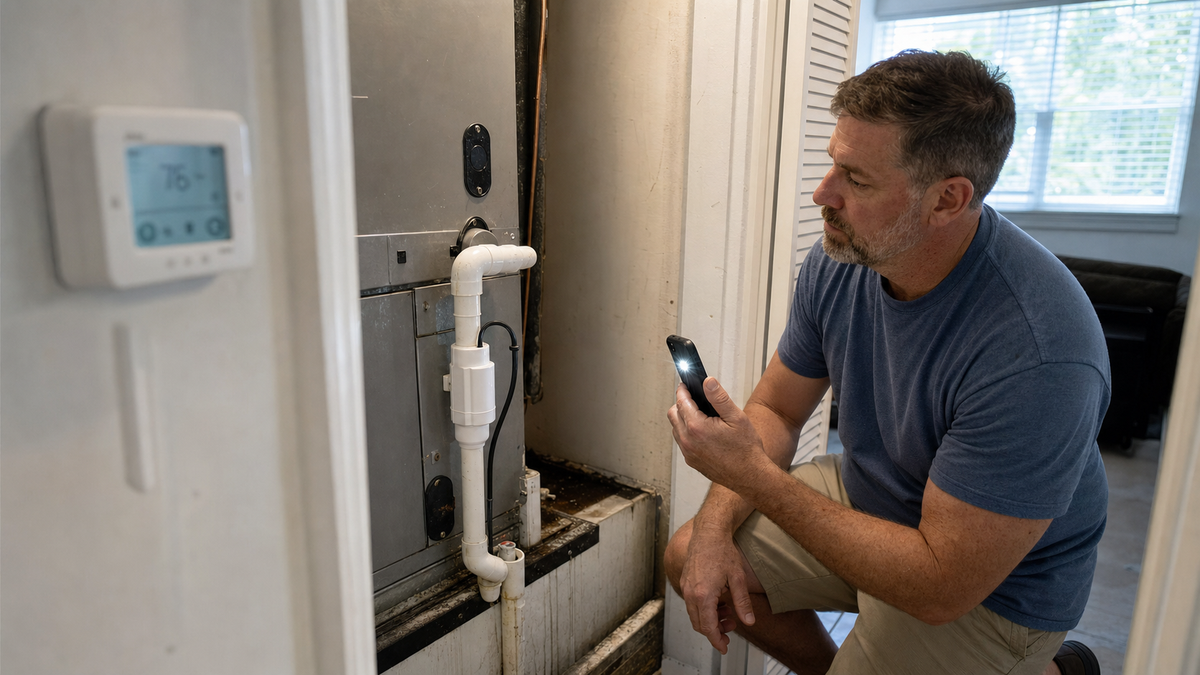
If your thermostat is calling for cooling but the A/C suddenly stopped, a tripped condensate float switch may be doing exactly what it was installed to do. The switch senses water rising where it should not. It interrupts the cooling circuit before that water can overflow into a closet, attic, ceiling, or finished room.
A tripped float switch is a warning, not a diagnosis. A clogged condensate drain is a common cause, but it is not the only one. A full auxiliary pan, failed condensate pump, frozen coil, damaged drain connection, or faulty switch can produce a similar shutdown.
What an A/C float switch actually does

An air conditioner removes humidity while it cools. Moisture condenses on the indoor evaporator coil, falls into a drain pan, and leaves through the condensate drain. When that water path backs up, a float switch rises with the water level. The switch then opens a low-voltage control circuit and stops cooling before the pan overflows.
That is why a float-switch shutdown can feel confusing. The thermostat may look normal. The outdoor unit may be silent. The indoor blower may stop or continue running, depending on how the switch and controls are wired. The real clue is water where the float switch is installed.
Float switches are safety devices. They do not remove the blockage, empty the pan, repair a pump, or fix a frozen coil. They buy you time to find the cause.
Where the condensate float switch may be located
There is no single location that fits every system. Installers choose a switch type and location based on the equipment, drain layout, local code, and the risk of water damage.
- Primary drain-line switch: installed in a PVC fitting near the air handler. Rising water in the drain chamber lifts the float.
- Secondary drain-port switch: installed in the overflow opening of the equipment pan. Water reaches it when the primary path is not keeping up.
- Auxiliary pan switch: clipped or mounted to the larger safety pan beneath an attic or horizontal unit.
- Condensate pump safety switch: built into or connected to a pump reservoir. It can stop cooling when the pump cannot move water away.
- Wet switch or water sensor: sits beneath equipment and reacts when water reaches the sensor.
You may have more than one protection device. Do not assume the first switch you see is the only one.
Why the float switch tripped
1. The condensate drain is clogged or restricted
Soft biological buildup, dust, sediment, insects, or debris at the outdoor termination can slow the drain. Water then rises in the pan, trap, or switch chamber. A fully blocked line is obvious, but a partial restriction can also trip a switch during long, humid cooling cycles.
If the line has been cleared repeatedly and the problem returns, look beyond the visible opening. Poor pitch, a sag, an incorrectly configured trap, debris left in the pan connection, or an outlet that keeps getting blocked can hold water inside the route. Our guide to why A/C drain lines keep clogging explains how to separate regrowth from a layout problem.
2. Water reached the auxiliary drain pan
An auxiliary pan is a second line of defense beneath equipment. Water there usually means the primary drainage path is not working normally, the primary pan is leaking, or condensate is missing its intended path. Emptying the safety pan without correcting the source does not finish the repair.
3. The condensate pump is full or has failed

Some systems cannot drain by gravity and use a small pump. A failed motor, lost power, stuck pump float, clogged intake, kinked discharge tube, or blocked discharge route can fill the reservoir. Many pumps include safety contacts that stop the A/C before water spills over.
A pump problem calls for a pump diagnosis. Pouring cleaner into the gravity drain or working at an outdoor drain termination will not restore a pump that has no power or cannot discharge.
4. A frozen coil melted faster than the drain could manage
Restricted airflow, a dirty filter, blower trouble, low refrigerant, or another equipment problem can allow ice to form on the evaporator coil. When the ice melts, water may arrive in the pan in an unusual volume or miss the pan altogether. If you see frost or ice, leave cooling off and arrange service. Do not chip ice from the coil.
5. The switch, wiring, or installation needs attention
A switch can be mounted at the wrong height, bind mechanically, collect debris, or develop an electrical fault. Loose low-voltage wiring and control problems can also mimic a tripped switch. Because diagnosing those faults requires opening equipment and testing a control circuit, that part belongs to an HVAC professional.
A safe homeowner checklist
- Turn cooling off at the thermostat. If water is near electrical equipment, stop and call a professional.
- Protect the area. Move belongings, catch active drips, and note any ceiling or wall staining.
- Look without opening energized panels. Check the visible drain pan, float-switch chamber, condensate pump reservoir, and nearby floor.
- Check the air filter. A badly restricted filter can contribute to coil icing, but changing it will not clear a backed-up drain.
- Find the correct outdoor drain termination. Do not guess. Water heaters, plumbing drains, and secondary warning drains can look similar.
- Choose the next step from the evidence. A full pump, frozen coil, cracked pan, active ceiling leak, or uncertain piping route needs a different response than an accessible condensate-line clog.
| What you see | What it suggests | Safest next step |
|---|---|---|
| Water high in an inline switch chamber | The drain downstream may be restricted | Keep cooling off and inspect the complete condensate route |
| Water in the auxiliary pan | The primary path, pan, or connection is not working normally | Protect the area and have the source traced |
| Full condensate pump reservoir | Pump power, float, intake, or discharge trouble | Do not keep adding water; arrange pump diagnosis |
| Ice or heavy frost | An airflow or refrigeration problem may be involved | Leave cooling off and call an HVAC professional |
| Switch looks dry but A/C will not start | The shutdown may have another electrical or mechanical cause | Do not assume a drain clog; schedule diagnosis |
What not to do after a float-switch shutdown
- Do not bypass, tape down, or remove the safety switch.
- Do not reset the system repeatedly while water continues to rise.
- Do not pour chemicals into an unidentified opening.
- Do not mix bleach, vinegar, drain cleaner, or other chemicals.
- Do not use high pressure unless the drain assembly and destination are known and designed for it.
- Do not open electrical panels or reach into wet equipment.
If you have positively identified a simple, accessible condensate drain and the situation is dry and safe, follow a method that matches the system. The step-by-step guide to cleaning an A/C drain line safely explains when a wet/dry vacuum may be appropriate and when to stop.
How to know the real problem is fixed

The A/C restarting is not enough. A switch can drop after water is removed even while the underlying restriction remains. A complete result should include all of the following:
- The pan, switch chamber, pump reservoir, and visible fittings are no longer holding abnormal water.
- Controlled test water reaches the correct termination without backing up or leaking.
- The float moves freely and returns to its normal position.
- The condensate pump, if present, cycles and discharges normally.
- The system runs through a cooling cycle without the water level rising again.
Proof of flow matters because opening only part of a blockage can create a temporary restart. If the switch trips again, if the pipe leaks, or if you cannot prove the route, stop and call a professional.
Keep a dated baseline after the repair. Use the A/C condensate drain maintenance log to record the identified outlet, observed flow, float-switch condition, service performed, and next inspection date. Share that record with your HVAC professional if the shutdown returns.
How to reduce repeat float-switch trips
Prevention starts after the active problem has been corrected. Keep the filter fitted correctly, keep return-air areas clean, make sure the outdoor termination stays open, and include the pan, trap, pump, switch, and visible piping in seasonal HVAC service.
For a compatible gravity drain that is open, intact, and already flowing correctly, Unclog is designed to support ongoing drain-line prevention with recurring suction cycles at the outdoor termination. It does not replace a float switch and it does not repair a failed pump, frozen coil, cracked pan, bad wiring, poor slope, or active blockage.
For broader symptom diagnosis, visit the A/C stopped or not cooling hub. If water is already inside the home, use the guide to an A/C leaking water indoors.
Choosing additional protection after the cause is corrected? Compare A/C leak detectors, float switches and scheduled drain maintenance to understand which option alerts you, interrupts cooling or helps maintain the drain. Keep the existing safety switch in service.
Frequently asked questions
Can I reset an A/C float switch?
The float should return to its normal position only after abnormal water is removed and the cause is corrected. Repeatedly resetting or holding the switch down is not a repair. If the switch does not move freely or cooling still will not start, call an HVAC professional.
Does a tripped float switch always mean the drain line is clogged?
No. A clogged or restricted drain is common, but a full auxiliary pan, failed condensate pump, frozen coil, damaged pan, installation problem, or faulty switch can create the same symptom.
Where is the A/C float switch located?
It may be in the primary or secondary PVC drain near the air handler, clipped to an auxiliary pan, built into a condensate pump, or replaced by a separate water sensor. Some systems have more than one.
Can I bypass the float switch to get the A/C running?
No. The switch is intended to stop water damage. Bypassing it can let condensate overflow into the home and can expose you to electrical hazards.
Will Unclog replace a condensate float switch?
No. A float switch is a safety device. Unclog is designed to support preventive drain care on a compatible, open, intact gravity drain after the active cause of a shutdown has been corrected.