
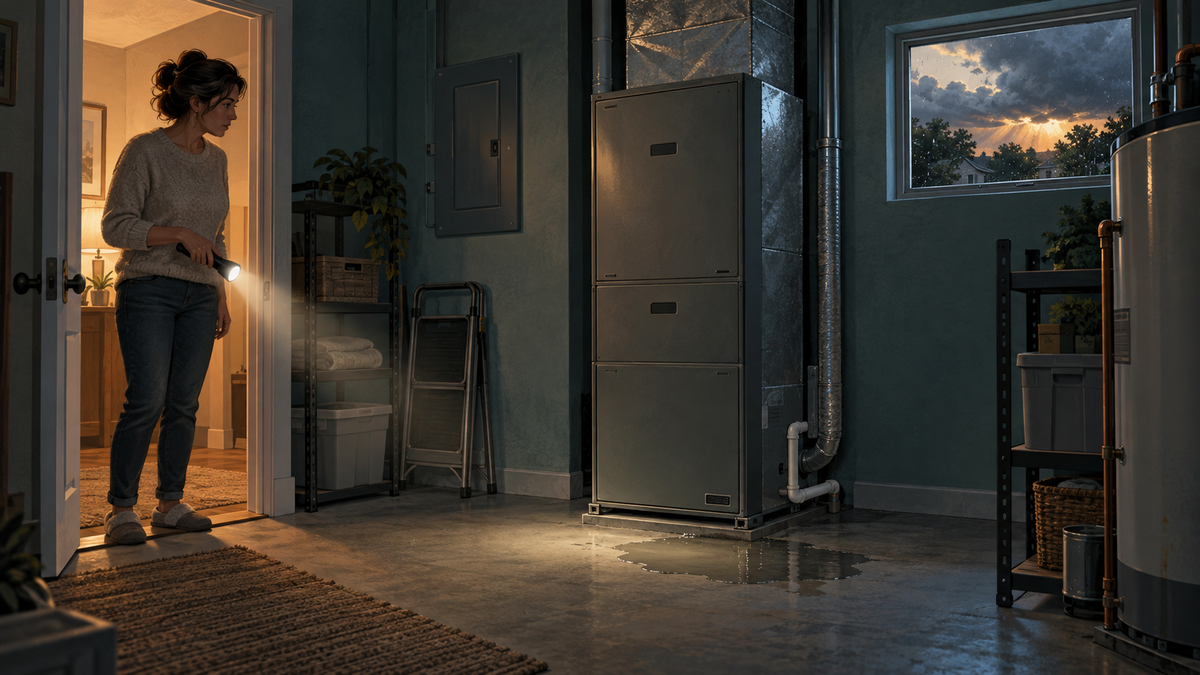
Cover: AI-generated editorial illustration, not a photograph of a customer installation or product test.
The lights come back on, the thermostat wakes up, and then you notice water beside the air handler. Resist the urge to keep restarting the system. The useful questions are when the water appeared, where it began, and whether your system drains by gravity or uses a pump. This guide organizes those observations into a practical post-outage check.
MAKE PREVENTION PART OF THE RECOVERY PLAN
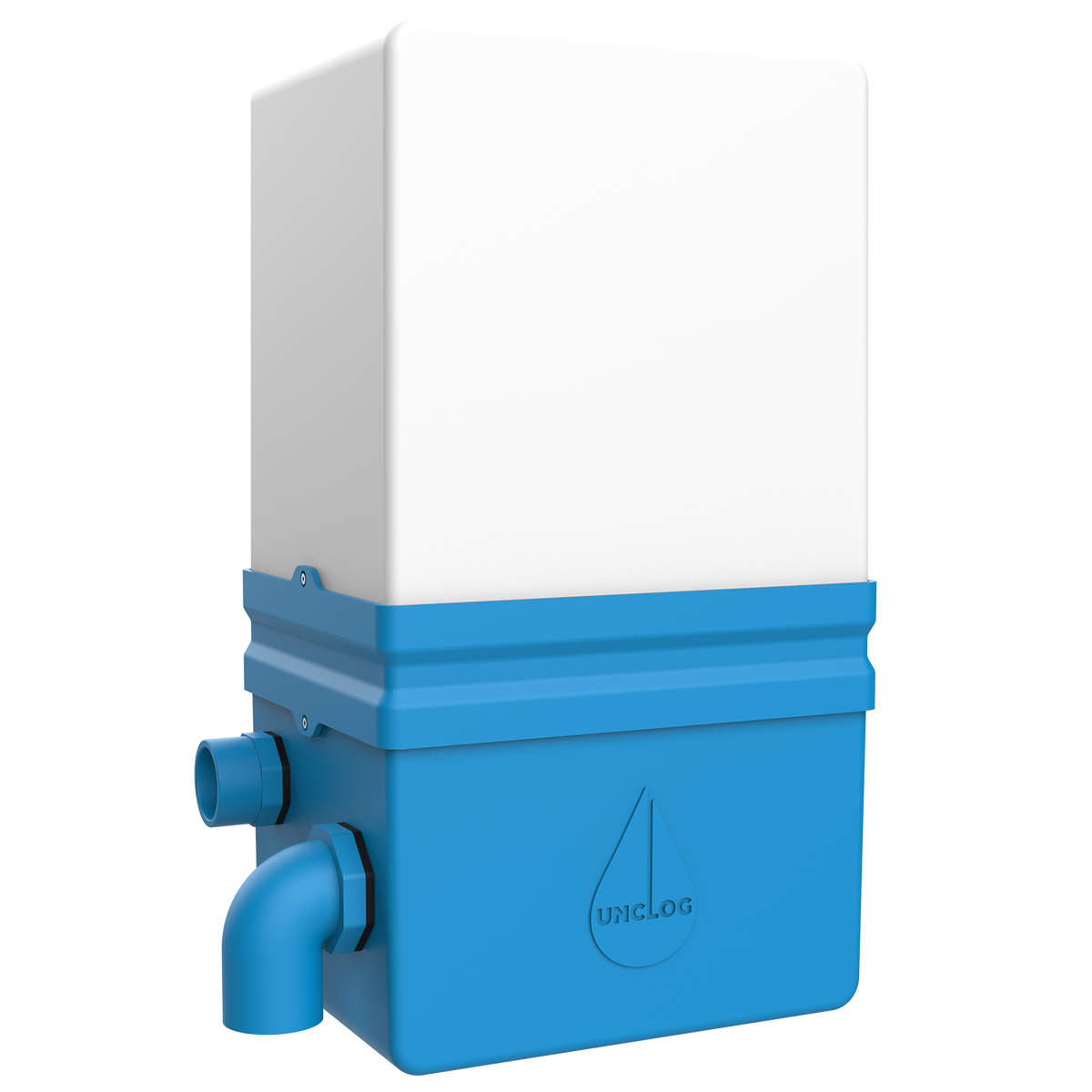
Once the drain is restored, let Unclog handle the recurring suction routine.
The outage gets your attention. Keeping the eligible drain maintained afterward is where Unclog helps: scheduled suction at the outdoor termination moves developing buildup without recurring chemical pours or setting up a wet/dry vacuum for every routine cleaning.
- A schedule you choose: daily, weekly, or monthly automatic cycles.
- Physical drain care: targeted suction instead of chemical cartridges.
- A practical next step: confirm the outlet, restore normal drainage, then check installation fit.
Start with a clear, intact, normally draining system. Unclog does not repair a failed pump, frozen coil, damaged pan, electrical fault, or active leak.
First response: water changes the restart decision
If water is escaping indoors, turn cooling off at a safely accessible thermostat. Keep away from wet outlets, wiring, or equipment. Do not reach into standing water to unplug a pump or operate an electrical control. Equipment exposed to floodwater needs professional assessment before it is energized.
A normal condensate outlet can drip outdoors during humid-weather cooling. Water from an emergency overflow outlet, a wet auxiliary pan, or a new indoor puddle is different. If you cannot identify the outlet, use the outdoor A/C drain identification guide before assuming the drip is harmless.
Why water can appear during or after an outage
The timing is a clue, not proof that the outage created the fault. A pre-existing restriction or damaged pan may become noticeable at the same time. A storm can also introduce rain or plumbing-related water that is unrelated to condensate.
Water already in the system can still move
Stopping the compressor does not instantly empty the coil, drain pan, pipe, or pump reservoir. Residual water can continue moving through the drainage path. An electric pump without power cannot perform its normal pumping cycle. Whether water overflows depends on the amount present, the route, the reservoir, and its protection.
A coil that was already frozen may thaw
A power outage does not by itself establish that the coil froze. If ice had formed beforehand, melting can add water after cooling stops. Carrier’s leak guidance identifies thawing coil ice, drain restrictions, and damaged pans as different causes. Visible ice or a history of weak airflow should be reported; do not chip ice away or treat a drain cleaner as a coil repair.
Restarting can expose an unresolved restriction
Once cooling resumes, the system starts removing moisture again. A restricted drain or pump that has not recovered may then back up. A brief successful restart is therefore weaker evidence than a verified drainage path. The fact that a floor dried while cooling was off tells you little about what will happen during the next cycle.
Separate gravity drainage from pump power
A gravity drain uses its installed slope and trap arrangement to carry water away. Losing electricity does not, by itself, turn that pipe into a clog. A pumped system adds a reservoir, motor, float, and discharge tube. Those extra components make electrical recovery part of the drainage check.
| Observation | What needs checking | What it does not prove |
|---|---|---|
| Pump reservoir high; pump silent | Power supply, operating float, motor, and safety circuit. | That the motor needs replacement. |
| Pump runs; level stays high | Discharge tubing, check valve, lift, and pump performance. | That more run time will clear the problem. |
| Water near a gravity-drain air handler | Pan, pipe joints, restriction, trap, and possible coil thaw. | That the outage caused a new blockage. |
| Thermostat works; cooling does not | Equipment power, controls, restart delay, and any water safety switch. | That the condensate drain is the cause. |
Hartell’s manufacturer troubleshooting guide identifies power, float, and discharge problems as separate failure paths. It also explains that a leaking check valve can return water to the reservoir. Those possibilities require diagnosis; none can be selected from the outage timing alone.
Observe only dry, accessible components. Note reservoir level, visible tubing damage, and whether the pump is silent, humming, or cycling. Leave hardwired connections and internal testing to a qualified professional. Our condensate-pump guide covers the broader repair-versus-replacement questions.
Before restarting: check power, water, and controls separately
Do not use a universal “wait 30 minutes and reset everything” recipe when water is involved. Follow the instructions for your equipment and thermostat. Carrier’s startup troubleshooting guidance distinguishes thermostat settings, power interruptions, and component faults, and calls for service when a breaker trips again or the system remains unresponsive.
- Confirm the active leak has been explained. If there was overflow, ice, or water near electrical equipment, get the necessary diagnosis before resuming cooling.
- Verify the water route. A qualified technician can test drainage, pump operation where fitted, and the applicable safety shutdown. A dry auxiliary pan alone is not a flow test.
- Follow the equipment’s restart instructions. Observe any specified delay. Repeated thermostat toggling or breaker cycling does not repair a fault.
- Observe normal operation afterward. From a safe location, watch for returning leakage, rising water, unusual pump operation, or another shutdown. If symptoms recur, turn cooling off and call for service.
If a float switch has tripped, do not remove it or hold it down. Also distinguish an app’s “offline” status from a physical drainage failure: connectivity, equipment power, and water flow are separate observations. A device appearing online is not proof that a drain is clear.
A useful service note takes five observations
- Power went out at ___ and returned at ___.
- Water first appeared before / during / after restoration.
- It began at the air handler / pump / ceiling / unknown location.
- Cooling had / had not resumed; visible ice or a shutdown message was ___.
- Pump sound, visible water level, and previous actions were ___.
Include safe photos of the original wet area and any readable model label. Mention anything added to the drain, including vinegar, bleach, or drain opener. Do not introduce another chemical or attach suction equipment to unknown chemical residue. Ask the technician to record both the corrected cause and the evidence that drainage and safety controls were tested.
After recovery, prevent the problems maintenance can address
An outage is a useful reminder to review the whole condensate system. Keep filter, coil, pan, trap, pump, drain, and safety-switch care in the maintenance plan. Discuss electrical resilience separately with the appropriate professional; a drain-care device is not a substitute for backup power or electrical protection.
For a compatible outdoor gravity-drain termination, Unclog’s automatic suction cycles provide recurring physical drain maintenance after normal flow is restored. Review the compatibility checklist and installation requirements. Do not connect it to a pump reservoir or assume a narrow pump discharge is an eligible outlet.
Keep overflow protection operating and document the service result in your A/C drain-maintenance log. The next step is a maintained, verified water path, not another unexplained reset.
Turn the service visit into an ongoing drain-care plan.
Ask your technician to confirm a clear, compatible outdoor termination. Then explore Unclog’s scheduled suction and choose the routine that fits your system.
Explore Unclog for your A/C drainReview installation →Frequently asked questions
Can a power outage make my A/C leak water?
An outage can interrupt an electric condensate pump while water already in the system is still draining. A previously frozen coil may also thaw. The timing alone does not prove the cause; a blocked drain, damaged pan, or stormwater can produce similar symptoms.
Should I restart the A/C if the floor is dry again?
A dry floor is not proof of a repair. If there was a leak, high water, ice, or a safety shutdown, identify the cause and verify the complete drainage route before returning to normal cooling.
Does a condensate pump restart when power returns?
A working pump may resume when power is restored and its operating float calls for pumping. Do not assume that happened: a power fault, stuck float, failed motor, or blocked discharge can prevent normal operation.
Should I reset or bypass the float switch after an outage?
Never bypass or hold down the float switch. If water has activated it, correct the drainage problem and have the protection checked. Follow the specific equipment instructions rather than using a universal reset procedure.
Can Unclog prevent a power-outage leak?
Unclog is scheduled suction-based maintenance for a compatible drain that is already clear and intact. It is not backup power, a condensate-pump replacement, or a guarantee against outage-related leaks. Its role is maintaining the eligible drain after the active problem is corrected.
Sources and scope: Researched September 17, 2026 using the Carrier and Hartell guidance linked above. The outage sequence is an educational application of their drainage and troubleshooting guidance, not an on-site diagnosis or a test of any particular installation. Follow your equipment manuals and qualified service advice.