
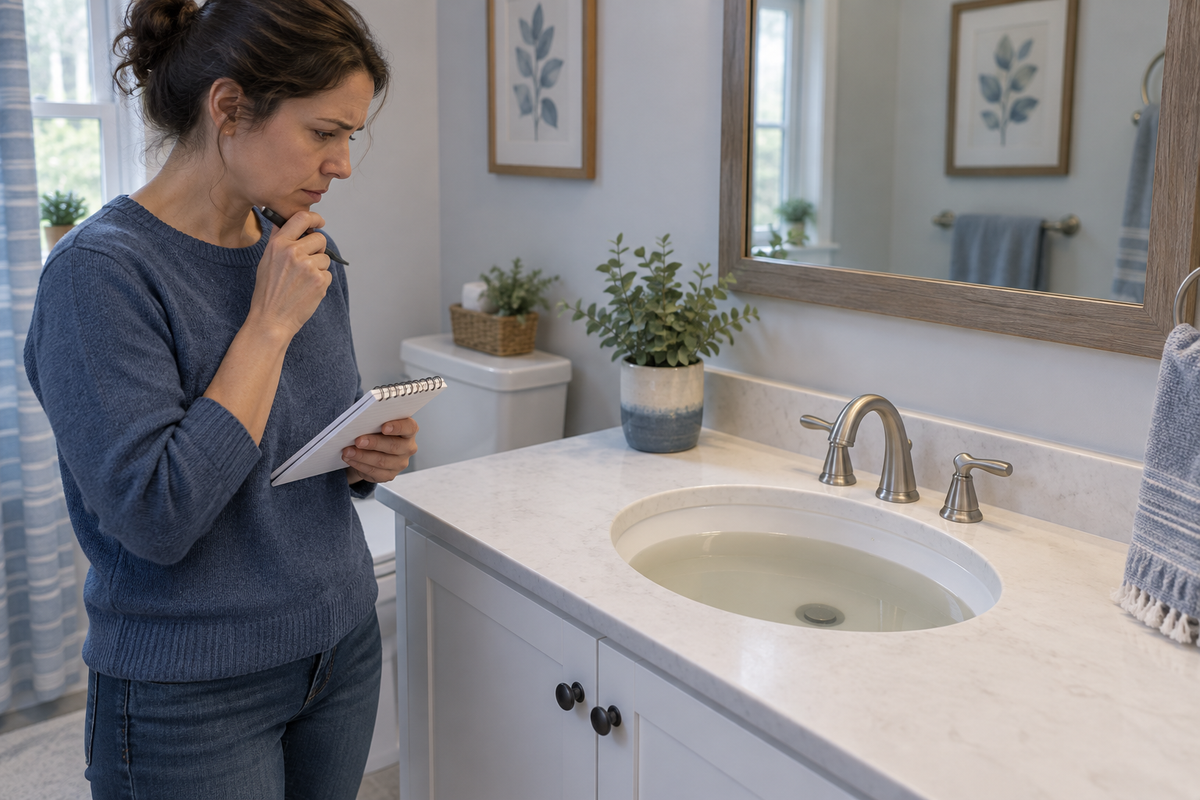
Cover image: AI-generated editorial illustration of a hypothetical sink-backup situation.
A bathroom sink that fills while the faucet is off can be confusing—especially when it happens during a long A/C cycle. In some homes, the air conditioner’s condensate line connects to the vanity drainage. The sink and A/C then depend on part of the same downstream route. Finding that connection is more useful than repeatedly treating the sink or assuming every backup starts at the air handler.
This Unclog guide explains what to observe, which service company to call, and how to separate restoring drainage from planning prevention.
Where Unclog fits after a shared-drain diagnosis
Unclog provides scheduled suction-based condensate maintenance at a compatible outdoor termination. It physically draws through the drain on a selected routine, helping address developing buildup without recurring chemical dosing.
The important question here is the actual destination. A hose connected to a bathroom sink is not an outdoor installation point. Have the active backup corrected and the route mapped before assessing fit; Unclog does not clear household plumbing or repair a pump, pan or faulty pipe.
Check your drain’s fitExplore Unclog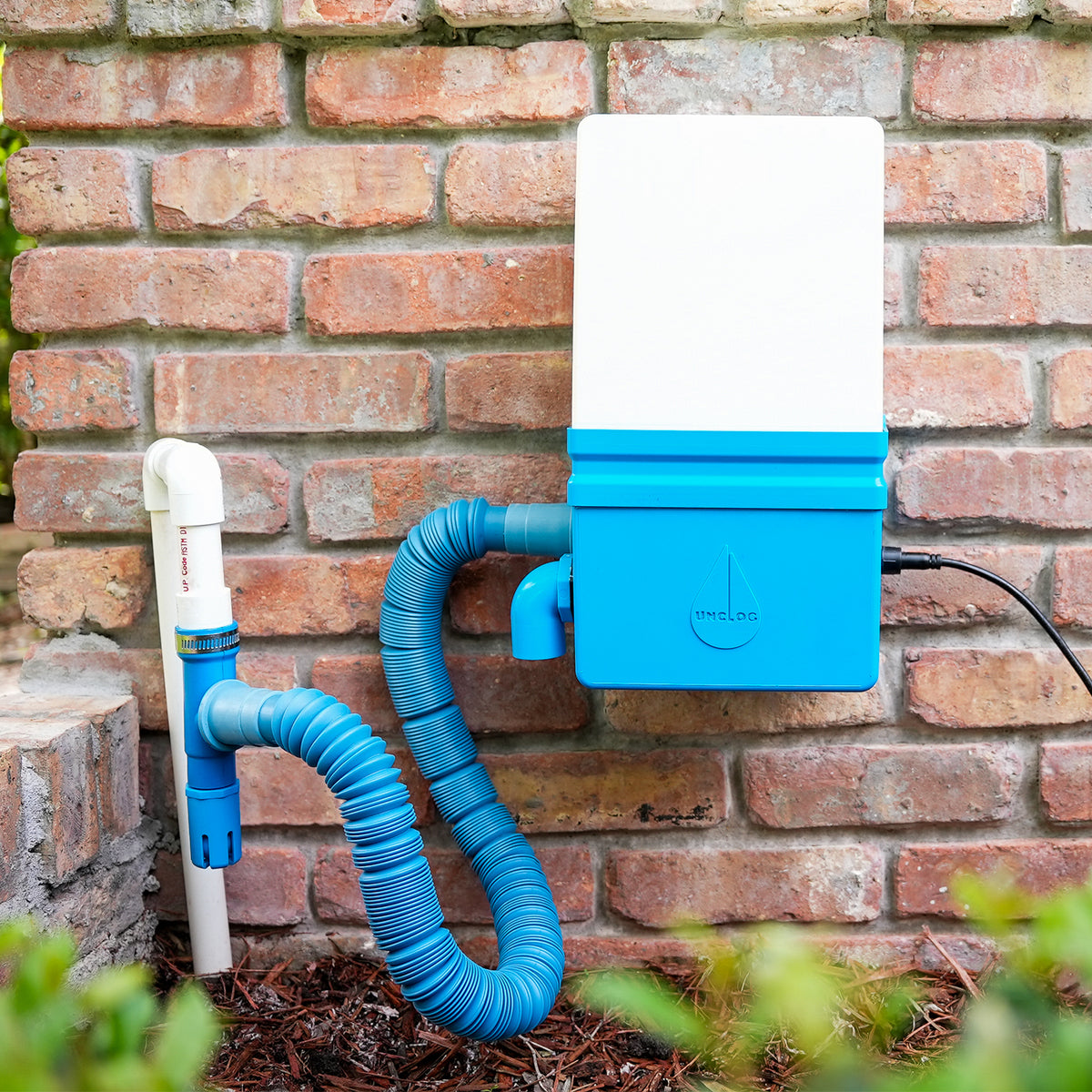
Why an A/C condensate line can affect a bathroom sink
Cooling removes moisture from indoor air. That water collects at the evaporator coil and needs a dependable drainage path. Some installations send it toward a plumbing connection beneath a vanity instead of a dedicated outlet outside. A restriction in the common drainage can therefore show up where you notice it: the sink bowl or cabinet.
A local plumbing company, Brazos Home Services, describes this arrangement in Houston-area homes and distinguishes sink-side symptoms from problems at the HVAC equipment. That is evidence that the arrangement exists, not a claim that it is universal or suitable in every jurisdiction.
Do not identify a hose by color alone. A professional should confirm where it starts, what it joins, and how it is meant to be serviced. The drain-system types guide explains the broader differences between gravity drains, pumps, shared routes and secondary safeguards.
Record the timing without creating another overflow
Describe what already happened. You do not need to run the faucet, restart a leaking A/C or fill a pan to collect evidence. These observations help a service provider choose what to inspect; they do not establish a diagnosis by themselves.
| Observed pattern | Useful service question | What it does not prove |
|---|---|---|
| Sink fills with the faucet off while cooling runs | Does this condensate branch join the vanity drain, and is the downstream route restricted? | That the A/C branch itself is the only blocked section |
| Sink drains slowly during ordinary use | Is there a fixture or shared-drain restriction? | That the A/C caused it |
| Water appears near the air handler or cooling stops | Are the pan, drain, pump and float safeguard working correctly? | That clearing the sink alone restores safe cooling |
| Several fixtures back up | Is a larger plumbing drainage problem involved? | That a condensate-only cleaning will solve it |
Note which room is affected, whether the faucet was off, whether cooling was running, and where water first appeared. Keep the distinction between “I saw” and “I think.” For example, “water rose in the sink at 3 p.m. with the faucet off” is a stronger service note than “the A/C pipe is definitely clogged.”
Call the right help and avoid blind cleaning
For water backing into the sink or leaking around the vanity drain, contact a plumber and mention the possible condensate connection. If there is water at the air handler, a wet auxiliary pan, a condensate-pump symptom or an A/C shutdown, involve an HVAC technician too. One visit may solve the problem; sometimes both trades need to coordinate.
Keep away from wet electrical equipment and unsafe attic or ceiling areas. If water is spreading, stop the affected fixture and cooling when safe. A float switch that stops cooling is a warning to investigate, not an obstacle to bypass. Turning the thermostat off does not remove water already in the system or clear the restriction.
Do not disconnect an unidentified hose, pressurize a shared branch, or apply outdoor wet-vac instructions to a vanity connection. Access, traps, connected equipment and cleaning direction matter. If cleaner has already been added, tell the service provider its name and approximate amount before work begins; do not add another chemical. See the A/C drain-opener guide for that specific situation.
A draining sink is only part of the closeout
Ask the contractor to identify the restriction and explain what was cleared or repaired. Then ask how both water paths were checked. A sink can drain from the faucet while its condensate branch still has a separate problem. Conversely, cleaning the A/C branch may leave a restriction farther downstream.
The exact test belongs to the professional who knows the installation. Your practical goal is a clear answer about normal flow, visible leaks, and any remaining work. Avoid accepting “we poured something in” as the entire explanation.
- Route: Where does the condensate line connect and discharge?
- Fault: Which section or component caused the problem?
- Work: What was cleared, adjusted or replaced?
- Verification: Were the sink and condensate paths checked, including visible connections?
- Follow-up: Who should you call if the symptom returns?
Save the invoice and labeled photos with your condensate maintenance log. If proposals differ substantially, use the clean, repair or replace guide to compare the diagnosed fault and proposed scope.
Plan maintenance around the actual drain route
After normal drainage is restored, ask for a maintenance plan suited to the equipment and the plumbing connection. A routine for a dedicated outdoor gravity outlet should not automatically be copied to a shared sink drain. Record the service access point and manufacturer guidance so the next person does not have to guess.
If the system has a verified compatible outdoor termination, Unclog can make scheduled physical drain maintenance part of that routine. Its suction mechanism works from the outlet; app scheduling and offline presets support a repeatable schedule without a recurring bottle-and-pour task. Keep required inspections and float safeguards in place. It is not a guarantee against all leaks, and it does not correct frozen coils, cracked pans, bad piping or failed pumps.
If the only identified route ends at the vanity connection, request a compatibility review before purchasing. Do not reroute plumbing just to fit a maintenance device without a qualified design and applicable approvals.
See how the production Unclog system is installed
The video explains the product’s outdoor installation. Compare your verified route with the installation instructions and full compatibility checklist; the video does not approve a sink connection.
Bathroom sink and A/C drain FAQs
Why does my bathroom sink fill when nobody is using it?
A connected condensate line is one possible water source while the A/C runs. A downstream restriction can prevent that water from draining. Other sources are possible; a plumber should identify the actual connection and restriction.
Should I call a plumber or an A/C technician?
Start with a plumber for backup at the sink or vanity drain. Involve an HVAC technician for water at the air handler, a wet auxiliary pan, a pump problem or a float-switch shutdown. Tell both companies that the systems may share a drain route.
Can I vacuum the hose under the bathroom sink?
Do not apply suction to an unidentified branch or dismantle a shared drain based on a generic outdoor cleaning guide. Have the route, service access and connected equipment identified first.
Will Unclog fix a sink-connected drain backup?
Unclog is not a sink drain cleaner or an emergency blockage repair. Its scheduled suction maintenance requires a compatible outdoor condensate termination after faults are corrected and normal flow is verified. A sink-connected route is not automatically compatible.
Does a draining sink prove that the A/C drain is clear?
No. Water from the faucet can drain while the condensate branch remains restricted. Ask the service provider to verify both the fixture path and the condensate path.
Restore both drainage paths, then choose the next step
For an active backup, give your service provider the symptom timing and ask them to verify the shared route. Once the system is open, intact and flowing normally, check whether outdoor suction maintenance is a fit for your home.
Check Unclog compatibilitySee UnclogEditorial guidance reviewed September 19, 2026. Illustrations and decision aids explain hypothetical situations; they are not field-test results or installation drawings. Equipment instructions and on-site diagnosis govern the specific repair.