

Drywall sanding ends, the room looks clean, and the A/C goes back on. That restart deserves more thought than a fresh filter. A/C care after renovation has two separate jobs: keep construction dust out of the air system, and verify that the cooling system can still carry condensate away. Unclog belongs in the ongoing drain-maintenance plan after cleanup and any needed repairs—not in the construction-dust cleanup itself.
Finish the renovation. Start a drain routine.
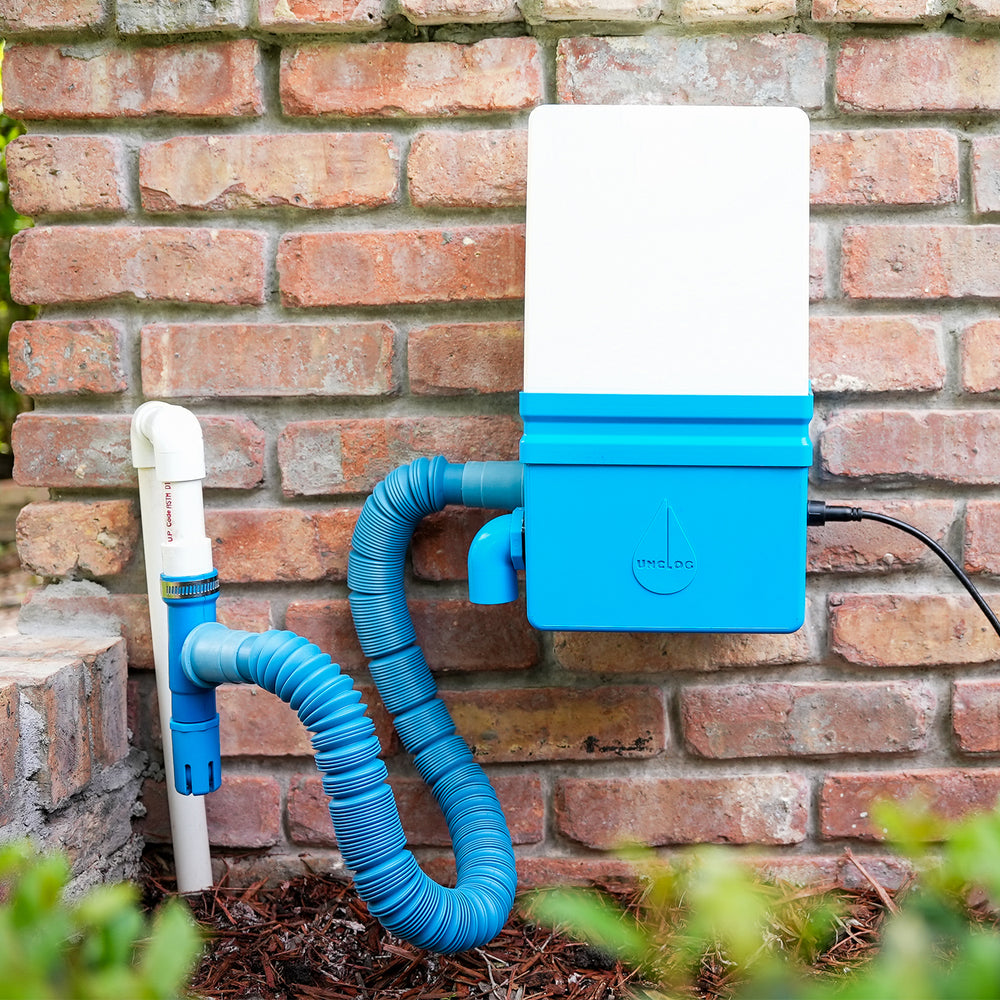
Once a compatible drain is open and normal flow is verified, Unclog uses scheduled suction at its outdoor termination to help move developing buildup out of the line. App scheduling and offline presets make physical drain care repeatable without recurring chemical treatments.
For a newly renovated home, the useful handoff is from completed cleanup and verified drainage to ongoing maintenance. Unclog does not collect airborne drywall dust or clean ductwork. Explore Unclog and check the actual drain configuration before installation.
Before drywall sanding: protect the HVAC system
Tell the renovation contractor where the supply and return openings are and which system serves the work area. A return grille draws room air toward the equipment; using the central A/C to make dusty work more comfortable can also bring that dust toward the system. Plan temperature control and dust containment before work starts.
The EPA’s duct-cleaning guidance advises sealing supply and return registers during dust-producing construction and keeping heating and cooling off until dust cleanup is complete. Covered registers and an operating system are not the intended combination. Have the contractor coordinate protection, cleanup and restoration rather than improvising a partial blockage while the blower runs.
Older building materials may require specialized handling. Do not use this article as a demolition or hazardous-material cleanup procedure. Its focus is the HVAC handoff: what was protected, whether the system ran during the work, and what needs checking afterward.
Why a new filter does not verify the drain
The filter, cooling coil and condensate drain do different work. A filter captures particles in the air stream according to its fit and design. During cooling, moisture collects at the evaporator coil and drains through the pan into the condensate route. Replacing the filter changes neither the condition of material already downstream nor the condition of the drain pipe.
If dust may have entered the equipment, ask for an inspection before deciding what cleaning is justified. Do not assume every renovation clogs a drain, or that a later leak proves drywall dust caused it. A blocked line, frozen coil, damaged pan or pump problem can produce overlapping symptoms. The recurring-clog guide explains the wider set of causes.
Before restarting after renovation
| Area | Useful confirmation | Not enough by itself |
|---|---|---|
| Work area | Dust cleanup is complete and protective coverings are removed appropriately. | The visible floor looks tidy. |
| Filter and air path | Correct filter, proper fit, restored openings and any needed equipment inspection. | A new filter was installed. |
| Condensate route | Pan and drainage concerns were checked; any restriction or leak was corrected. | The thermostat restarted. |
| Operating result | Normal operation and drainage were verified for the installed system. | Water was wiped off the floor. |
Keep the equipment instructions in the conversation. Do not select a more restrictive filter simply because the job was dusty, run without a filter, or open electrical compartments to search for debris. Record whether the system operated while sanding or demolition took place. That history helps the technician choose an inspection; it is not a diagnosis.
Ask what was found, not just what was cleaned
A useful service explanation identifies the affected component and the evidence. Was debris found at a return, on a coil, in a pan or in the drain? Was there a restriction, a leak or an unrelated equipment fault? Ask how the work addressed that finding and how the result was checked. Photos of accessible conditions before and after service can make that explanation clearer.
EPA does not recommend duct cleaning automatically on a routine schedule. Its guidance calls for attention to substantial contamination and also highlights proper pan drainage and coil condition. That distinction matters after remodeling: inspect the actual system rather than treating a renovation date as proof that every duct needs cleaning.
If the A/C is already leaking, get the active fault diagnosed before adding drain treatments or prevention equipment. For a leak that appeared specifically after coil service, use the coil-cleaning follow-up guide. For a leak noticed after filter replacement, see what to check after a filter change.
After cleanup, separate inspection from recurring drain care
Keep the renovation history and service findings with the home’s maintenance information. Continue the equipment’s filter, coil and pan care. If the drain is compatible, faults are corrected and normal flow is established, Unclog can provide scheduled suction at the outdoor termination as part of that routine. Follow the installation instructions and keep periodic inspection in the plan.
Unclog does not repair frozen coils, pumps, pans, bad piping or active leaks. It is not an emergency substitute for clearing a blocked line. Its role here is practical: maintain a working drain after the dusty project and any corrective service are finished.
Common questions
Does drywall sanding always clog an A/C drain?
No. Dust exposure is a reason to review protection and inspect suspected contamination, not proof of a drain blockage. Find the actual cause if drainage changes.
Is replacing the filter enough after remodeling?
It does not establish that equipment downstream is clean or that condensate drains correctly. The necessary work depends on exposure and inspection findings.
Can Unclog remove renovation dust from the air system?
No. It provides suction-based condensate drain maintenance at a compatible outdoor termination. Dust containment, equipment cleaning and fault correction are separate tasks.
Next step: Complete the contractor-to-HVAC handoff first. Once the drain is working normally, check compatibility and see how Unclog fits ongoing drain care.
Reviewed November 2026. Cover: original AI-created colored-pencil illustration of HVAC protection during renovation, not a field photograph. Product image: production Unclog. Diagram: conceptual explanation. Source: EPA guidance linked above; this article does not report a construction test or replace equipment instructions and on-site diagnosis.