
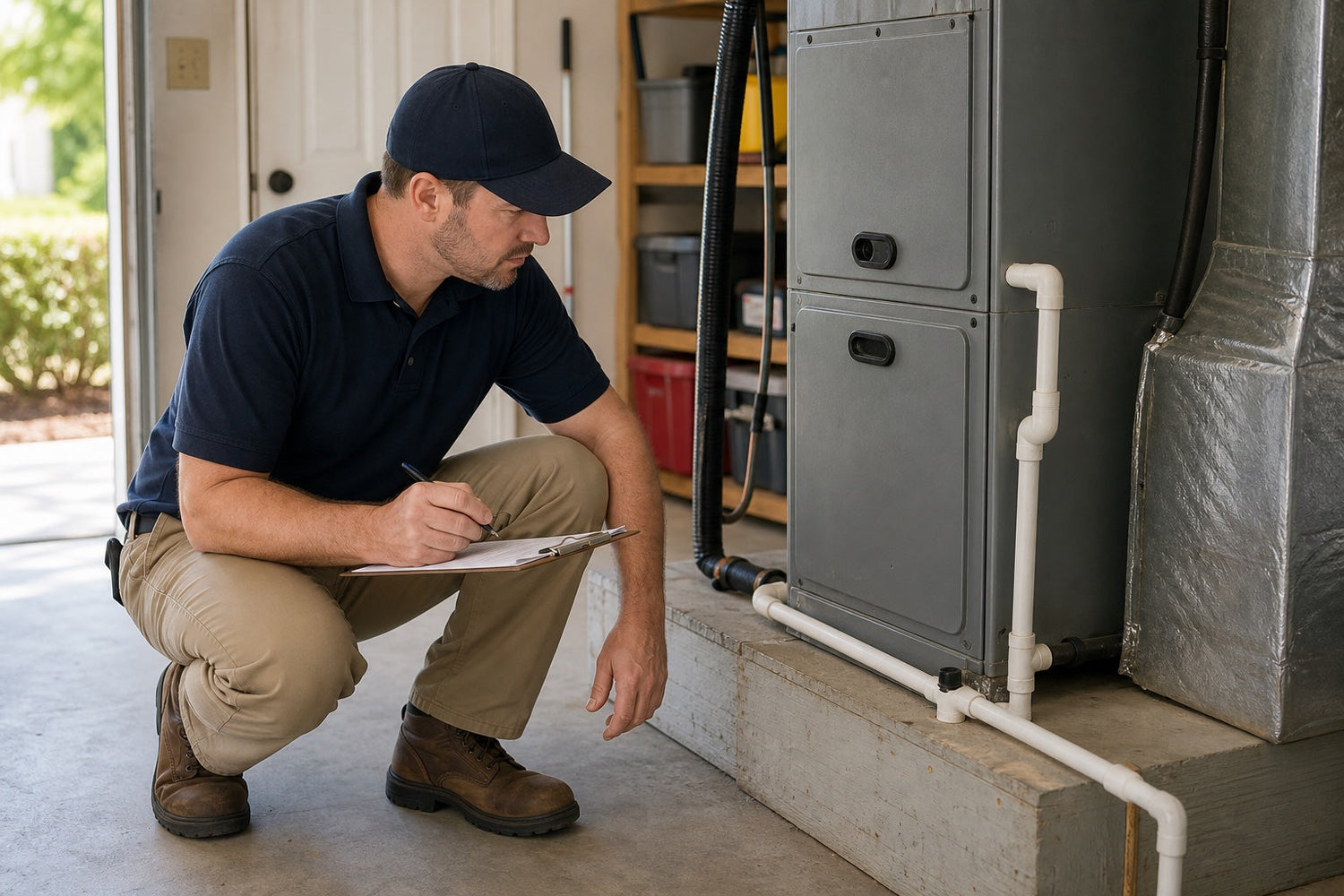
Short answer: an A/C condensate drain that clogs again soon after cleaning usually has an unresolved condition somewhere along the water path. New dust and biological material may be reaching the line, water may be sitting in a low spot, the trap or vent may not match the equipment, the outdoor termination may be obstructed, or the previous cleaning may have opened only part of the route.
A recurring clog is different from a neglected line that blocks once after years of service. The calendar matters. So does the location of the material, the amount of water the system produces, and whether a complete flow test was performed after the last cleaning.
If water is spreading near electrical equipment, entering a ceiling, or collecting in an auxiliary pan, turn the cooling system off and call a qualified A/C professional. Do not bypass a float switch or keep resetting the system while water is backing up.
First, define what “keeps clogging” means
Write down when the line was last cleared and what happened afterward. A line that slows again in a few weeks deserves a different investigation from one that accumulates material gradually over several cooling seasons.
- Days or weeks: suspect an incomplete cleaning, a blocked outlet, trapped debris, standing water, or a drainage-layout problem.
- Every few months during heavy cooling: look at the amount of condensate, dirt entering the indoor equipment, biological buildup, and the maintenance method.
- Once after a long interval: ordinary accumulation may be the main issue, but the complete route should still be checked.
Also record the symptom. Did the float switch stop the system? Was water in the primary pan or only the auxiliary pan? Did the outdoor outlet stop dripping? Did suction remove a soft mass, dry debris, insects, or almost nothing? Those clues help separate a material problem from a piping problem.
Cause 1: dust and debris keep reaching the wet side of the system

Condensate starts at the evaporator coil. Airborne dust, fibers, and other particles can collect in the indoor equipment, mix with moisture, and travel toward the pan and drain. Carrier notes that dust and airborne particles can combine with condensate and form sludge that eventually blocks the line.
A dirty filter is not proof that it caused the clog, and replacing a filter does not clear a blocked pipe. It is still worth checking the filter size, fit, condition, and replacement history. Gaps around a filter, a missing panel, or heavy dirt inside the air handler may allow more material to reach wet surfaces.
Do not open electrical or refrigerant compartments for a homeowner inspection. A qualified technician can evaluate the coil, blower area, pan, filter rack, and cabinet for dirt bypass, unusual contamination, or deteriorating internal material.
Cause 2: biological buildup is regrowing in a warm, wet route
A condensate drain repeatedly carries water during humid weather. Soft biological material can develop on wet surfaces and catch additional dust. Trane lists mold, mildew, dirt, dander, debris, and even insect activity among possible causes of condensate drain clogs.
The appearance of the material matters. A soft translucent or tan mass behaves differently from hard mineral scale, insulation fragments, rust flakes, or outdoor soil. A maintenance liquid may contact some residue, but it cannot correct a sagging pipe, remove a foreign object, or prove that the full route is open.
If a line keeps producing a large amount of soft buildup, ask where it is beginning. Cleaning only what appears at the outdoor end may leave material in the pan, trap, vertical drop, or another low section. The indoor wet surfaces may also need professional cleaning.
Cause 3: a low spot or poor pitch is holding water

Gravity drains need a continuous route that allows water to move toward the termination. A sagging horizontal run, shifted support, or section pitched the wrong way can hold water and debris. The pipe may drain during a large flush yet retain a shallow pool after normal operation.
Standing water gives material time to settle. It can also make the result of an outlet cleaning look better than it really is. The accessible end opens, some water leaves, and the low section remains ready to collect the next round of debris.
Do not bend, lift, or rehang an installed line without understanding the equipment connection, trap, vent, and supports. Ask a technician to inspect the route with a level and correct any sag or reverse pitch according to the equipment instructions and local requirements.
Cause 4: the trap, vent, or equipment pressure is working against drainage
Some air handlers require a correctly sized and primed condensate trap because the drain connection is exposed to negative air pressure. An incorrect or dry trap can interfere with drainage. A vent or cleanout cap installed in the wrong place can also change how the route behaves.
This is one reason a vertical PVC opening should not automatically be treated as a place to pour cleaner. It may be a vent, cleanout, float-switch connection, trap primer point, or part of a condensate pump arrangement. The equipment installation instructions determine the required configuration.
Recurring backups near the equipment, gurgling, or drainage that changes when a panel or cap is moved are reasons to stop experimenting and have the setup inspected. The solution may be a piping correction rather than another cleaning product.
Cause 5: the drain pan or equipment is not level

The drain line can be open while water still remains in the pan. A unit that is not level, a warped or rusted pan, debris around the pan outlet, or an installation problem can prevent all the condensate from reaching the drain connection.
Water sitting in the pan can support more buildup and may eventually spill into an auxiliary pan. It can also mislead a homeowner into treating the drain line repeatedly when the source is inside the equipment.
A technician should check the primary pan, pan outlet, equipment level, and signs of corrosion or cracking. A damaged pan is a repair problem. It is not corrected by vacuuming the outdoor pipe.
Cause 6: the outdoor termination keeps getting blocked

The last few inches of the system are easy to forget. Mulch, soil, lawn clippings, insects, spider webs, or a pipe ending too close to the ground can obstruct the outlet. A termination hidden behind shrubs may also go unobserved until water backs up indoors.
Keep the outlet visible and free of loose landscaping material. Do not extend, cut, screen, or relocate the pipe without confirming that the change will not restrict flow or conflict with local requirements. Fine screens can catch debris and create their own blockage.
When the line is tested, watch the identified termination. Water should arrive without backing up elsewhere. Confirming that the correct outlet was found is especially important at homes with multiple A/C systems, water-heater drains, pool equipment, or irrigation pipes.
Cause 7: the previous cleaning opened only part of the route

Removing one visible plug is not the same as cleaning and testing the complete line. Material may remain in a trap, a long horizontal run, a fitting, or the pan outlet. A loose vacuum connection can also pull air around the pipe instead of pulling effectively through it.
After a compatible cleaning method is used, controlled test water should enter through the correct service point and reach the identified outlet. The pan, fittings, pump, and visible pipe should remain dry. Every cap, vent, trap, and safety device must then be restored correctly.
If test water does not appear where expected, or the pan begins filling, stop. Repeating suction or adding liquid without locating the restriction can hide the actual problem and add more water upstream.
Cause 8: the maintenance routine does not match the system
A fixed calendar cannot account for every climate and installation. A system in a long, humid cooling season may move far more condensate than one used for a few months each year. An attic air handler above finished space also carries a different water-damage risk from equipment in a garage near a floor drain.
Use inspection history to set the interval. Note when the outlet flow changes, how much material is removed, whether the pan stays clean, and whether the float switch has activated. If the interval keeps getting shorter, do not simply clean more often forever. Investigate the root cause.
For help building a practical schedule, see how often to inspect and clean an A/C drain line.
A better plan for a drain that keeps clogging
- Document the recurrence. Record dates, symptoms, weather, and what was removed.
- Identify the complete route. Trace the primary pan connection, trap, vent, pump if present, and outdoor termination.
- Restore full flow. Use a compatible cleaning method or professional service, then prove water reaches the intended outlet.
- Inspect the installation. Check pitch, supports, trap design, pan condition, equipment level, and termination placement.
- Reduce new material. Correct filter fit, dirt bypass, pan contamination, or outdoor debris where applicable.
- Choose prevention only after correction. A prevention routine should begin with an intact, compatible line that is already open and draining properly.
Unclog is designed for that final prevention stage. It uses scheduled suction cycles at the outdoor termination of a compatible residential condensate drain. It does not repair poor pitch, an incorrect trap, a damaged pan, or a blocked condensate pump.
When to call an A/C professional
Call for service when the line blocks again soon after a complete cleaning, water is near electrical components, the air handler is above finished space, the pan is rusted or damaged, the piping cannot be traced, or the float switch repeatedly shuts the system down.
Ask the technician to diagnose why the clog returned, not only to remove the next plug. Useful inspection points include the coil and pan, filter fit, pan outlet, trap and vent, pipe pitch and supports, pump if present, outdoor termination, and a documented flow test.
For an active blockage, start with the clogged A/C drain-line troubleshooting guide. If the route is accessible and the system is safe to work around, the complete cleaning guide explains suction, flushing considerations, and proof of flow.
Frequently asked questions
Why does my A/C drain line clog every month?
A monthly recurrence suggests more than ordinary long-term accumulation. The route may still contain material, hold standing water, have poor pitch or an incorrect trap, receive excessive dirt, or end at an obstructed termination. Have the complete path inspected instead of repeating the same outlet cleaning.
Can a dirty air filter cause an A/C drain-line clog?
A poorly fitted, missing, or heavily loaded filter can contribute to dirt reaching indoor equipment, but it is not the only possible cause. Replacing the filter will not remove an existing clog. The coil, pan, cabinet, and drain route may also need inspection.
Will vinegar stop the line from clogging again?
Not reliably. Distilled white vinegar is sometimes recommended for maintenance on compatible systems, but it cannot correct poor pitch, a damaged pan, a blocked outlet, or retained debris. Never mix it with bleach or an unknown cleaner. Read the vinegar-versus-bleach safety guide before adding any product.
How do I know the entire condensate line is clear?
Controlled test water should travel from the identified service point to the correct termination without backing up or leaking. The pan, pump, fittings, and visible pipe should stay dry, and all caps, vents, traps, and safety devices should be restored afterward.
Can Unclog fix a drain line that keeps clogging?
Unclog can support prevention after a compatible residential drain is open, intact, and working correctly. It does not fix piping slope, trap design, equipment level, pan damage, pump failure, or an active water leak. Those conditions should be corrected first.
Reviewed July 2026. This article provides general homeowner education and does not replace the installed equipment instructions, local requirements, or an on-site diagnosis.