
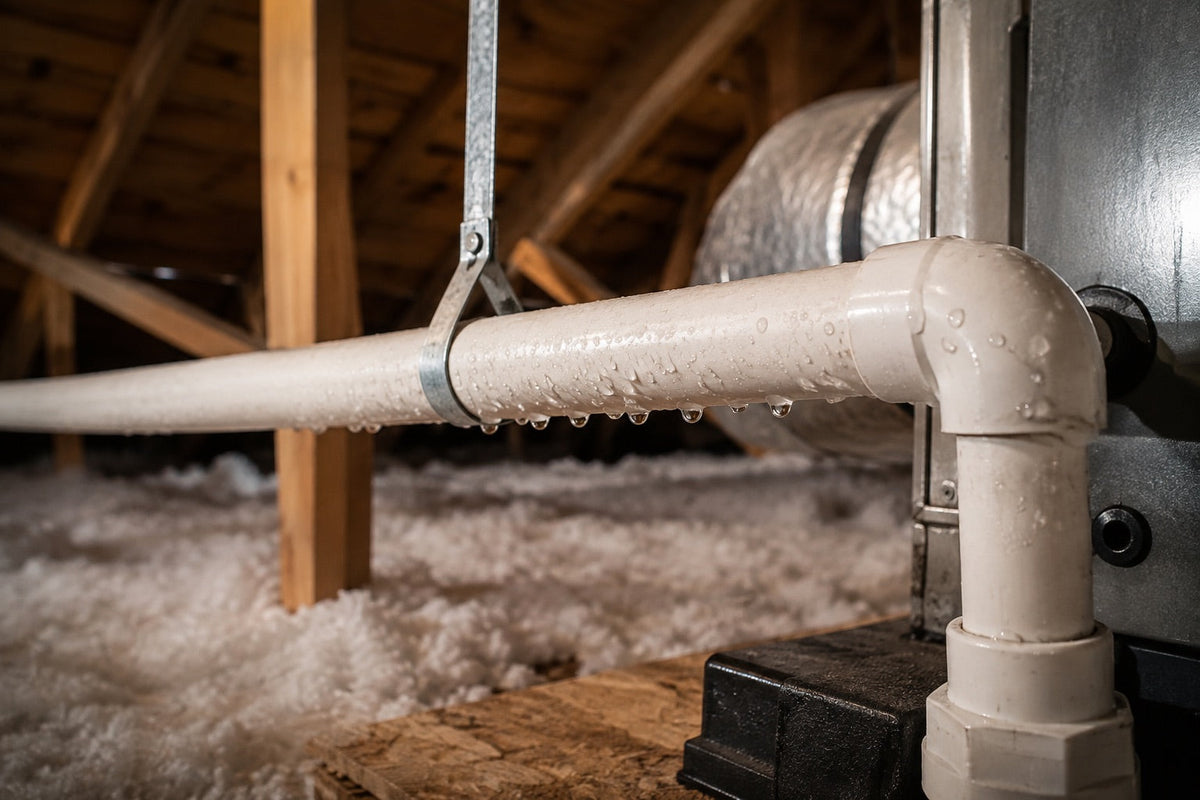
Water beads on the outside of a cold condensate pipe can be ordinary surface condensation, but a wet pipe can also be catching water from a loose joint, backed-up pan, frozen coil, or nearby refrigerant line. Here is how to tell the difference without guessing.

Pipe sweat is condensation on the outside surface
Your cooling system removes moisture from indoor air. That condensate enters a pan and drain route near the indoor coil. The water and nearby drain piping can be cool. When hot, humid attic, garage, crawlspace, or utility-room air touches a surface below its dew point, water vapor changes into liquid droplets on the outside of the pipe.
This is the same physical process that makes a cold glass sweat. It does not automatically mean the PVC is cracked or the inside of the drain is clogged. The location and pattern matter. Fine droplets distributed along a cold section suggest surface condensation. A concentrated trail beginning at a coupling, cabinet seam, cleanout, pump, or overhead component suggests a different source.
First identify which pipe is actually wet
The term “A/C pipe” can describe several nearby components. A white PVC pipe may be a condensate drain, but the larger insulated copper refrigerant line can also produce condensation when insulation is missing or damaged. Water can then travel along another surface and make the drain look guilty.
Trace it from the coil or drain-pan area and confirm where it terminates. Do not identify it by color alone.
This line is normally insulated. Exposed cold copper or failed insulation can create heavy condensation.
Water at seams, beneath the unit, or in an emergency pan deserves prompt investigation.
A pump, reservoir, tubing connection, or check valve can leak or overflow independently of pipe sweat.
Use the outdoor A/C drain identification guide if you are unsure which pipe belongs to the system. If water is inside the house, also compare the symptoms in the indoor A/C water-leak guide.
A simple observation can separate sweat from water traveling from above
Only work from a safe, dry, accessible location. Do not enter a hazardous attic, remove equipment panels, touch wiring, or bypass a float switch. If the area is safe to observe, use a clean absorbent cloth to dry the outside of the pipe and the nearby fittings. Then watch where moisture first returns while the system operates normally.
The dry, observe, trace method
Wipe only the accessible exterior of the pipe and nearby surfaces.
Uniform beads suggest sweat. A stream or single origin suggests a leak or overflow.
Look for water traveling from a cabinet, joint, pump, pan, or refrigerant-line insulation.
One observation is not a complete diagnosis. Condensate production changes with temperature, humidity, and cooling runtime. Photograph the condition and note whether the water appears only during cooling, after long runtimes, or even when the system is off.
Insulation can help after the source is confirmed
When verified condensate piping passes through hot, humid, unconditioned space, appropriate closed-cell pipe insulation can reduce contact between humid air and the cold pipe surface. The equipment instructions, local codes, pipe size, route, and access conditions determine the right material and installation method.

Do not wrap a wet assembly and assume the problem is solved. Trapping water against wood, drywall, metal, or damaged piping can conceal continuing moisture. Correct the source, dry affected materials, and replace damaged insulation as appropriate. A qualified contractor should handle inaccessible piping, persistent moisture, equipment-side leaks, and any work near electrical components.
These signs point beyond ordinary pipe sweat
| What you see | What it can suggest | Safer next step |
|---|---|---|
| Fine droplets evenly covering a cold pipe section | Surface condensation is plausible | Confirm the pipe and source, then evaluate insulation and humidity conditions. |
| Water begins at a coupling, tee, cap, or cabinet connection | Loose, damaged, or overflowing drainage component | Arrange proper drain and equipment inspection. |
| Water in an auxiliary pan or from a high, visible secondary outlet | The primary drainage path may not be working normally | Stop treating it as cosmetic sweat and call for service. |
| Ice, frost, or a frozen coil | Airflow, refrigerant, or equipment fault may exist | Turn cooling off as appropriate and contact a qualified A/C professional. |
| Water near wiring, controls, or a ceiling stain | Electrical or property-damage risk | Keep clear of the wet area and obtain prompt professional help. |
| Musty odor, recurring staining, or damp insulation | Moisture has persisted or traveled | Find and correct the source, then assess and dry affected materials. |
If the pan itself contains water, use the A/C drain pan decision guide. For the full system path and terminology, see the complete homeowner’s guide to A/C drain lines.
Questions about a sweating A/C drain pipe
Is condensation on an A/C drain pipe normal?
It can occur when a cold pipe is exposed to humid air, especially in an attic or other unconditioned space. It should still be identified correctly because water from a leak, overflow, frozen coil, pump, or refrigerant line can look similar.
Can a clogged A/C drain make the pipe sweat?
A clog does not directly create dew on the outside of a pipe, but a drainage restriction can cause water to back up or escape near the same area. The location and pattern of the water must be diagnosed rather than assumed.
Should every condensate drain line be insulated?
Requirements vary by equipment, climate, route, and local code. Manufacturer instructions and a qualified local contractor should guide the decision. Insulation is commonly considered where cold condensate piping passes through hot, humid, unconditioned space.
Will Unclog stop condensation on the outside of PVC?
No. Unclog is designed to help prevent developing buildup inside compatible condensate drains by using scheduled suction at the outdoor termination. Pipe sweat is addressed by confirming the moisture source and correcting insulation or environmental conditions as appropriate.
Why is only one fitting wet?
Water may be starting at that fitting, or it may be traveling there from a colder or higher surface. Dry the accessible exterior, observe where moisture first returns, and call a professional if the source is not clear.
Confirmed buildup inside the drain too?
After an active clog or leak is corrected, normal flow is restored, and the outdoor termination is confirmed compatible, Unclog can support scheduled suction-based drain care.