

Your air conditioner does more than cool the air. It also removes moisture from it—and all that water needs a safe way out of your home.
That is the job of the A/C drain line, also called the condensate drain line. It is usually a narrow PVC pipe, it does its work quietly, and most homeowners do not think about it until water appears where it should not.
This guide explains how the drainage system works, where to find it, what causes it to clog and what warning signs deserve your attention. If you are already dealing with standing water or an A/C system that has shut off, start with the safety steps below.
Quick answer: An A/C drain line carries condensation from the indoor air handler to a safe discharge point. Dust, biological buildup and debris can narrow or block the line. When water cannot drain, it may fill the drain pan, trigger a safety switch or leak into the surrounding area.
First: what to do if water is already leaking
If water is spreading near electrical components, coming through a ceiling or overflowing from the air handler, turn the cooling system off and contact a qualified A/C professional. Do not reach into wet equipment or remove access panels unless you are trained to work around HVAC electrical components.
If the area is dry and you are trying to understand a possible drainage problem, look for these clues:
- Standing water in or around the auxiliary drain pan
- Water stains on a nearby ceiling, wall or floor
- An A/C system that stopped running unexpectedly
- A wet float switch or drainage warning
- A musty smell near the indoor unit
- Little or no water leaving the outdoor drain while the system is removing humidity
- Water coming from a secondary drain outlet
These symptoms can point to a clogged drain line, but they are not proof by themselves. Cracked pans, loose connections, frozen coils, failed condensate pumps and improper drain slope can create similar problems.
What is an A/C condensate drain line?

When warm household air passes over the cold evaporator coil inside your A/C system, moisture in the air condenses into water. It is the same basic effect that leaves droplets on a cold drink.
The water falls into a primary drain pan beneath the coil. From there, it enters the condensate drain line and travels away from the equipment. Depending on the home and system layout, the line may discharge:
- Outside near the foundation
- Into a plumbing drain
- Into a utility sink
- Through a condensate pump
- At another approved drainage location
The exact configuration varies. A typical residential line is PVC, but the pipe material, route and termination can differ by system and local installation requirements.
The moisture path, from indoor air to outdoors
It helps to picture the system as a simple path:
- The evaporator coil removes heat and moisture from indoor air.
- Condensation falls into the primary drain pan.
- Water enters the condensate drain connection.
- A trap and properly sloped drain line guide the water away.
- The water exits at the approved discharge point.
The line relies on gravity in many homes. Some systems need a condensate pump because the water must travel upward before it can reach a drain.
When every part of the path is clear, condensate leaves without attracting attention. When one section slows or blocks, water begins to collect upstream.
Where is the A/C drain line?
Start at the indoor A/C equipment—not the large outdoor condenser.
The indoor unit may be in:
- An attic
- A garage
- A utility closet
- A basement
- A mechanical room
Look for a small PVC pipe connected near the bottom of the evaporator-coil cabinet or air handler. You may see a removable cap or vertical cleanout tee near the unit. The pipe should lead toward a drain, pump or outdoor termination.
Outside, the drain outlet often looks like a short piece of PVC emerging through an exterior wall. It may be near the condenser, but it does not have to be. Use the outdoor A/C drain-line guide to trace the route, distinguish primary and secondary outlets, and interpret the flow you see.
If you are uncertain which pipe is the condensate line, do not pour anything into it. A professional can identify the primary line, secondary line, vent, cleanout and any condensate-pump connections.
Primary and secondary drain lines
Many systems have more than one drainage path.
Primary drain line
The primary line is the normal route for condensate. During cooling, water should move through this line and away from the equipment.
Secondary drain line
A secondary line provides another path or visible warning if the primary path fails. In some homes, its outlet is placed above a window or another noticeable location so dripping water gets attention.
Water coming from the secondary outlet is not something to ignore. It can mean the primary line or pan is not draining normally.
Auxiliary drain pan
When an air handler is installed above a finished space, a separate pan may sit beneath the equipment. That pan is backup protection, not a place where water should remain during normal operation.
Standing water in an auxiliary pan means the drainage system needs to be inspected. A pan switch may shut the A/C off before the water overflows.
Why A/C drain lines clog
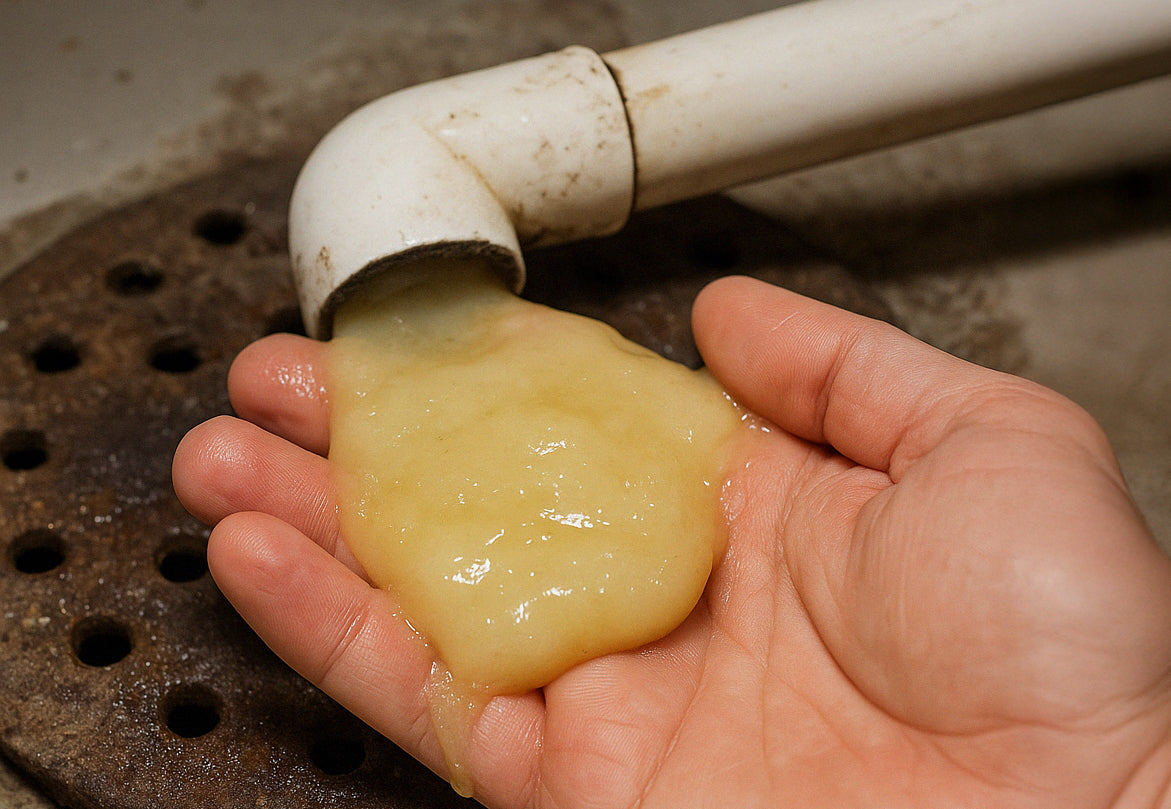
A condensate system is dark, wet and exposed to material carried through the indoor equipment. That combination creates several opportunities for buildup.
Biological buildup
Bacteria and other microorganisms can form a sticky biofilm inside the pan, trap and line. Homeowners often describe the material as slime, sludge, white gunk or “drain snot.”
The color and texture vary. The important point is that soft buildup can collect on the pipe wall, catch more debris and gradually restrict the path.
Dust and debris
Filters capture a great deal of airborne material, but not every particle. Dust that reaches the wet coil or drain pan can travel into the line and become part of a clog.
Poor drainage
Low spots, inadequate slope, an incorrectly configured trap or a sagging section can allow water and material to remain in the pipe. A line that never drains well is more likely to develop recurring problems.
Outdoor obstruction
Insects, soil, landscaping material or debris near the discharge opening can restrict the end of the line.
A dirty drain pan
Clearing the pipe without addressing material in the pan can leave the source of the next blockage in place.
If your A/C drain line keeps clogging, the cause may be more than missed maintenance. A professional should check the complete drainage path and installation.
Signs of a clogged A/C drain line
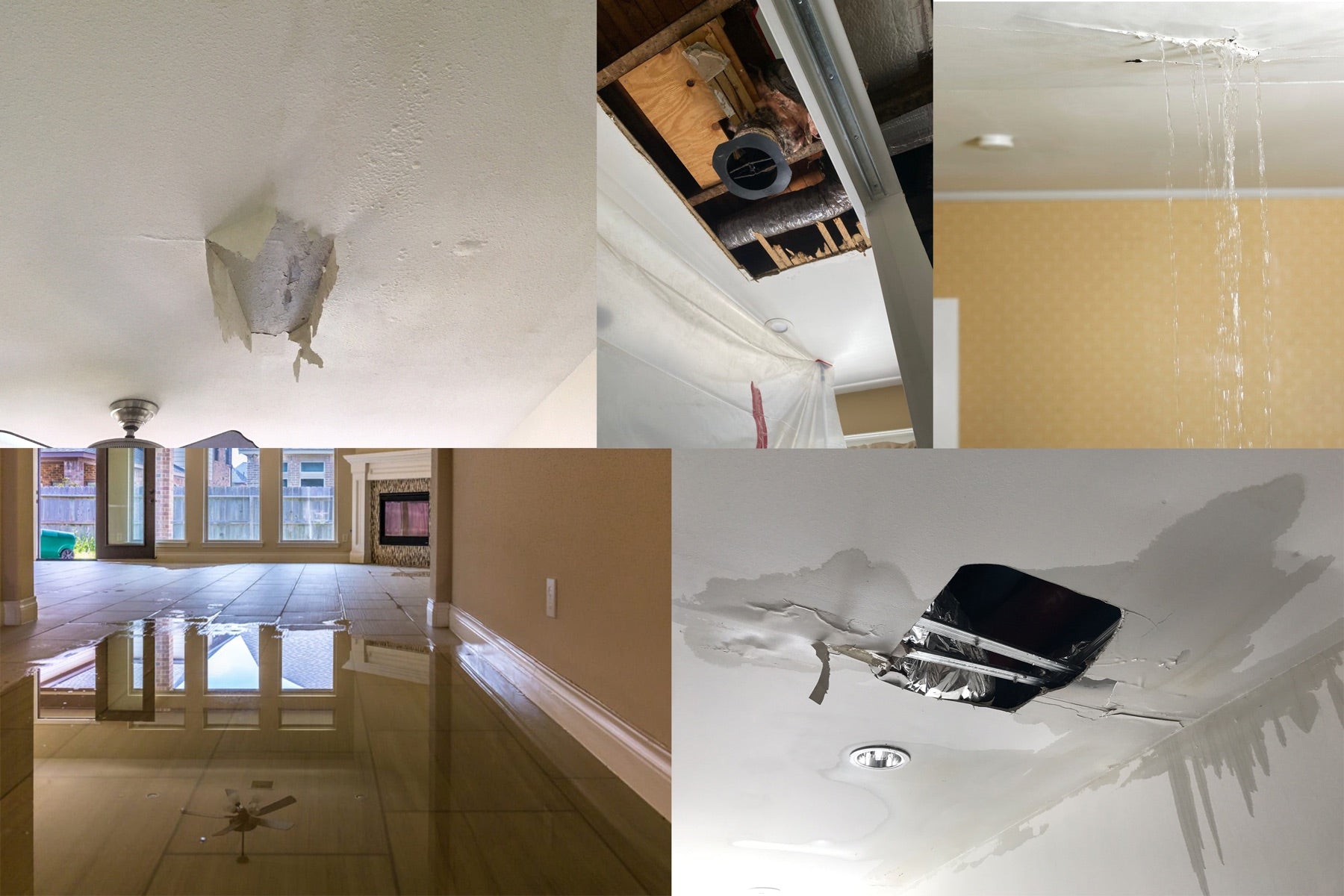
Common warning signs include:
- Water near the indoor unit
- A full or overflowing drain pan
- Ceiling or wall stains beneath attic equipment
- Water from the secondary drain
- A float switch that has opened
- A system that shut off unexpectedly
- Musty odors around the air handler
- Visible slime in the pan or cleanout
- Slow drainage during a maintenance test
A clogged line does not always announce itself at the outdoor outlet. Depending on the installation, a lack of visible dripping may be normal at that moment—or it may signal a blockage. Use the complete set of symptoms rather than one observation.
For a focused diagnostic walkthrough, see Clogged A/C Drain Line: Symptoms, Causes and Next Steps.
Can a clogged drain line stop the A/C?
Yes, some systems include a float switch or another condensate overflow safety device. When rising water moves the switch, it can interrupt the cooling system before the pan overflows.
That shutdown is protective. Resetting or bypassing the switch without correcting the drainage problem can remove the warning while leaving the water risk in place.
A drain clog is only one possible reason an A/C system will not start. Electrical faults, thermostat problems, control issues and other mechanical failures require different diagnosis. See A/C float-switch troubleshooting guide before assuming the drain is responsible.
What normal drainage looks like
Normal behavior depends on humidity, runtime and system configuration.
On a hot, humid day, a central A/C system may produce a steady amount of condensate. In milder or drier conditions, the amount may be much lower. Some drain outlets drip visibly outside; others terminate where the flow is harder to see.
The most useful baseline is your own system:
- The primary pan should not overflow.
- The auxiliary pan should normally remain dry.
- The secondary drain should not become the routine discharge path.
- Water should move through the intended line without backing up.
- The area around the indoor equipment should remain dry.
How homeowners clean A/C drain lines
Air leaking around a vacuum hose reduces the force reaching the clog. This Unclog test demonstrates why a tight connection matters when material is being pulled through a drain line.

Common maintenance methods include flushing from a cleanout, applying suction at the outlet and having a technician clear the line with professional equipment.
Before attempting any cleaning:
- Turn the A/C off according to the manufacturer’s instructions.
- Confirm that you have identified the correct drain opening.
- Keep liquids away from electrical components.
- Do not combine cleaning chemicals.
- Do not force pressure into a line unless you understand the piping and connections.
- Stop if water is already affecting ceilings, insulation or electrical equipment.
A wet/dry vacuum is commonly used at the outdoor termination to pull soft material from the line. The seal between the vacuum hose and pipe matters because air leaking around the connection reduces suction.
Flushing recommendations vary by equipment, drain materials and professional practice. Vinegar, peroxide, tablets and diluted chlorine products are all discussed online, often with contradictory instructions. Never mix bleach with vinegar, ammonia or another cleaner. Before adding a chemical, check the equipment manufacturer’s guidance and ask the contractor who services the system.
Our step-by-step A/C drain-line cleaning guide separates immediate clog removal from routine prevention and explains when DIY work should stop.
Vinegar, bleach and drain tablets
These options are not interchangeable.
- Vinegar is commonly discussed for routine flushing, but it is not a substitute for physically removing a complete blockage.
- Bleach is recommended by some technicians and discouraged by others because the system may include metals, seals, pumps or materials that react poorly to repeated exposure.
- Drain-pan tablets or strips are designed for specific placement and use. The product label and equipment instructions matter.
- Physical suction removes material rather than depending on a recurring chemical treatment.
The safest general rule is simple: do not improvise mixtures, do not assume more chemical is better and do not pour a product into an opening you have not positively identified.
For a side-by-side explanation, read Vinegar vs. Bleach for A/C Drain Lines.
How often should the line be checked?
There is no single interval that fits every home.
The maintenance need changes with:
- Local humidity
- Cooling-season length
- Daily A/C runtime
- Filter condition
- Drain slope and trap design
- Whether the system has clogged before
- Air-handler location
- The amount of biological buildup in the pan and line
A home in South Florida may need more frequent attention than a home with a short, dry cooling season. A system with a history of clogs deserves a more deliberate plan than one that has drained correctly for years.
At minimum, include the drain system in professional A/C maintenance and inspect the surrounding area regularly. If you want a climate-based schedule, see How Often Should You Clean an A/C Drain Line?.
Why recurring prevention matters
Manual drain cleaning tends to happen after one of three things:
- A calendar reminder appears.
- An A/C technician performs seasonal maintenance.
- Water or an unexpected shutdown forces the issue.
The third option is the one homeowners want to avoid.
Recurring prevention focuses on moving buildup before it becomes a complete restriction. That may include filter care, drain-pan inspection, scheduled professional maintenance and an appropriate line-cleaning routine.
Unclog was developed around this exact problem. Instead of asking homeowners to remember another chemical treatment or wait for the next wet/dry-vac cleanup, Unclog connects at the end of a compatible residential condensate drain line and runs scheduled suction cycles. It is designed to help move accumulated material without recurring chemicals.
Unclog is a prevention tool, not a substitute for repairing a cracked pan, correcting a poorly installed drain or addressing an active water emergency. Compatibility and installation requirements still matter.
When to call an A/C professional
Call a qualified professional when:
- Water is leaking through a ceiling or finished surface.
- The air handler or nearby electrical components are wet.
- The auxiliary pan is full.
- The A/C repeatedly shuts off.
- The line clogs again soon after cleaning.
- The condensate pump is not operating.
- The drain has a poor slope, broken fitting or inaccessible blockage.
- The coil is frozen or the system has airflow problems.
- You cannot confidently identify the drain components.
A good diagnosis looks beyond the visible outlet. The technician should consider the pan, drain connection, trap, vent, slope, float switch, pump and the full pipe route.
A practical homeowner checklist
Use this short checklist during cooling season:
- Look around the indoor unit for moisture.
- Check that the auxiliary pan is dry.
- Notice whether the secondary drain has begun dripping.
- Replace or clean the air filter on the schedule appropriate for your home.
- Keep the outdoor drain termination visible and free of landscaping debris.
- Include the drain pan and line in professional maintenance.
- Respond to recurring clogs as a system problem, not just a cleanup chore.
Frequently asked questions
Is an A/C drain line the same as a condensate line?
In residential air-conditioning conversations, the terms usually refer to the same drainage path: the pipe that carries condensed water away from the indoor unit.
Does the A/C drain line connect to the outdoor condenser?
Usually, the condensate line begins at the indoor evaporator-coil or air-handler area. Its outdoor outlet may be near the condenser, which can make the two seem directly connected.
Should water always drip from the outdoor A/C drain pipe?
Not necessarily. Drainage changes with humidity, system runtime and the way the line terminates. A dry outlet is more concerning when it appears with standing water, leaks, a full pan or other drainage symptoms.
Can I use a plumbing drain cleaner in the A/C line?
Do not assume a household plumbing chemical is safe for HVAC equipment. The drain path may include metals, seals, pumps and components that are not present in an ordinary sink drain.
Why does my drain line clog so often?
Recurring clogs can result from heavy biological growth, debris in the pan, drainage slope, trap configuration, long cooling seasons or incomplete cleaning. A professional inspection can identify whether the problem is maintenance-related or structural.
Can Unclog clear a completely blocked line?
An active, fully blocked line should be diagnosed and cleared before relying on a prevention routine. Unclog is designed to run recurring suction cycles that help keep a compatible line clear after installation.
The next guide to read
If you are currently troubleshooting, continue with Clogged A/C Drain Line: Symptoms, Causes and Next Steps.
If your line is currently flowing and you want a prevention plan, read How Often Should You Clean an A/C Drain Line? or see how Unclog works.
About the author: Anthony Tranchida is the founder of Unclog. He developed Unclog after working through multiple physical prototypes for a simpler, automatic approach to residential A/C condensate drain-line care.
Editorial note: This guide provides general homeowner education. HVAC systems and installation requirements vary. Follow the equipment manufacturer’s instructions and consult a qualified A/C professional when water, electrical components or system operation are involved.