
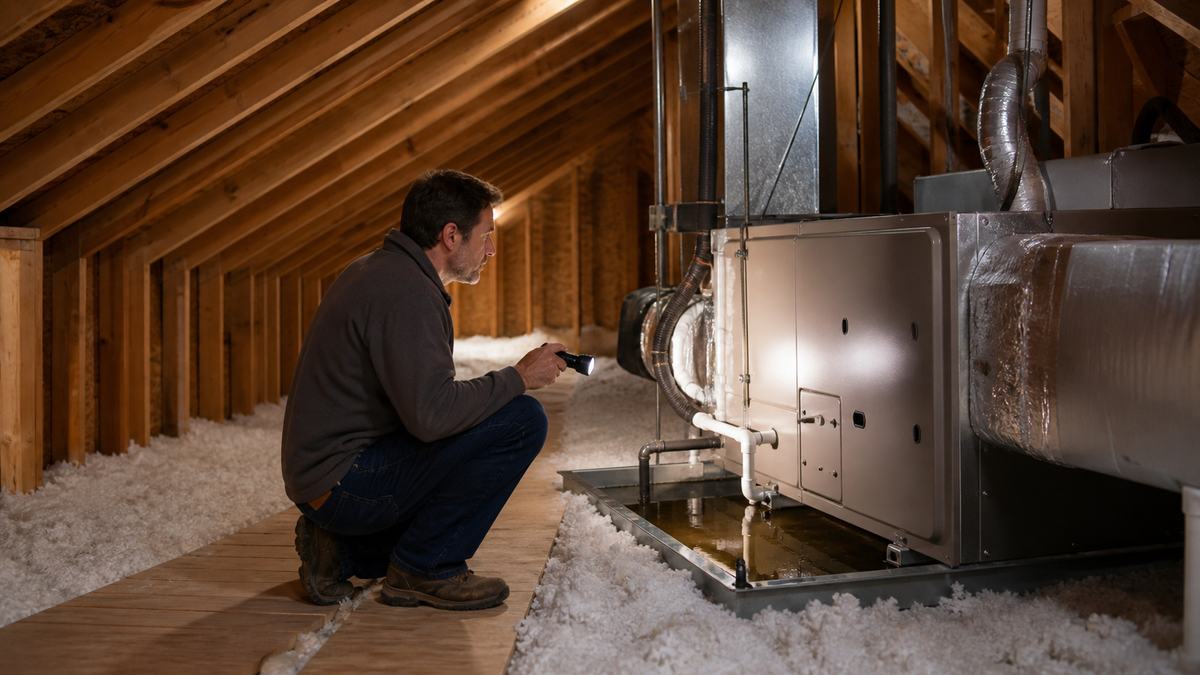
A drain pan with standing water is a warning, not a diagnosis. A small amount of water in the internal pan can be normal while the system runs. Water collecting in the large emergency pan beneath the unit is not. It usually means the normal drainage path is slow, blocked, damaged, or unable to keep up.
If the water level is rising, water is near wiring, or a ceiling is getting wet, turn the cooling system off at the thermostat and call a qualified HVAC professional. The checks below are visual and low-risk. They are meant to help you describe the problem, not encourage you to open equipment or work around electricity.

First, identify which drain pan has water
Most central A/C systems have an internal primary condensate pan directly under the evaporator coil. Its job is to collect moisture removed from the air and route it into the primary drain line. You may not be able to see this pan without opening the cabinet, and you should not remove panels just to check it.
Systems installed above finished living space often also have a large auxiliary pan beneath the entire air handler. It is a backup. Under normal conditions, it should stay dry. Water there suggests that condensate escaped the primary system or came from another fault, such as a thawing frozen coil.

Why an A/C drain pan fills with water
1. The condensate drain line is slow or clogged
This is the most common drain-related explanation. Airborne dust and biological buildup can collect inside the wet drain path. As the opening narrows, water backs up faster than it can leave. A float switch may shut the system down before the pan overflows, which is why a wet pan and an A/C that suddenly stopped can happen together. See what to do when an A/C float switch trips.
2. The drain trap or pipe slope is causing poor flow
A condensate line needs the correct trap and continuous fall for the equipment design. A sagging section can hold debris and water. An improperly configured or dry trap can also affect drainage on some negative-pressure air handlers. These are installation issues, so a professional should evaluate the layout rather than guessing or cutting pipe.
3. A condensate pump is not moving water
When gravity cannot carry condensate to a safe discharge point, a small pump may collect and lift the water. A tripped outlet, stuck float, blocked tube, failed motor, or full reservoir can stop that process. Confirm only that the plug is seated and the circuit has power. Do not open, bypass, or disassemble the pump while it is connected.

4. A frozen evaporator coil is thawing
Restricted airflow, a dirty filter, blower trouble, or a refrigerant-system problem can allow ice to form on the coil. When the ice melts, the volume of water can overwhelm the primary pan or drip outside it. A frozen coil is not fixed by clearing the drain alone. If cooling is weak, airflow is low, or you see ice, turn the system off and use the fan setting only if your HVAC professional recommends it. Read the A/C not cooling diagnostic guide for the next safe checks.
5. The pan, drain connection, or fitting is damaged
Older metal pans can corrode. Plastic pans and fittings can crack or loosen. Water escaping below the pan, rust trails, or a leak that continues even when the drain outlet is clear points away from a simple clog. This usually requires access to the equipment and replacement or repair by a technician.

Safe checks you can make without opening the unit
- Watch the water level. If it is rising, spreading, or approaching electrical parts, turn cooling off at the thermostat. Do not wait for the float switch.
- Check the air filter. A severely loaded filter can contribute to low airflow and coil icing. Replace it with the correct size and type if it is dirty.
- Confirm supply and return vents are open. Blocked airflow can worsen freezing and comfort problems.
- Look for ice without removing panels. Ice on an accessible refrigerant line or visible cabinet sweating, paired with weak airflow, supports the frozen-coil possibility.
- Observe the outdoor drain outlet while the system runs. No dripping does not prove a clog, but it is useful evidence when the indoor pan is filling.
- Check a condensate pump from the outside. Confirm power and note whether it runs. Do not defeat its safety switch or reach into the reservoir.
- Take photos and note timing. Record whether water appears only while cooling, after shutdown, or after visible ice melts. This can shorten the technician's diagnostic process.
If the evidence points to a blocked line and the installation has a safe, accessible exterior outlet, our step-by-step drain-line cleaning guide explains the limits of homeowner maintenance. Stop if the line is inaccessible, the system is above finished space, water is near electricity, or clearing the line does not restore steady flow.
What not to do with a full drain pan

- Do not keep running the A/C while water is rising.
- Do not bypass a float switch. It is protecting the home from overflow.
- Do not open the air-handler cabinet around wet components.
- Do not pour chemicals into an unidentified opening.
- Do not assume every wet pan is a clog. A frozen coil, failed pump, cracked pan, or installation issue needs a different fix.
- Do not use compressed gas or excessive pressure that could separate hidden drain fittings.
Call an HVAC professional now if...
- Water is reaching a ceiling, wall, insulation, wiring, or electrical equipment.
- The pan refills after you remove standing water.
- The coil or refrigerant line is iced.
- The condensate pump has power but does not empty.
- The pan is rusty, cracked, tilted, or leaking at a connection.
- The system repeatedly shuts down on the float switch.
- The A/C is not cooling or airflow is unusually weak.
Water damage can spread beyond the area you can see. If the unit is in an attic or above a finished ceiling, treat a wet auxiliary pan as urgent even when there is no visible stain yet. The condensate leak hub can help you trace other common leak locations.
How to reduce the chance of another full pan
Start with airflow and drainage. Check the filter on a schedule that fits your home, keep returns unobstructed, and have the evaporator coil and drain configuration inspected during routine HVAC service. For the drain line itself, preventive cleaning is usually easier than dealing with an active overflow. Our maintenance hub explains how climate, pets, occupancy, and system runtime affect the interval.
Unclog is designed to make scheduled suction-based condensate drain cleaning more convenient. It is a preventive drain-care tool. It does not repair a cracked pan, thaw a frozen coil, correct pipe pitch, or replace a failed condensate pump. Diagnose those conditions first.
Keep the drain line from becoming the emergency
Learn how Unclog supports routine condensate drain care between professional HVAC visits.
See how Unclog worksFrequently asked questions
Is a little water in the A/C drain pan normal?
The internal primary pan can be wet while the A/C is actively removing humidity. The large auxiliary pan beneath the unit should normally be dry. Standing or rising water there means the primary drainage system or another component needs attention.
Can I run my A/C if the drain pan is full?
No. If water is standing in the auxiliary pan or rising toward an overflow, turn cooling off at the thermostat. Continued operation can cause property damage and may bring water closer to electrical components.
Will replacing the filter empty the drain pan?
A dirty filter can contribute to coil freezing, but replacing it will not clear a clogged drain, fix a failed pump, or repair a damaged pan. Remove the airflow restriction, then have the underlying water source diagnosed.
Why is the drain pan full but the drain line does not look clogged?
The restriction may be hidden in a trap or pipe section. The cause may also be a thawing frozen coil, a failed condensate pump, poor pipe slope, or a damaged pan connection. The timing and location of the water help separate these possibilities.
Should I use bleach or vinegar in a full drain pan?
No. Do not add chemicals to a full pan or an unidentified opening. First stop the overflow and identify the cause. Product and equipment manufacturers may have specific drain-care guidance, so follow the documentation for your system.