
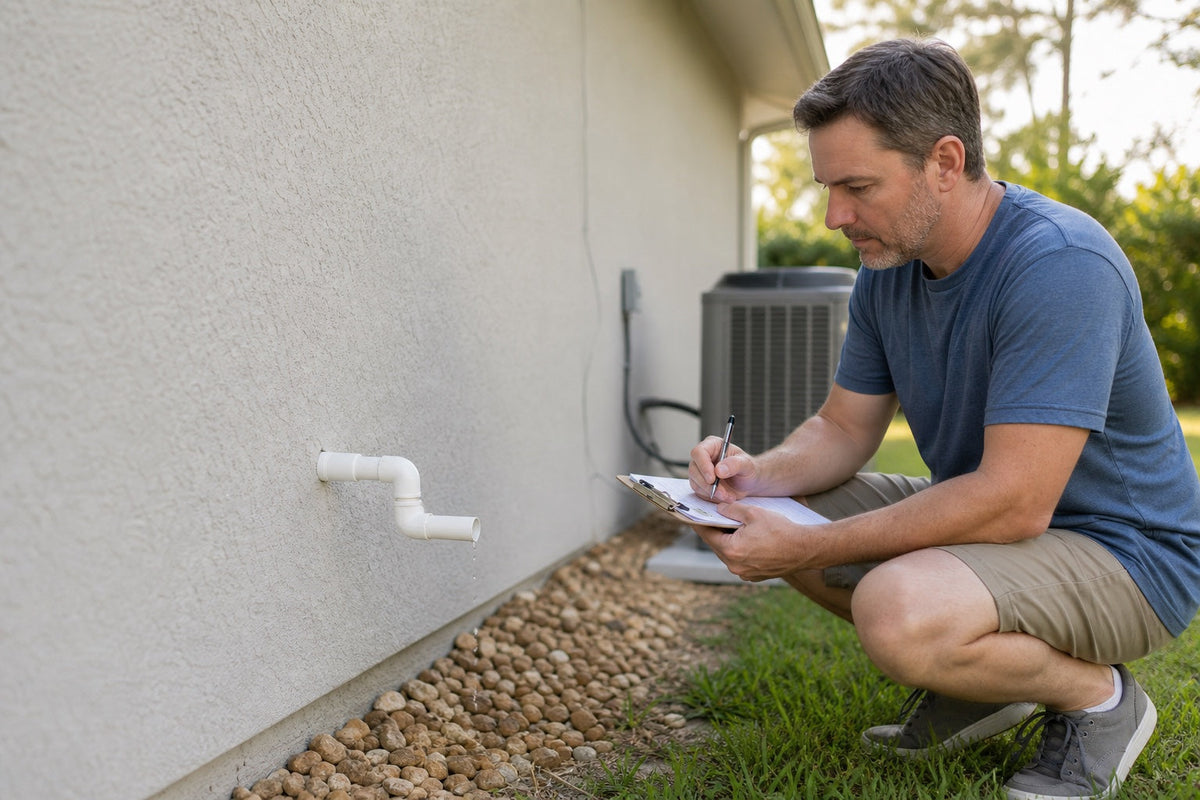
Short answer: Most homeowners should have the complete A/C condensate drainage system checked during professional cooling-system maintenance and visually inspect the accessible pan, safety switch, and outlet during the cooling season. A line with a history of clogs, long runtimes, or an attic installation may need attention more often. The right interval is based on evidence from your system, not a universal monthly ritual.
An A/C drain line does not collect buildup at the same rate in every house. A system that runs for long hours in humid weather can move far more water than one in a mild, dry climate. Dust, pipe layout, equipment location, and past drainage trouble also change the risk.
This guide explains how to set a useful inspection and maintenance schedule without cleaning blindly, mixing chemicals, or waiting for water damage to choose the timing for you.
The useful answer is a range, not a universal number
Search results often offer a simple answer such as “once a month” or “once a year.” Both can be misleading when they are separated from the condition of the equipment.
There are also two different jobs hidden inside the word clean:
- Inspection means looking for standing water, residue, leaks, a raised float switch, or an obstructed outlet. It is quick and does not disturb the system.
- Cleaning means physically removing buildup or using an equipment-approved maintenance method after the line is known to be flowing.
Inspection can happen more frequently than cleaning. A clean, freely draining line does not automatically benefit from being taken apart or filled with another product on a rigid calendar.
Start with this practical A/C drain-line schedule
Before the main cooling season
Have the condensate system included in professional A/C maintenance. The check should cover more than the last few inches of pipe. It should include the indoor pan area, primary drain connection, trap, vent or cleanout, condensate pump if present, safety switch, visible pipe joints, and final discharge point.
This is the right time to correct a damaged pan, poor pipe pitch, loose connection, failed pump, or missing service access. A cleaning routine cannot repair those installation problems.
During the cooling season
Look at the accessible parts of the system periodically, especially during the hottest and most humid stretch of the year. For many homes, pairing a visual drain check with the air-filter check makes the task easier to remember.
You are looking for change: water where the pan is normally dry, a new ceiling stain, damp insulation, residue around a connection, an emergency drain that suddenly drips, or an outdoor termination that looks obstructed.
After severe weather, service, or a drainage event
Recheck the system after an overflow, float-switch shutdown, drain repair, condensate-pump replacement, or work that changed the pipe route. Confirm that water still reaches the intended outlet and that every cap and safety device was restored.
If a storm or landscaping work packed debris around an outdoor termination, clear the area without forcing material into the pipe.
Five factors that should change the frequency

1. Humidity and system runtime
The indoor coil removes moisture while the system cools. Longer runtimes and higher indoor humidity usually mean more condensate moving through the drain. That does not guarantee a clog, but it gives residue more moisture and more operating time to develop.
Homes in hot, humid regions should usually inspect drainage more often during peak season than homes where cooling runs occasionally.
2. The line’s actual history
A system that has never shown standing water is different from one that has clogged twice in the same summer. Record the date, symptom, location of the restriction, method used, and whether full flow was verified afterward.
If the interval between clogs keeps shrinking, simply cleaning more often is not a satisfying diagnosis. The route may have poor pitch, a sag that holds water, a partially restricted pan outlet, recurring debris from the equipment, or a pump problem.
3. The cost of a failure
An air handler in a garage over a floor drain presents a different water-damage risk from one above a finished ceiling. Attic units, systems over living space, and installations near stored belongings deserve more frequent visual checks because the consequence of an unnoticed overflow is higher.
That does not mean bypassing the float switch to avoid shutdowns. The switch is there to stop a drainage problem from becoming building damage.
4. Drain length and layout
Long horizontal runs, multiple turns, shallow pitch, traps, pumps, and concealed sections add places where water or residue can collect. A short, accessible gravity drain is easier to observe and test.
If you cannot trace the indoor connection to the final discharge point, have a qualified A/C professional identify the route before anyone applies suction, pressure, or liquid.
5. Dust and indoor conditions
Dust that reaches the wet coil and pan can contribute material to the drainage system. Filter condition, air leakage around the equipment, construction dust, pets, and the cleanliness of the coil compartment can all affect what reaches the drain.
Changing a filter on schedule is useful, but a dirty drain is not proof that the filter alone caused it. Treat the system as a complete water path.
What to inspect regularly versus what to clean

A useful visual check does not require opening electrical compartments or dismantling the air handler. From a safe service area, look for:
- A normally dry auxiliary pan that now contains water
- A float switch that has risen or interrupted cooling
- Rust, residue, or moisture around visible drain connections
- A condensate pump that is full, silent, leaking, or cycling abnormally
- An outdoor outlet blocked by soil, mulch, insects, or landscaping
- A secondary or emergency drain that has started running
Clean the line when inspection, testing, or service history shows that buildup needs to be removed. For an accessible active restriction, physical removal is usually more useful than adding liquid to an already backed-up pipe. The complete process is covered in our A/C drain-line cleaning guide.
Signs your current schedule is too long
Your maintenance interval should become shorter when the system repeatedly reaches the warning stage before the next planned check. Watch for:
- Recurring float-switch shutdowns
- Standing water or fresh residue in the pan
- Water appearing from an emergency drain
- Repeated ceiling stains or moisture near the indoor unit
- Increasing amounts of soft buildup at the outlet
- A line that passes a test after cleaning but loses flow again quickly
Do not simply shorten the calendar forever. Repeat failures deserve a root-cause inspection. See our guide to clogged A/C drain-line symptoms and causes when water is already backing up or the system has stopped.
Why cleaning more often can still miss the real problem
A recurring clog can be a maintenance issue, but it can also be the symptom of an installation or equipment problem. Common examples include a sagging horizontal run, an improperly configured trap or vent, a cracked drain pan, a failing condensate pump, or debris returning from an upstream area that was never cleaned.
Another common mistake is treating “something came out of the pipe” as proof that the complete line is working. A proper result means controlled test water travels from the correct indoor access point to the intended outlet without leaking or backing up.
If the line will not hold normal flow after a careful cleaning, stop repeating the same step and have the system diagnosed.
Keep a simple maintenance record
A short record turns guessing into a schedule that fits the home. Use the printable A/C condensate drain maintenance log to keep observations and service notes together for each system. Note:
- The date of each inspection or professional service
- Whether the pan was dry and the float switch was normal
- Whether flow was observed or tested
- Any residue, leaks, odors, or unusual pump behavior
- What cleaning method was used
- How long the line stayed clear afterward
After one full cooling season, patterns become easier to see. Property operators can use the same record for each unit and give higher-risk systems a shorter inspection interval.
Where automatic preventative suction fits

Prevention begins only after the drain is open, intact, and moving water normally. For a compatible residential system, scheduled suction at the outdoor termination can help move developing material before it becomes another full restriction.
That is the job Unclog is designed to perform. It does not repair a broken pan, correct poor pipe pitch, revive a failed condensate pump, or replace professional A/C maintenance. It adds a repeatable drain-care step between service visits without relying on another bottle or calendar reminder.
When to call an A/C professional
Call a qualified professional when water is touching electrical equipment, spreading into ceilings or walls, or collecting in an inaccessible attic area. Professional help is also appropriate when the route cannot be identified, the line clogs again soon after verified cleaning, the condensate pump does not work, or the system continues shutting down.
Carrier’s homeowner guidance recommends regular maintenance and professional help for persistent condensate clogs, while Trane’s condensate-drain guidance includes keeping the drain clear as part of ongoing system care. The equipment manufacturer and the conditions at your home should guide the final schedule.
Frequently asked questions
Should I clean my A/C drain line every month?
Not every system needs a full monthly cleaning. Monthly visual checks can be reasonable during heavy cooling use, especially for attic equipment or a line with past clogs. Clean based on the condition and service history of the system.
Is once-a-year A/C drain maintenance enough?
Annual professional maintenance is a useful baseline, but it may not be enough for a high-risk installation or a line that repeatedly clogs during a long humid season. Visual checks between service visits can catch changes earlier.
Can I pour vinegar into the line on a schedule?
Only use a method approved for the installed equipment, and only after confirming the correct access point and normal drainage. Do not pour liquid into a fully blocked line, mix cleaners, or assume vinegar will correct a physical restriction or installation problem.
Does a dry outdoor drain mean it needs cleaning?
No. Drainage changes with humidity, runtime, and how the system is configured. A dry outlet is more meaningful when it appears with standing water, a full pan, a tripped float switch, or another drainage symptom.
How often should landlords or property managers check condensate drains?
Set the interval by unit history and water-damage risk. Record every system, identify its drain route, and inspect attic units, repeat offenders, and equipment over finished spaces more frequently than low-risk installations.
Reviewed July 2026. This article provides general homeowner education and does not replace the instructions for your equipment or an on-site diagnosis.