
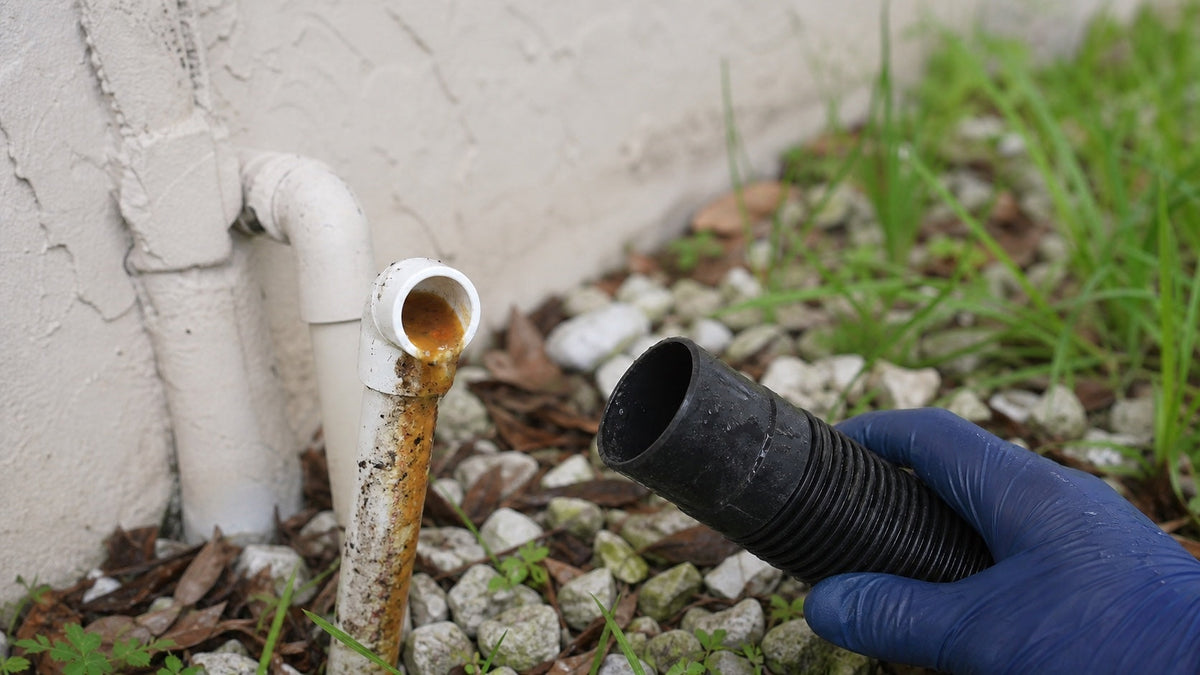
A clogged A/C drain line can show up as a puddle beside the indoor unit, a stain on the ceiling or an air conditioner that suddenly refuses to run. Those symptoms all deserve attention, but they do not automatically prove that the drain line is the cause.
This guide will help you recognize the most useful clues, rule out a few look-alike problems and decide what to do next. If water is already spreading through a ceiling, touching electrical equipment or overflowing from the air handler, turn the cooling system off and call a qualified A/C professional.
Quick answer: The strongest signs of a clogged A/C drain line are backed-up water near the indoor unit, a wet or full auxiliary drain pan, water coming from a secondary drain outlet and a float switch that has shut the system down. A musty smell or a dry outdoor outlet can support the diagnosis, but neither one confirms a clog by itself.
Start with the symptom you can see
The location of the water—or the fact that there is no visible water—can narrow the possibilities quickly.
Water beside the indoor air handler
If ice was visible before the puddle appeared, use the frozen-coil versus clogged-drain guide to separate the cooling fault, meltwater timeline and drainage check.
Water near the indoor equipment is one of the clearest warning signs of a drainage problem. Condensate may be backing up in the primary pan, overflowing into an auxiliary pan or escaping through a loose or cracked connection.
Do not assume the pipe is the only possible cause. A frozen evaporator coil can release a large amount of water as it thaws. A damaged pan, failed condensate pump or disconnected fitting can also leave water around the unit.
A ceiling stain below attic equipment
A new yellow or brown stain beneath an attic air handler needs prompt attention. The visible mark may be far from the actual leak because water can travel along framing, insulation or drywall before it appears.
Turn the system off. Avoid opening wet equipment or walking on damp ceiling material. A technician should inspect the primary pan, auxiliary pan, drain connections, float switch and the complete condensate path.
The A/C stopped running
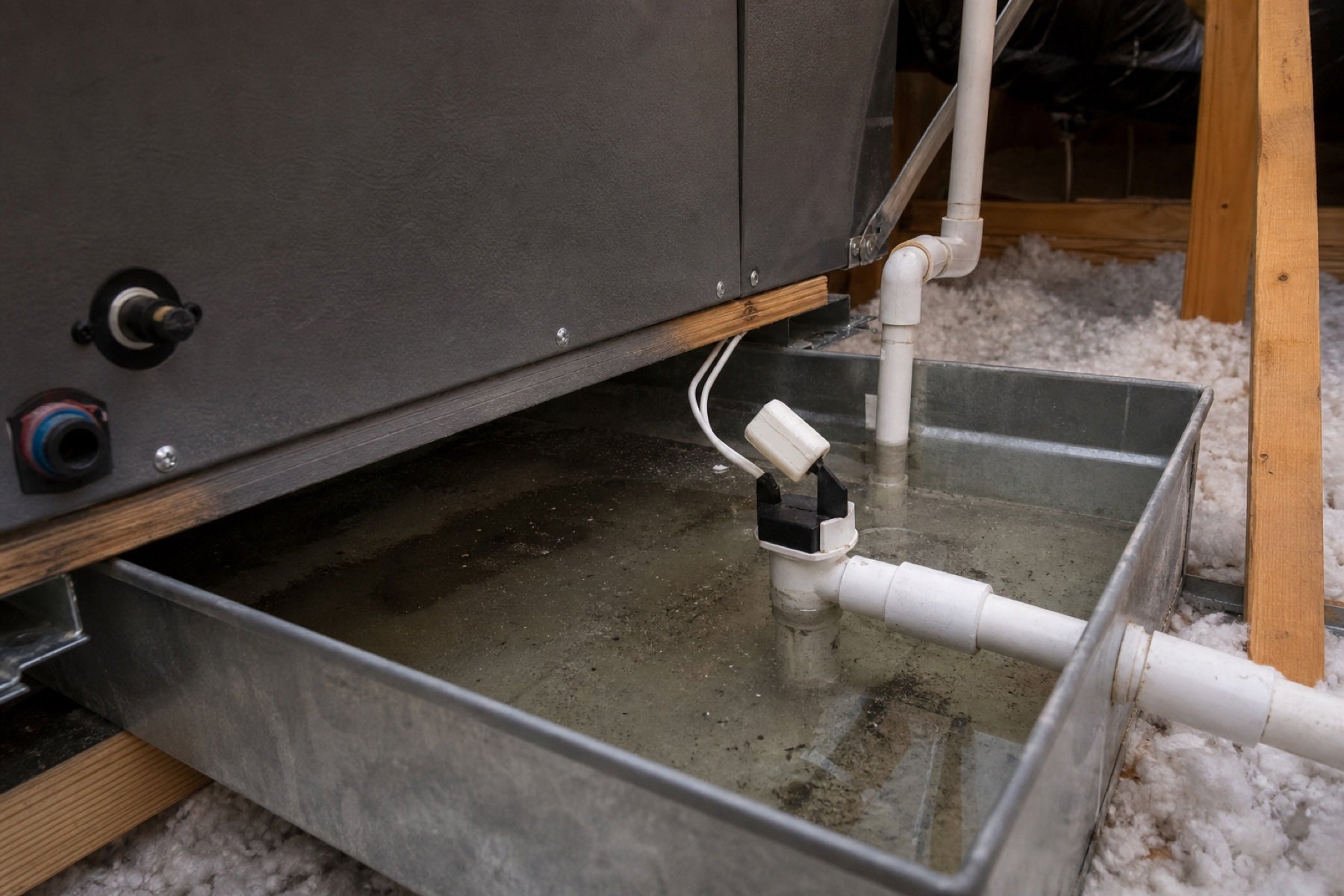
A clogged drain can stop some air-conditioning systems. When backed-up water raises a float switch, the switch opens the control circuit so the system shuts down before the pan overflows.
That shutdown is protection—not the failure itself. Do not bypass the float switch to make the A/C run. The switch may be the only thing standing between a drain problem and water damage.
A blank thermostat or an A/C that will not start can have many other causes, including a tripped breaker, control fault, thermostat problem or failed component. Water in the pan or float-switch chamber makes a condensate problem more likely, but diagnosis still matters.
Water is dripping from a secondary drain
Many homes have a secondary drain outlet positioned somewhere noticeable, sometimes above a window or doorway. Water coming from that outlet is often an intentional warning that the normal drainage path is not working correctly.
Do not treat the secondary outlet as a harmless alternate drain. Find out why the primary path is not carrying the water.
The indoor unit smells musty
A dark, wet drain pan and pipe can support biological growth. Musty odors near the air handler can accompany a dirty pan or slow drain, but odor alone does not establish where the problem is. Wet insulation, a dirty evaporator coil and other moisture problems can smell similar.
No water is coming from the outdoor pipe
A dry outdoor condensate outlet is not automatically clogged. The amount of condensate changes with humidity, cooling runtime and the way the system is installed. Some systems discharge where the flow is difficult to see.
A dry outlet becomes more meaningful when the A/C has been cooling in humid weather and you also find standing water, a wet float switch, an overflowing pan or another drainage symptom. The outdoor drain-line guide shows how to identify the correct pipe before using the outlet as a clue.
Seven common clogged A/C drain-line symptoms
- Standing water around the indoor unit
- Water collecting in the auxiliary drain pan
- A ceiling, wall or floor stain near the air handler
- Water dripping from the secondary drain outlet
- An activated condensate float switch
- An A/C system that shut off unexpectedly
- Visible slime or slow drainage at an identified cleanout
The more of these signs that appear together, the stronger the case for a clogged or restricted condensate path. One symptom by itself may still have another explanation.
What a clog actually looks like inside the pipe
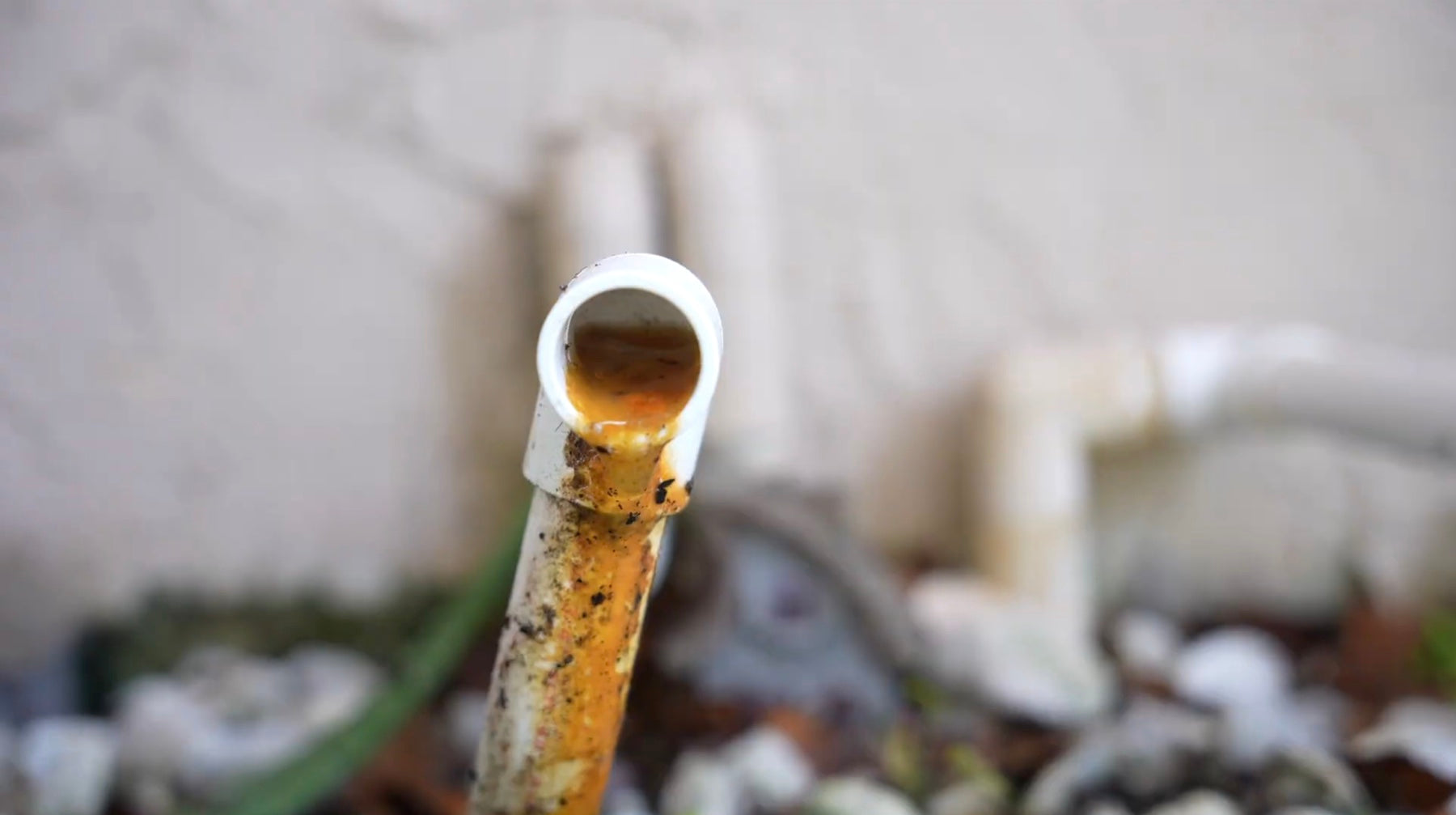
Most residential condensate clogs are not a single hard object wedged neatly in the outlet. They often develop as a soft restriction along the pipe wall.
Dust and airborne particles reach the wet drain pan. Bacteria and other microorganisms can form a sticky biofilm. That material catches more debris, collects in traps or low spots and gradually narrows the path. Homeowners describe what comes out as slime, sludge, white gunk or “drain snot.”

Outdoor debris can also block the discharge end. Insects, soil, mulch and landscaping material deserve a look, especially when the outlet sits close to the ground.
How to check the drain without guessing
You do not need to dismantle the air handler to make a useful first inspection.
- Turn the cooling system off. Follow the equipment manufacturer’s instructions. If water is near electrical components, stop and call a professional.
- Locate the indoor equipment. The air handler or evaporator coil may be in an attic, garage, closet, basement or mechanical room.
- Look around the unit. Check for water on the floor, moisture around pipe connections and standing water in an auxiliary pan.
- Identify the float switch. If you know what it is, look for water in its chamber. Do not bypass, remove or force the switch.
- Find the outdoor termination. Keep landscaping away from the opening and look for an obvious obstruction.
- Compare the clues. Water upstream with little or no drainage downstream points toward a restriction, but a cracked pan, failed pump or frozen coil still needs to be considered.
If you cannot confidently identify the drain, cleanout, vent and secondary connection, do not pour anything into an opening just because it is PVC.
Can you clear the clog yourself?
Some homeowners use a wet/dry vacuum at the outdoor termination to pull soft material from the line. The connection needs a reasonably tight seal; air leaking around the hose reduces the suction reaching the restriction.
Before attempting that method, make sure:
- The water has not reached electrical components or finished surfaces.
- You have positively identified the condensate outlet.
- The pipe and fittings are intact.
- You understand how to turn the system off safely.
- You are comfortable stopping if the line does not clear promptly.
Our step-by-step A/C drain-line cleaning guide covers the wet/dry-vac method, flushing considerations and the checks to make before turning the system back on.
What not to do to a clogged drain line
- Do not mix cleaners. Bleach, vinegar, ammonia and other chemicals can create dangerous reactions when combined.
- Do not use ordinary plumbing drain opener. An HVAC drain may include metals, seals, pumps and equipment that are not part of a sink drain.
- Do not apply uncontrolled pressure. Excessive compressed air or water pressure can separate fittings or push material into the pan.
- Do not force a cable through unfamiliar piping. Traps, elbows and condensate pumps can be damaged.
- Do not bypass a float switch. Correct the water problem that activated it.
- Do not keep running a leaking system. A small drainage problem can become damaged drywall, insulation or flooring.
Why the line clogged in the first place
Clearing the restriction restores a path for the water. It does not always address the condition that created the restriction.
Recurring clogs can be encouraged by:
- Heavy biological growth in the pan and line
- Dust and debris reaching the wet evaporator area
- A dirty primary drain pan
- Long cooling seasons and high humidity
- Low spots or inadequate slope in the piping
- An incorrectly configured trap or vent
- A partially blocked outdoor termination
- Incomplete cleaning that leaves material upstream
If the A/C drain line keeps clogging, ask a technician to inspect the full route rather than repeating the same outlet cleanup indefinitely.
Clearing an active clog versus preventing the next one
An active water backup comes first. The line needs to be cleared, the pan needs to drain and any underlying installation or equipment problem needs to be corrected.
Prevention starts after the system is draining normally. That may include filter care, drain-pan inspection, professional maintenance and a recurring method for moving buildup before it becomes a complete restriction.
Unclog was developed for that prevention stage. It connects at the outdoor end of a compatible residential condensate drain line and runs scheduled suction cycles. It is not a substitute for diagnosing an active leak, repairing a damaged pan or correcting faulty drain piping.
When to call an A/C professional
Call a qualified professional when:
- Water is coming through a ceiling or finished wall.
- The air handler, wiring or nearby electrical components are wet.
- The auxiliary drain pan is full or overflowing.
- The system repeatedly shuts off on the float switch.
- The line does not clear with a safe, basic outlet-vacuum attempt.
- The evaporator coil is frozen or covered with ice.
- A condensate pump is not operating.
- The pipe is cracked, sagging, disconnected or inaccessible.
- The clog returns soon after cleaning.
- You are not certain which pipe or access point you are looking at.
A useful service call should evaluate more than the last few inches of pipe. The technician should consider the drain pan, coil condition, trap, vent, slope, float switch, condensate pump and complete drainage route.
Frequently asked questions
Will a clogged A/C drain line cause the A/C to stop working?
It can. If the system has a condensate float switch, backed-up water may activate the switch and interrupt cooling. Many other electrical and mechanical problems can also stop an A/C, so water in the pan or switch chamber is an important clue.
Can I run the A/C with a clogged drain line?
Do not keep running a system that is backing up or leaking water. Continued operation can overflow a pan and damage nearby materials. A protective float switch should not be bypassed.
How do I know whether the primary or secondary drain is clogged?
Water from a secondary outlet often means the primary drainage path is not working normally. The blockage may be in the pipe, pan connection, trap or another part of the primary path. A professional can trace the configuration when the lines are not clearly identified.
How much does it cost to unclog an A/C drain line?
The cost varies by location, access, clog severity and whether the pan, pump or piping also needs work. Ask a local A/C contractor for an estimate based on the actual system rather than relying on a national flat-price claim.
Does vinegar clear a completely clogged A/C drain line?
Vinegar is commonly discussed for routine drain care, but pouring liquid into a fully blocked line does not physically remove the obstruction and may add more water upstream. See our guide to vinegar versus bleach for A/C drain lines before using any chemical treatment.
What should I read next?
If the system is dry and currently draining, return to the complete homeowner’s guide to A/C drain lines or learn how often the line should be checked.
About the author: Anthony Tranchida is the founder of Unclog. He developed Unclog after working through multiple physical prototypes for a simpler, automatic approach to residential A/C condensate drain-line care.
Editorial note: This guide provides general homeowner education. HVAC equipment, drainage layouts and local requirements vary. Follow the equipment manufacturer’s instructions and consult a qualified A/C professional when water, electricity or system operation is involved.