
Water near the unit
Stop cooling if water is reaching electrical components or spreading into floors, insulation, or drywall.
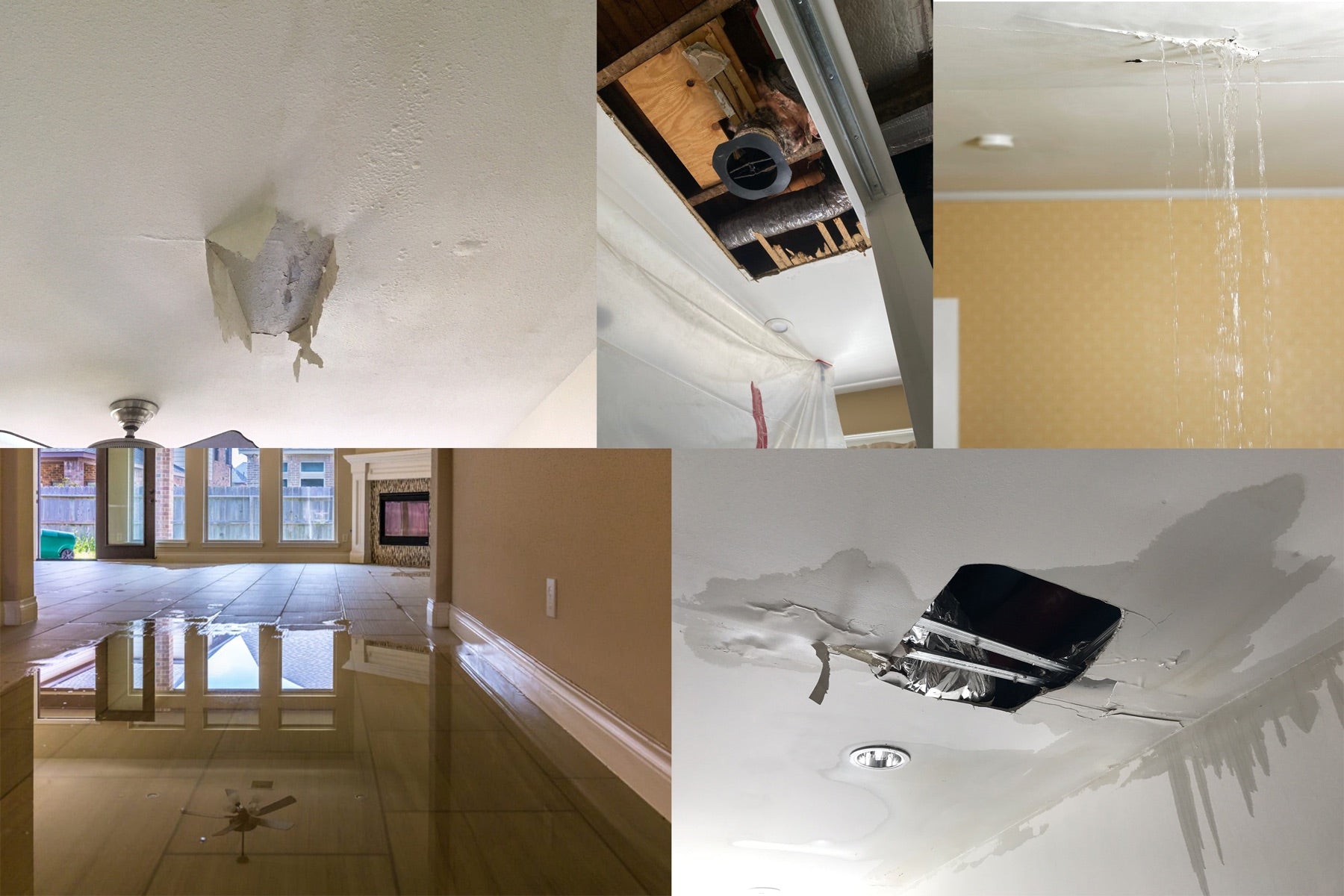
Stop cooling if water is reaching electrical components or spreading into floors, insulation, or drywall.
Water can travel along framing before it becomes visible. The stain may be far from the actual failure.
An emergency outlet that suddenly runs can indicate the primary drainage path is not working normally.
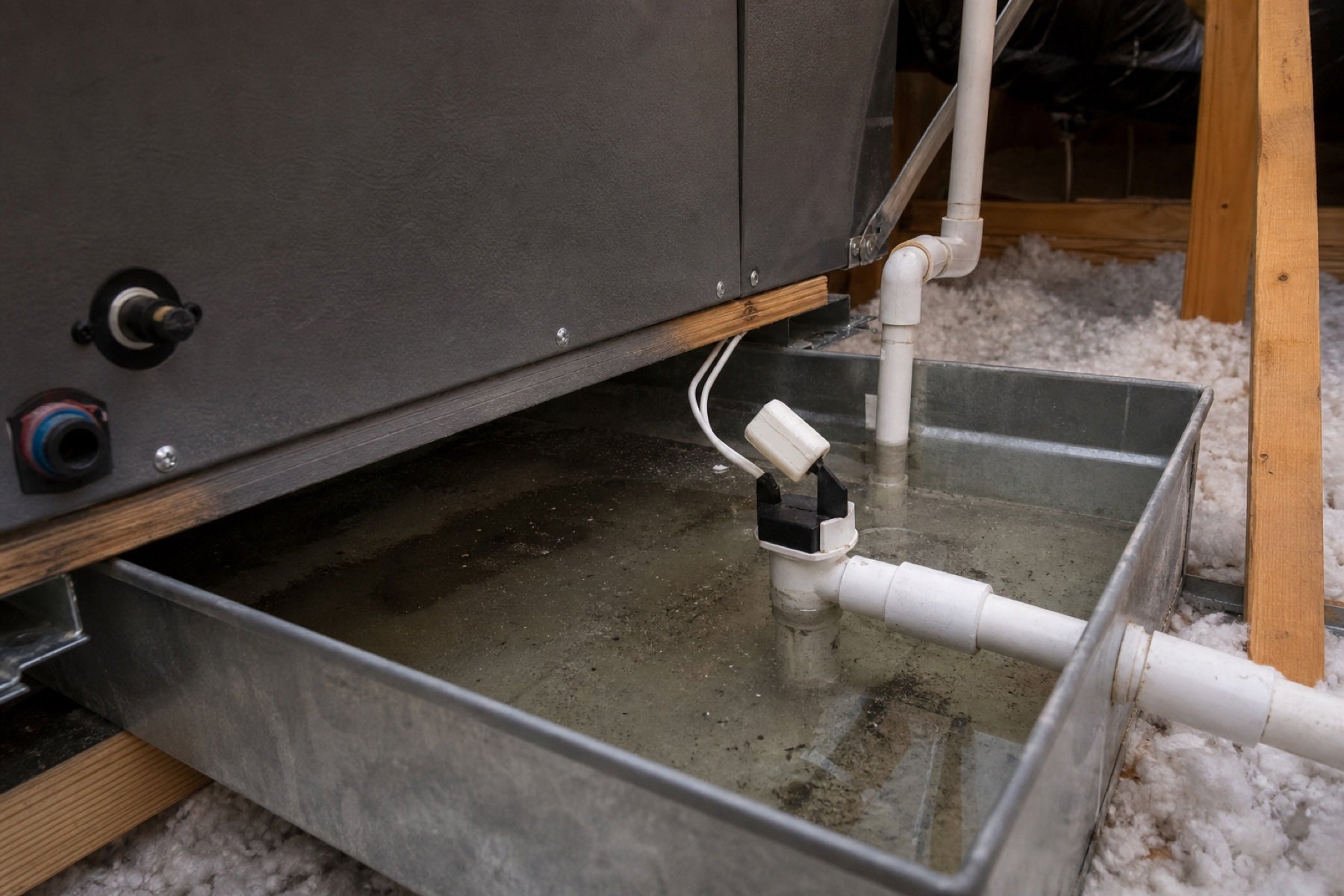
Begin at the wettest safe point and work back toward the indoor coil. Check the primary pan, auxiliary pan, drain connections, float switch, trap, pump, and visible pipe joints. Do not open wet electrical compartments.
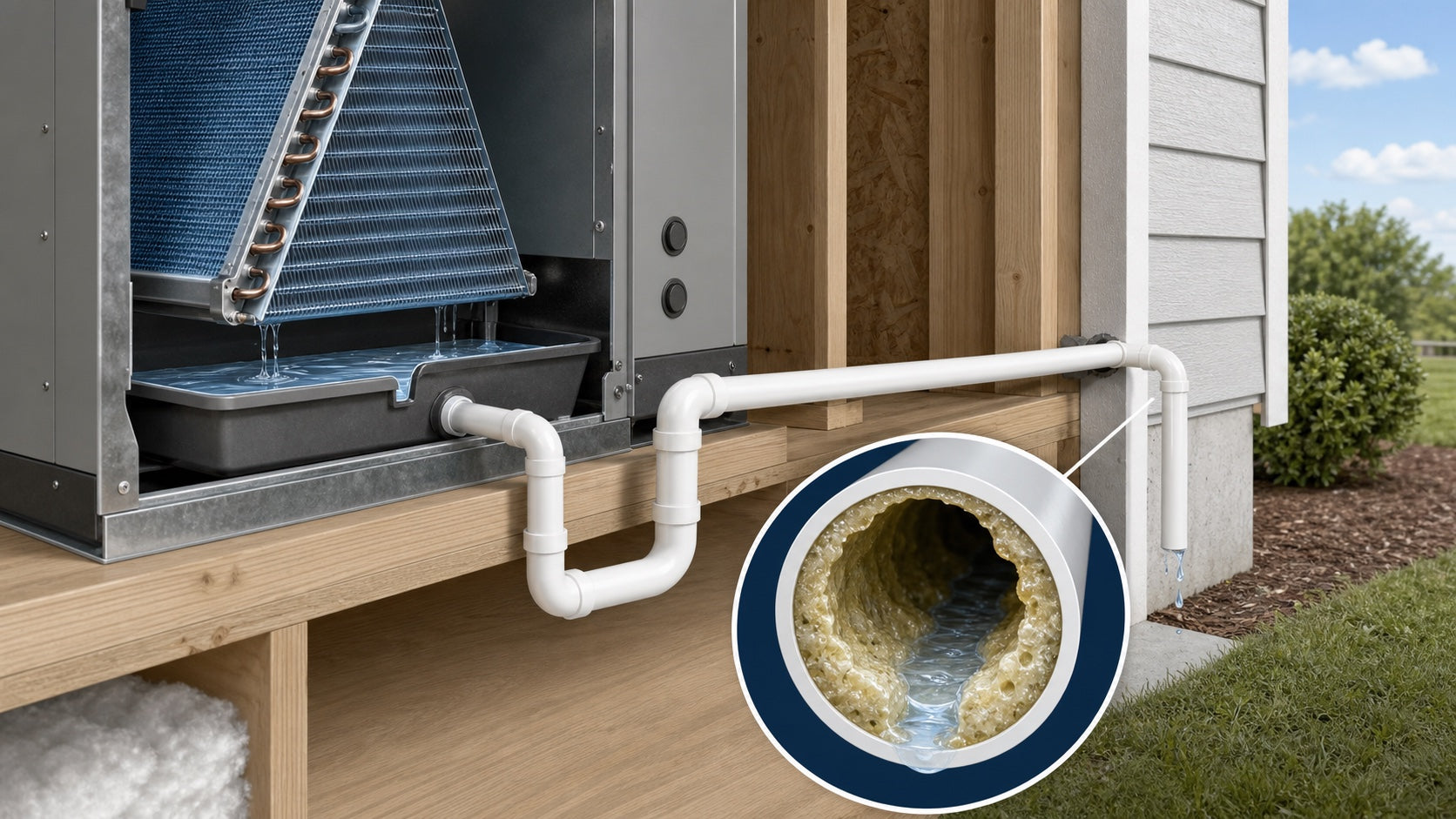
A condensate clog is common, but it is not the only explanation. Coil ice can melt into a large volume of water. A cracked pan, loose fitting, sweating duct, or failed pump can also leave water around the equipment.
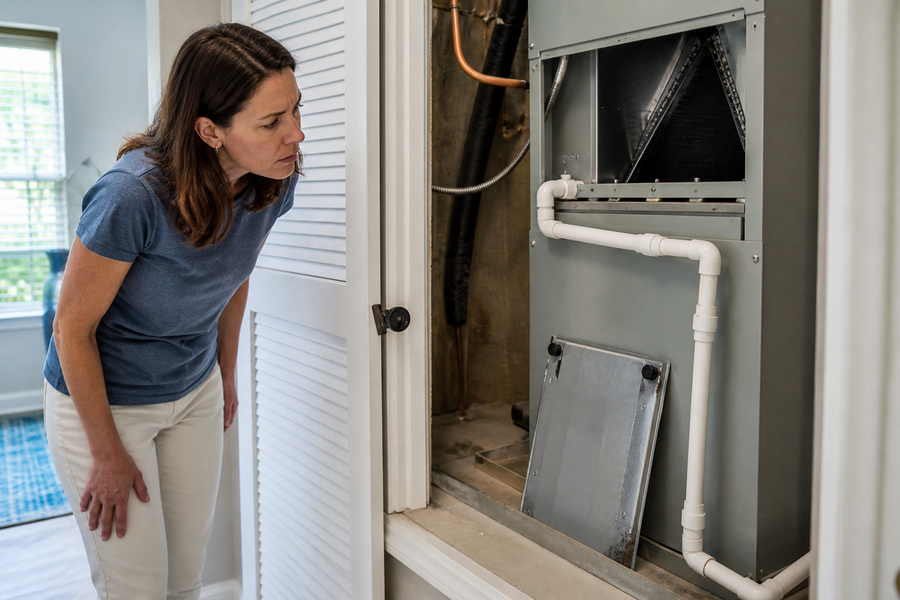
If water is spreading, turn the system off and protect the area below it. Do not walk on wet ceiling material or reach through soaked insulation. A technician can remove standing water, test the drain path, and identify damage that is hidden from view.
Once the line is flowing and the installation is sound, regular inspection and preventative drain care can reduce the chance of another surprise.
Start with the closest match, then use the complete guide when you need the whole system explained.
Quick answer A musty smell when the A/C runs usually points to moisture lingering somewhere it should not. Common sources include a wet evaporator...
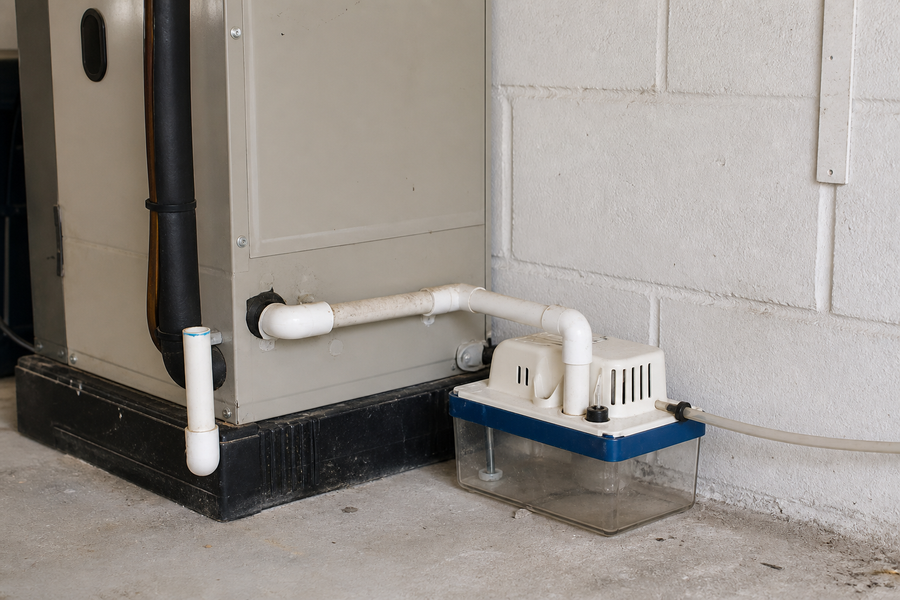
A/C condensate pump full, humming, overflowing, or silent? Learn what the symptoms mean, which checks are safe, when to stop, and how to prevent...
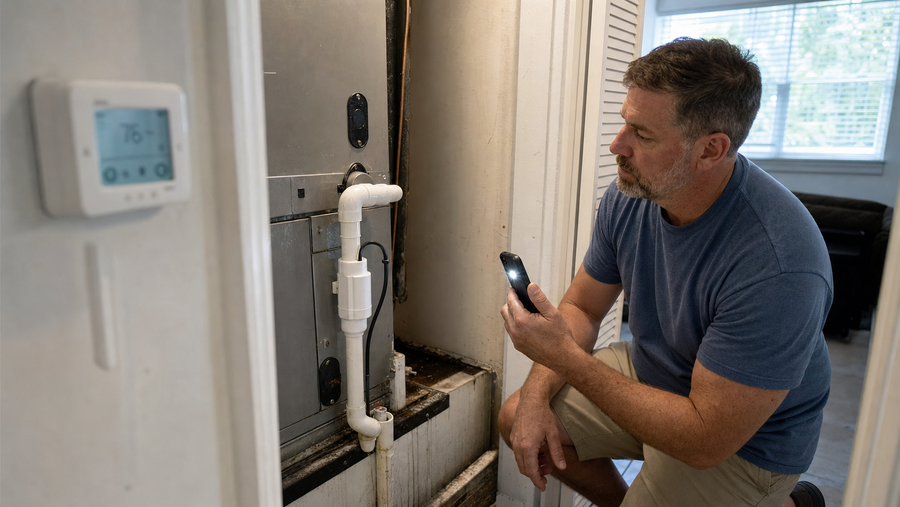
Learn why an A/C float switch shuts cooling off, what standing water means, which checks are safe, and how to tell a clogged drain...
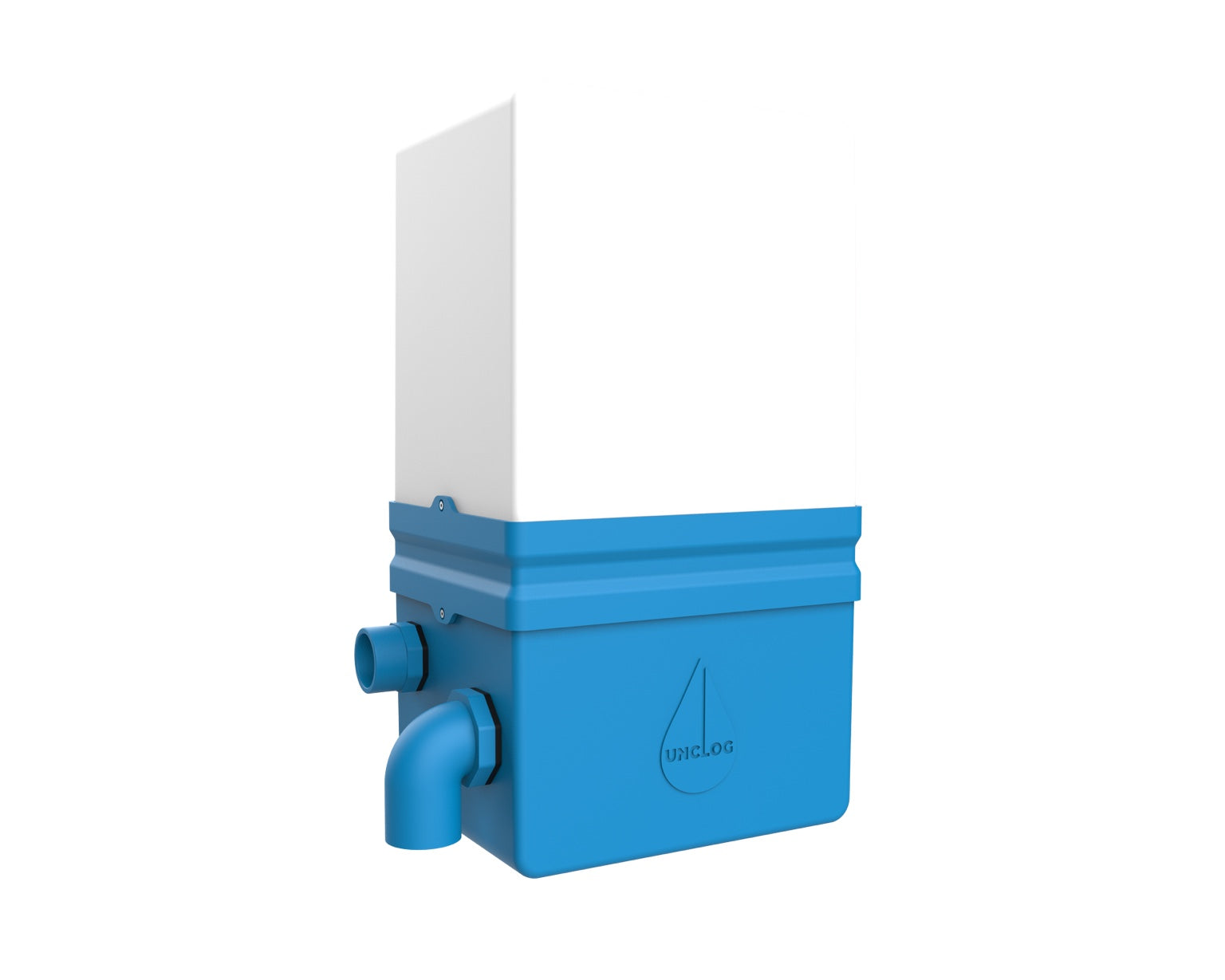
Unclog is designed for compatible residential systems that are already draining normally. Scheduled suction cycles help move developing buildup before it becomes another complete restriction.