
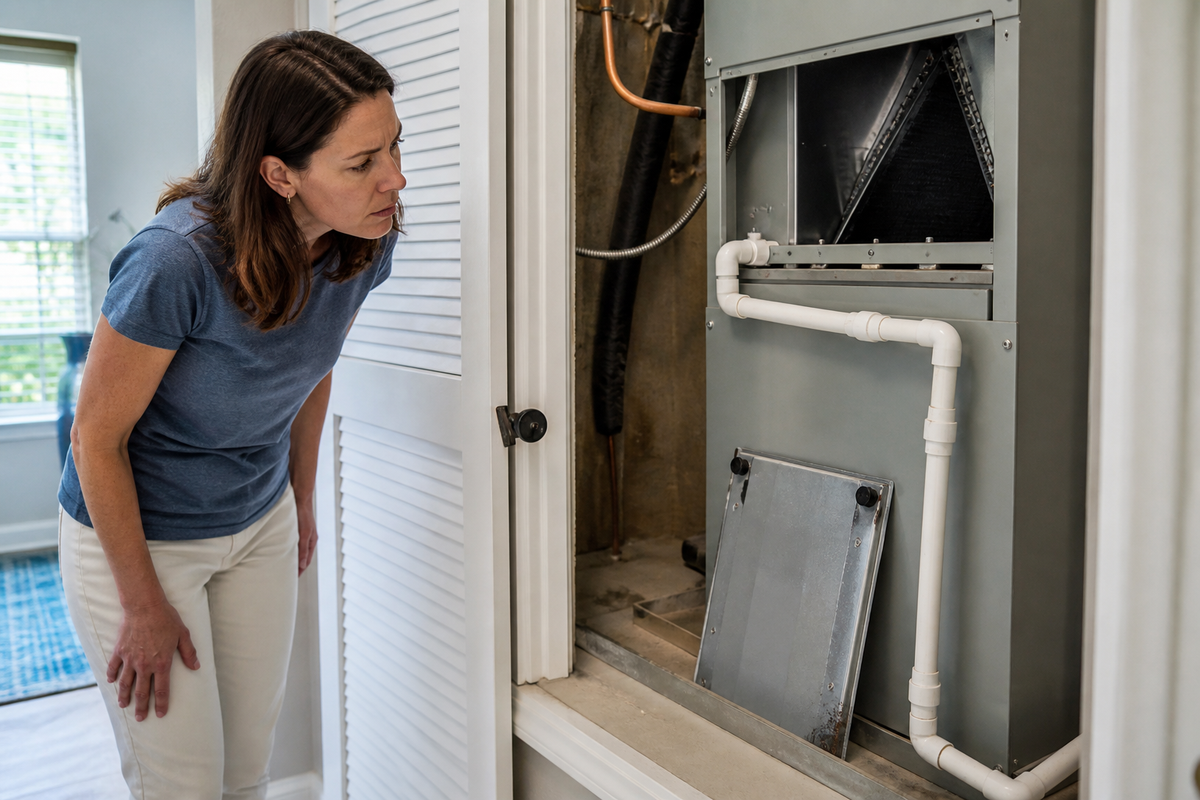
You notice it as soon as the cooling starts: damp cardboard, old towels, a basement-like odor, or what many people call “dirty socks.” The smell may fade after a few minutes, remain for the entire cycle, or seem strongest beside the indoor equipment.
Those differences matter. A musty odor is a symptom of a moisture problem, but it is not proof that the condensate drain line is clogged. The same smell can begin on the coil, in a wet filter, inside a drain pan, along damp duct insulation, or elsewhere in the home.
What a musty A/C smell actually means
Air-conditioning systems remove moisture from indoor air. Water forms on the cold evaporator coil, falls into the primary drain pan, and leaves through the condensate drain. When that path is clean and working normally, the water moves away from the equipment.
If part of the system stays wet, organic material such as household dust can collect there. A musty odor suggests that unwanted moisture or biological growth may be present, so the useful question is not simply “How do I cover the smell?” It is “Where is the moisture staying?”
Seven likely causes of a musty smell when the A/C runs
The coil is wet during normal cooling. Dust and residue on that surface can hold moisture and create odor, especially after the system has been idle.
A heavily loaded filter can smell stale. A wet filter also points to a drainage, humidity, or air-leak problem that deserves attention.
The primary pan should move condensate into the drain. Water in an auxiliary pan is a warning that the normal drainage path has failed.
A restriction can leave water sitting upstream. Drain-line buildup becomes more likely when you also find a wet pan, tripped float switch, indoor leak, or poor outlet flow.
Condensation, an air leak, or a previous water event can wet porous material. That requires a different repair than clearing a drain pipe.
Long periods of elevated humidity can keep surfaces damp and make an existing odor more noticeable, even when the drain is still open.
A plumbing leak, damp closet, wet carpet, roof leak, or wall cavity can smell strongest when the blower begins moving air through the house.

Use the timing and location to narrow the source
The strongest clue is often when and where the odor appears. Use this table as a starting point, not a final diagnosis.
Safe checks a homeowner can make
Keep the inspection visual. Do not open electrical compartments, reach into the air handler, disturb suspected growth, or pour a treatment into a pipe you have not positively identified.
If you find water in the auxiliary pan, use the A/C drain-pan guide. If the system shut down and a safety switch is wet, see what an A/C float-switch trip means. When the evidence points toward a restriction, follow the clogged condensate drain-line guide.
When to turn the system off and call a professional
- Water is touching the air handler, wiring, controls, or finished surfaces.
- The auxiliary drain pan contains water or is overflowing.
- The system repeatedly stops on a float switch.
- The evaporator coil is frozen or covered with ice.
- The filter is wet, duct insulation is damp, or visible growth is inside the air path.
- The odor is strong, persistent, or accompanied by symptoms.
- You cannot confidently identify the condensate drain and its outlet.
A good service diagnosis should inspect the filter, coil, drain pans, trap, drain slope, float switch, condensate pump if present, and accessible duct materials. Clearing the last few inches of PVC will not solve an odor that began somewhere else.
Prevent the smell from returning
Prevention starts with correcting the moisture source, not masking the odor. Replace filters on an interval appropriate for the home and equipment. Keep supply and return openings unobstructed. Include the coil, pans, drain, pump, and insulation condition in seasonal service. Record when the smell appears so a recurring pattern is easier to diagnose.
For the condensate line specifically, learn its normal route and outlet behavior. A line that repeatedly slows or clogs needs more than another emergency clearing. Pitch, traps, venting, pan condition, airflow, and recurring buildup may all contribute.
Frequently asked questions
Can a clogged A/C drain line make the house smell musty?
It can contribute. A restriction may leave water sitting in the pan or drain system, but the odor can also begin on the evaporator coil, filter, duct insulation, or another damp surface. Look for drainage evidence instead of diagnosing a clog from smell alone.
Why does the A/C smell musty only when it first turns on?
Startup airflow can make moisture and residue on the coil, pan, filter, or nearby air path noticeable. A short-lived odor still deserves investigation when it returns regularly.
Will changing the air filter remove the smell?
Replacing a dirty or damp filter may help when the filter is the source, but it will not correct standing pan water, a clogged drain, a dirty coil, wet insulation, or high humidity.
Should I pour bleach or vinegar into the drain line?
Do not pour anything into an unidentified opening or mix treatments. Equipment materials and manufacturer instructions vary, and a liquid treatment does not prove a blocked line is open. Compare the options in the vinegar-versus-bleach guide.
Can I keep running an A/C that smells musty?
Turn it off when there is active water, wet electrical equipment, a full auxiliary pan, suspected HVAC contamination, or a strong persistent odor. Arrange professional inspection rather than continuing to circulate air through a known moisture problem.
Sources and editorial notes
- U.S. EPA: What does mold smell like?
- U.S. EPA: A brief guide to mold, moisture and your home
- CDC/NIOSH: Mold, testing and remediation
Educational information only. HVAC layouts, equipment instructions, drainage routes, and local requirements vary. Anthony Tranchida is the founder of Unclog. This article distinguishes a possible condensate-drain symptom from other moisture sources and does not diagnose mold or replace qualified HVAC or remediation advice.