
White Slime in Your A/C Drain Line: What It Is and How to Stop the Cycle
The clear, white, tan, or orange jelly pulled from a condensate pipe is usually better described as biofilm, not simply algae. Learn why it forms, when it becomes a clog, and what prevention can realistically do.
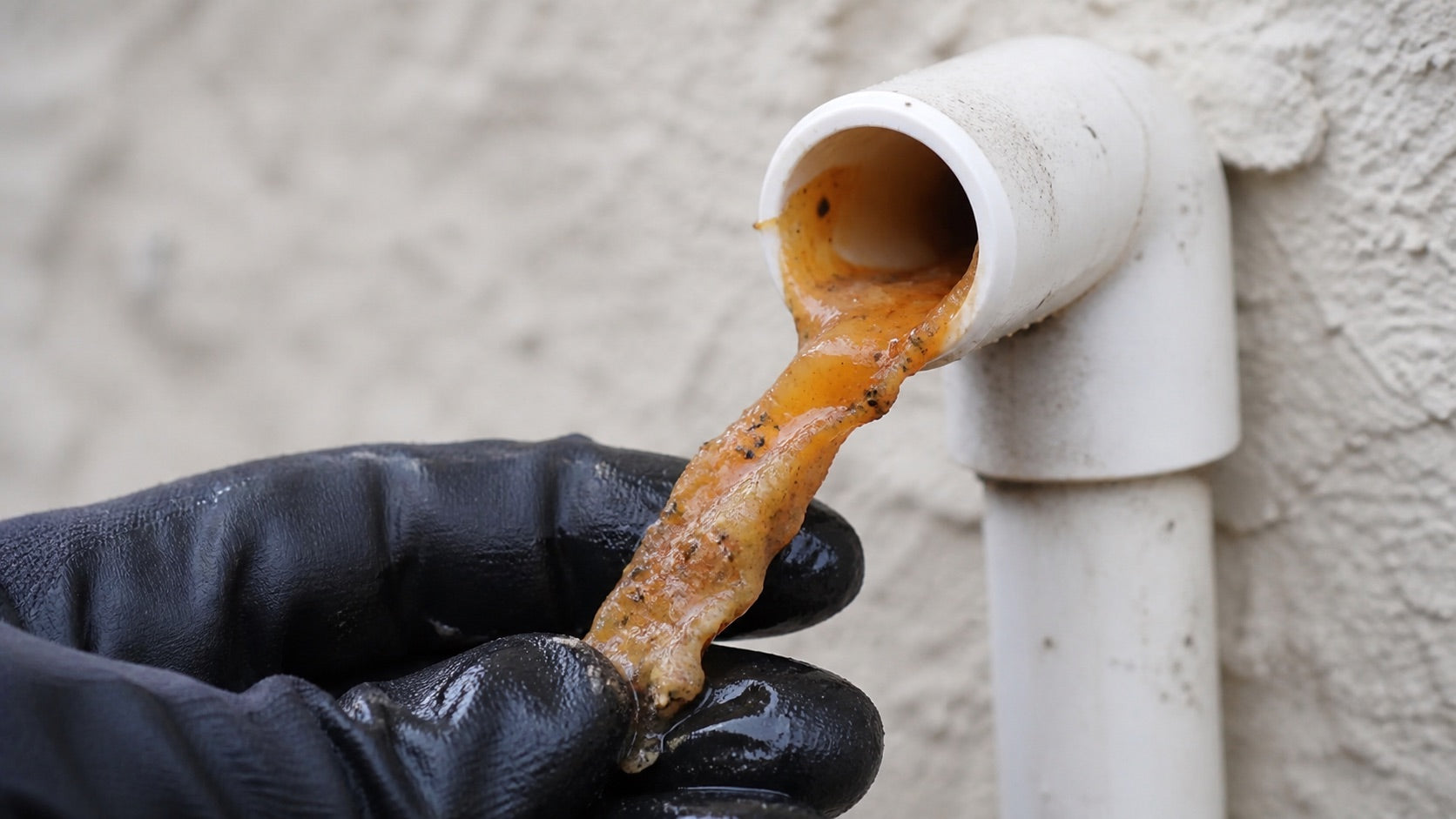
Drain slime is a growing layer, not just loose dirt
Condensate water keeps the drain path wet. Dust and other material reach those wet surfaces. Microorganisms can attach to the pan and pipe wall, producing a sticky matrix that traps more debris. Over time, that layer narrows the path until water slows, backs up, or trips a float switch.

Clear the active slime plug. Then move new buildup earlier.
Unclog is preventative drain-line equipment. It uses scheduled suction cycles at the outdoor termination of a compatible gravity drain, helping move developing buildup before it becomes another complete restriction.
- 1Remove the current clog
Open and clean the complete route using a safe method appropriate for the system. - 2Verify the drain itself
Correct pitch, trap, pan, pump, fitting, or outlet problems and prove normal flow. - 3Add recurring suction
Install Unclog only after confirming the outdoor termination and system are compatible.
Important: Unclog does not dissolve an active plug, sanitize the air handler, repair damaged piping, replace a condensate pump, or correct a frozen coil.
Three ingredients turn a wet pipe into a biofilm problem
Central air conditioning removes moisture from indoor air. That water falls from the evaporator coil into the primary drain pan, then travels through the condensate line. During humid weather and long cooling cycles, parts of that route may stay damp for extended periods.
1. Moisture
Condensate repeatedly wets the pan and pipe wall during cooling.
2. Attachment
Microorganisms can settle on wet surfaces and begin producing a protective sticky layer.
3. Accumulation
The layer catches dust and debris, grows thicker, and reduces the open path for water.
The material may look clear, white, gray, tan, orange, or dark. Appearance can change with dust, pipe condition, standing water, landscaping debris, and how long the material has remained in the route. A photograph can document the condition, but it cannot prove the species or the source of every particle.
Warm, humid climates make drain complaints more common because the system runs longer and produces more condensate. But climate is only part of the story. Poor pipe pitch, a sagging line, an incorrect trap, retained debris, dirty pan conditions, weak airflow, pump problems, or an obstructed outlet can help the same buildup return.
What drain-line slime looks like before it becomes an emergency
Rope-like or jelly-like buildup leaving the outdoor pipe is direct evidence that material is moving through the route.
Less flow than the system normally produces can mean a partial restriction, but weather and run time also change condensate volume.
Backed-up drainage is one possibility. A failed pump, frozen coil, damaged pan, or loose pipe can look similar.
A safety switch may stop cooling when water rises. Never bypass the switch to force the system back on.
Persistent dampness deserves investigation. The filter, coil, pan, drain, ducts, or another moisture source may be involved.
Repeat symptoms call for diagnosis of the full route, not another quick treatment at one accessible opening.
If water is spreading, a ceiling is sagging, electrical components are wet, or the source is unclear, turn cooling off at the thermostat when safe and call a qualified HVAC professional. Use the A/C stopped or not cooling guide for safe first checks.
If slime has already blocked the line, restore flow first
A maintenance rinse and an active clog removal are not the same job. When water has backed up, the entire visible drainage system should be evaluated: pan, outlet, cleanout, trap, pipe slope, supports, float switch, secondary route, and condensate pump if one is present.
| Condition | What it means | Best next step |
|---|---|---|
| Line flows normally with no warning signs | Preventative maintenance may be appropriate | Follow equipment guidance and a documented schedule |
| Visible slime but no verified restriction | Buildup is present, but flow still needs to be tested | Inspect the complete route and choose a compatible cleaning method |
| Slow outlet, wet pan, or float-switch trip | A restriction or another drainage failure may be active | Stop guessing and clear or repair the actual cause |
| Repeat clog after recent cleaning | Material may remain upstream or the route may hold water | Request diagnosis of pitch, trap, pan, airflow, pump, and cleaning completeness |
| Wet electrical area, ceiling leak, frozen coil, or inaccessible equipment | The risk and diagnosis extend beyond simple drain maintenance | Call a qualified professional |
For a careful breakdown of outlet suction, cleanout access, and proof-of-flow checks, read How to Clean an A/C Drain Line Safely. If the line keeps clogging, use the recurring-clog root-cause guide.
A prevention plan should protect the whole condensate path
- Keep filtration on schedule. Use the filter size and type specified for the system, and correct gaps that allow unfiltered air to bypass it.
- Inspect the pan and coil area during normal service. Drain-line prevention cannot compensate for dirt and retained material at the source.
- Confirm pitch and support. Low spots can hold water and give sticky material more time to settle.
- Keep the outdoor termination visible. Do not let mulch, soil, insects, landscaping, or stored items cover the outlet.
- Test safety devices. A float switch is protection against rising water, not a nuisance to bypass.
- Record when buildup returns. The interval between cleanings can help a technician distinguish a maintenance pattern from a route defect.
- Use only a method compatible with the system. Compare physical suction, manual rinsing, professional cleaning, and other options in the A/C drain-line cleaner methods guide.
“Prevent algae” is a convenient search phrase, but the practical goal is broader: keep condensate moving, reduce accumulated biological material, and catch drainage problems before water reaches the warning stage.
White slime and A/C drain-line FAQ
Is the white slime in my A/C drain line really algae?
Not necessarily. “Algae” is often used as a catchall term. The gelatinous material is better described as biofilm mixed with dust and debris. Its exact organisms cannot be identified by sight alone.
Can white slime shut off my air conditioner?
Yes, indirectly. If buildup blocks the condensate line, water can rise and activate a float switch that stops cooling. The switch is doing its safety job and should never be bypassed.
Why does the slime return after I vacuum the outlet?
The vacuum may have opened only the accessible end, or conditions elsewhere may encourage buildup. Retained material, pan contamination, poor pitch, trap problems, long wet sections, pump issues, and filter or airflow problems deserve review.
Should I pour bleach or vinegar into the line?
Do not assume one liquid is safe for every system. Follow manufacturer guidance and your HVAC professional’s instructions. Never mix products or add a chemical when you do not know what is already in the line.
Will Unclog clear an existing slime clog?
No. The active blockage must be removed and normal drainage verified first. Unclog is designed to provide scheduled suction at the outdoor termination of a compatible drain to help move developing buildup earlier.
When should I call an HVAC professional?
Call for active leaks, water near electrical components, a frozen coil, repeated float-switch trips, inaccessible equipment, a failed pump, damaged piping, a clog that returns quickly, or any route you cannot identify and verify safely.
Follow the symptom to the right next guide
Do not wait for the next rope of drain slime
See how Unclog adds scheduled suction to a compatible outdoor condensate-drain termination, then confirm the drain layout before installation.
Explore UnclogCheck your drain layout